Premium Wine Market in China
A commercial roadmap for international wine producers and distributors navigating China's premium wine market, highlighting structural premiumization, distribution channels, and buyer engagement.
The premium wine market in China has transitioned decisively from a volume-driven import environment to an era defined by value density, category education, and calculated brand prestige. While overall import volumes declined across consecutive quarters—exemplified by an initial 25% drop in total consumption volume reported by Vinetur in 2025—the average import price per bottle has risen steadily. China's wine retail space reached an estimated $26.8 billion in 2024 according to industry data from Vinetur (2025), underscoring that commercial expansion now lies exclusively in the mid-to-high and luxury price bands.
For international vintners, brand brand managers, and import distributors, entering or expanding in China requires shedding outdated mass-market assumptions. Today’s Chinese wine buyer demands authentic provenance, cultural alignment, certified quality credentials, and frictionless omni-channel distribution. Navigating this landscape demands tactical clarity on pricing, consumer psychology, route-to-market mechanics, and distributor procurement criteria.
Market Realities: Volume Contraction vs. Value Expansion
For over a decade, China represented an unconstrained volume opportunity for global wineries shipping generic, entry-level inventory. However, structural macroeconomic shifts, anti-extravagance policies enacted since the 2012 Xi administration, and evolving lifestyle priorities have dismantled the generic bulk import segment. Research documented in the Journal of Wine Economics (Cambridge Core, 2025) tracks how trade policy shocks—such as the anti-dumping tariffs imposed on Australian wine from late 2020 until late March 2024—fundamentally rearranged supplier market shares among France, Chile, Italy, Spain, and Australia.
Yet, behind aggregate volume declines lies a resilient premium segment. Data published in a 2026 forecast by MS Advisory projects the market volume to grow steadily from $9.5 billion in 2024 to $10.1 billion by 2026, driven by higher spending per bottle, urbanization, and expanding middle-class disposable income. As generic table wines lose relevance to domestic beer, spirits, and ready-to-drink beverages, discerning consumers are drinking "less but better."
Import statistics compiled by Wine-Intelligence in 2026 confirmed that even as total import volumes faced pressure, bottled high-value table wines and premium sparkling selections remained resilient across tier-1 and tier-2 distribution hubs. Category producers cannot depend on distributor speculative stockpiling; commercial traction requires targeted premium portfolio placement.
The Anatomy of the Chinese Premium Wine Consumer
To price, brand, and position a fine wine label effectively, category producers must understand who actually purchases premium bottles in China and what cultural dynamics dictate the point of sale.
1. The Corporate Gifting and 'Mianzi' (Face) Economy
Premium wine purchasing remains tightly tethered to business gifting, formal hosting, and reciprocal hospitality. Academic research published by MDPI in 2025 highlights that presenting high-value, prestigious gifts functions as an act of 'Gei Mianzi' (giving face), directly reinforcing the social credit and mutual standing of both parties. In this commercial context, consumers gravitate toward labels with widely recognized retail pricing, verified ratings, and distinct luxury packaging. If a client or business partner cannot immediately assess the esteem or market valuation of a label, its value as a gift drops significantly.
2. Gen Z and Millennial Connoisseurs
China’s emerging generation of urban, educated professionals is redefining wine consumption away from compulsory banquet chugging (ganbei) toward personal indulgence, casual socializing, and curated epicurean experiences. While red wine continues to account for nearly 90–95% of domestic consumption according to data compiled by Vinetur in 2025, younger demographics show growing curiosity for regional whites (such as Burgundian Chardonnay, German Riesling, and Marlborough Sauvignon Blanc), organic and low-intervention biodynamic bottles, and traditional-method sparkling wines. This cohort values storytelling, transparent winemaking philosophies, and food-pairing versatility over hollow aristocratic heraldry.
Essential Route-to-Market Channels for Premium Wine
Achieving commercial velocity requires deploying an integrated distribution matrix that spans private offline networks, regional specialists, and localized digital ecosystems.
| Channel Type | Primary Target Demographic | Key Operational Focus & Commercial Margins | | :--- | :--- | :--- | | Direct Private Client (KOLs & Weixin Mini-Programs) | HNWI, corporate procurement executives, collector clubs | High gross margins; requires personalized relationship management, private salon tastings, and tailored gifting sets. | | Specialized On-Premise (Bistros & Michelin/Black Pearl Dining) | Urban professionals, affluent food enthusiasts | Brand-building platform; requires sommelier education, staff tasting incentives, and low-inventory consignment arrangements. | | Cross-Border & Domestic E-Commerce (Tmall, JD.com, Douyin) | Tech-literate mass-affluent consumers, Gen Z | Rapid regional reach; requires investment in certified flagship store credibility, livestreaming, and temperature-controlled logistics. | | Tier-2 & Tier-3 Regional Distributors | Regional business networks, local hospitality venues | High volume potential; requires clear territorial exclusivity, price stabilization, and bilingual point-of-sale assets. |
Digital Acceleration and E-Commerce Dominance
China operates the world’s most advanced digital alcohol retail network. Analysis published by China Briefing (2024) citing International Wine and Spirits Research (IWSR) data indicates that China's alcohol e-commerce channel is expanding at a compound annual growth rate (CAGR) of 6% through 2027, representing up to 40% of global online beverage alcohol sales value.
Platforms such as Tmall, JD.com, and Douyin are no longer purely transactional clearinghouses for cheap products; they serve as critical brand discovery engines where buyers cross-check winery credentials, read sommelier tasting notes, and inspect anti-counterfeiting tracking labels before purchasing offline.
Commercial Entry Barriers and Operational Risks
Expanding into China’s premium wine sector carries regulatory, operational, and macroeconomic hurdles that producers must actively mitigate.
Tariff and Trade Policy Volatility
Trade mechanisms remain subject to geopolitical recalibration. As detailed by MS Advisory in 2026, China applies most-favored-nation (MFN) tariffs ranging between 14% and 30% on imported wines from non-preferential trading partners, in addition to standard consumption taxes (10%) and value-added tax (13%). While Australian wine tariffs were eliminated in early 2024, trade disputes involving other global economic blocs highlight the necessity for international brands to maintain flexible regional inventory strategies.
The Rise of Domestic Competitors
China's domestic viticulture is experiencing rapid professionalization. As noted by Vinetur in 2025, top-tier regions like Ningxia's Helan Mountain East Foothills have secured international accolades for technically precise Cabernet Sauvignons, Marselans, and proprietary blends. Backed by government infrastructure subsidies and localized marketing agility, premium Chinese wineries are directly competing for shelf space and corporate banqueting budgets. Foreign labels must compete on authentic heritage, distinctive regional terroir, and differentiated varietal profiles.
Brand Registration and Intellectual Property Defense
Under China's "first-to-file" trademark framework, securing Chinese-language phonetic and semantic trademarks is an essential prerequisite before executing commercial shipments. As observed by China Briefing (2024), regional trade groups like the Consorzio Franciacorta prioritized registering a tailored Chinese name alongside certified education curricula to anchor brand ownership early. Foreign wineries operating without defensive Chinese trademark registrations risk losing market control to unauthorized distributors or trademark squatters.
Actionable B2B Playbook: Winning Importers and Distributors
To build long-term distribution partnerships in China, international wineries must treat importers as collaborative commercial partners rather than passive transactional buyers.
- Localize Packaging and Visual Signifiers: Ensure back-labels meet General Administration of Customs of China (GACC) compliance without looking like an afterthought. High-weight glass, distinctive embossed crests, tamper-evident anti-counterfeiting seals, and elegant, localized presentation boxes appeal directly to corporate and premium personal gift-givers.
- Equip Local Partners with Educational Collateral: Develop certified WeChat-accessible technical tasting sheets in simplified Chinese. Importers struggle to sell products their regional sales teams cannot articulate. Providing localized pairing guides with Cantonese, Huaiyang, or Sichuan cuisines bridges cultural barriers for regional on-premise accounts.
- Maintain Strict Price Governance Across Channels: Parallel imports and uncontrolled online discounting destroy importer margins and brand prestige. Brand owners must establish transparent minimum advertised price (MAP) rules to ensure both traditional distributors and live-stream e-commerce partners profit fairly.
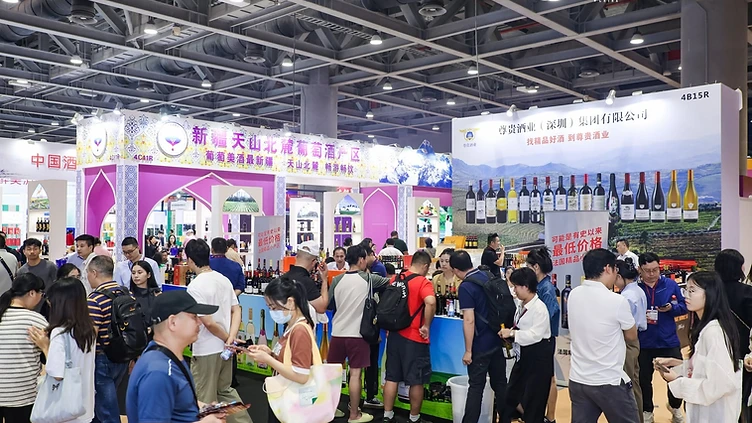
- Engage Decision-Makers Directly on the Trade Floor: Chinese wine procurement is founded on personal trust (guanxi), face-to-face evaluation, and physical tasting. Participating in professional trade environments like INTERWINE allows producers to present their portfolios directly to certified national importers, retail beverage buyers, and luxury hospitality managers.
To connect with verified regional distributors, fine wine merchants, and trade buyers across mainland China, producers can directly become an exhibitor at upcoming expositions. Review current trade trends via market insights, and utilize dedicated B2B business matching to establish verified distribution pipelines.
Sources
- MS Advisory: Wine Market in China – Trends, Growth, and Consumer Dynamics (2026)
- China Briefing: China's Wine Market Outlook – Trends and Opportunities (2024)
- Vinetur: China's Wine Consumption Shifts Toward Premium Bottles and Digital Sales (2025)
- Cambridge Core / Journal of Wine Economics: China’s Wine Market – Recent Shocks, Long-Term Prospects (2025)
- Wine-Intelligence: China Wine Imports – Premium Resilient (2026)
- MDPI: Understanding the Wine Consumption Behaviour of Young Chinese Consumers (2025)
Key Takeaways
- —China's imported wine sector is undergoing structural premiumization; while total import volume has contracted, spending per bottle and premium demand continue to rise.
- —Corporate gifting and professional hospitality remain anchored in 'mianzi' (social face), favoring brands with recognizable market value, high critical scores, and prestige packaging.
- —E-commerce channels represent up to 40% of global online beverage alcohol sales, requiring producers to balance digital brand visibility with strict MAP price protection.
- —Domestic fine wine regions, notably Ningxia, are producing award-winning wines, forcing imported brands to compete on distinct terroir, heritage, and specialized varietals.
- —B2B success depends on proactive trademark defense, simplified Chinese marketing collateral, and building face-to-face trust through professional trade fairs and structured business matching.
Frequently Asked Questions
What price threshold defines a 'premium' wine in China?
In China's imported wine sector, entry-premium wines typically retail above 150 RMB ($20 USD) per bottle, while standard premium and super-premium wines range between 300 RMB and 800 RMB ($40 to $110 USD). Luxury and collectible wines exceed 1,000 RMB, finding their primary customer base in corporate gifting, private collectors, and Michelin-starred dining accounts.
Why is total wine import volume declining while the market remains commercially viable?
China's wine consumption has structurally transitioned from high-volume, generic table wine consumption toward a 'drink less, drink better' consumer ethos. While lower-end bulk wine imports have contracted significantly, the average price per liter has increased, allowing premium, boutique, and reputable estate producers to achieve solid margins despite lower shipment volumes.
What is the role of digital channels like Douyin and WeChat in premium wine sales?
Digital platforms serve a dual function in China. While entry-to-mid tier wines generate direct consumer sales through live-stream commerce, premium wineries utilize WeChat Mini-Programs and official brand accounts primarily for brand verification, direct-to-VIP allocations, sommelier storytelling, and driving foot traffic to authorized on-premise venues.
What regulatory hurdles must foreign wineries overcome before shipping to China?
Wineries must ensure facility registration with the General Administration of Customs of China (GACC) through the Single Window system, provide verified certificates of origin and laboratory test analysis, strictly conform back-labels to Chinese national food safety standards (GB standards), and defensively register their Chinese phonetic trademarks.
How can international wine producers meet qualified Chinese distributors?
Building distribution requires direct engagement with verified importers, regional distributors, and hospitality buyers through recognized trade exhibitions. Participating in curated industry events like INTERWINE and taking advantage of dedicated on-site business matching sessions provides foreign producers with direct access to pre-screened commercial partners across mainland China.