How Small Wineries Can Enter the Chinese Market
A commercial roadmap for boutique and family-owned wineries entering China: navigating GACC CIFER compliance, regional distribution, and B2B buyer matching.
The Direct Path to Market Entry for Boutique Wineries
Small wineries can successfully enter the Chinese market by bypassing mass-volume retail channels, securing self-directed customs compliance, and partnering with regional specialty distributors who prioritize provenance over bulk discounting. Entering China does not demand multi-million-euro advertising budgets or nationwide logistics networks. Instead, small-to-medium-sized wine producers (SMEs) must focus on defensible niche positioning: boutique estate storytelling, targeted regional beachheads, airtight General Administration of Customs of China (GACC) compliance, and structured, face-to-face commercial matchmaking.
While China's overall wine import volumes experienced a sustained recalibration—dropping by 66.7% from 2017 to 2023 according to the EU SME Centre—the composition of buyer demand has shifted markedly toward authenticity, boutique single-vineyard expressions, organic viticulture, and direct importer relationships. For family estates and boutique producers, understanding how to navigate this refined landscape is the key to sustainable, high-margin export growth.
Regulatory Foundations: GACC, CIFER, and Customs Clearance
Before shipping a single pallet to Shenzhen, Guangzhou, or Shanghai, overseas wineries must establish regulatory legitimacy. China enforces stringent food safety and traceability protocols that demand precision at the production origin.
1. Facility Registration via GACC CIFER
Under GACC Decree 248, all overseas food and beverage manufacturing and processing facilities must register with Chinese Customs before products arrive at ports of entry. As detailed in the EU SME Centre's 2023 Market Report, wine is classified as a "low-risk" category. This distinction benefits small wineries because it allows producers to register independently on the official China Import Food Enterprises Registration (CIFER) system without requiring formal diplomatic submission through home-country agriculture ministries.
- Required Data: Corporate tax identification, production license numbers, winery footprint, annual production volume, ingredient sourcing declarations, and process flowcharts.
- Output: Upon approval—which generally takes one to two weeks—GACC issues an 18-digit registration code valid for five years.
- Packaging Mandate: This 18-digit number must be printed directly on the Chinese back label or affixed securely prior to customs inspection.
2. Labeling Standards and Landed Tax Math
Chinese food safety standards (GB 7718 and GB 15037) require a simplified Chinese back label that lists the standard alcohol consumption warnings, exact product classification, grape varieties, net volume, alcohol strength by volume, production/bottling date, batch identification, and the full legal contact details of the licensed Chinese importer.
Importers must also account for the landed tax stack when calculating landed costs and wholesale margins. According to trade industry guidelines from Best Wine Importers (2025), standard bottled wine imports into China face a compound taxation burden that adds roughly 50% on top of CIF (Cost, Insurance, and Freight) value:
- Customs Import Tariff: ~14% (unless modified by specific bilateral free trade agreements, such as with Chile or Australia post-tariff revision)
- Value Added Tax (VAT): 13%
- Consumption (Excise) Tax: 10%
Small wineries must price their products backward from these landed costs to ensure local distributors can retain healthy distributor margins (typically 30–40%) without pricing the bottle out of its competitive tier in Chinese fine dining or boutique bottle shops.
Targeting Dynamic Regional Markets Over Monolithic National Campaigns
China is not a singular, uniform market; it operates as an interconnected continent of diverse regional economies with distinct dining habits, spending capacities, and distributor footprints. A common pitfall for small producers is signing an exclusive national distribution agreement with an agency that only operates effectively in one municipal cluster.
+-----------------------+--------------------------+------------------------------+
| Target Region         | Strategic Hub Cities     | Consumer & Channel Focus     |
+-----------------------+--------------------------+------------------------------+
| Greater Bay Area (GBA)| Guangzhou, Shenzhen,     | Cantonese gastronomy pairings|
|                       | Zhuhai, Foshan           | High disposable income, tech |
|                       |                          | Private dining & gifting     |
+-----------------------+--------------------------+------------------------------+
| Yangtze River Delta   | Shanghai, Hangzhou,      | Natural/organic wine bars,   |
|                       | Ningbo, Nanjing          | Millennial & Gen Z consumers |
|                       |                          | Sophisticated bistro trade   |
+-----------------------+--------------------------+------------------------------+
| Hainan Free Trade Port| Haikou, Sanya            | Duty-free tourist retail,    |
|                       |                          | Luxury hospitality resorts   |
+-----------------------+--------------------------+------------------------------+
Guangdong and the Greater Bay Area
Guangdong Province stands as China’s economic powerhouse for imported spirits and wine. Supported by established trade hubs in Guangzhou and Shenzhen, the province features sophisticated distribution networks, a deep-seated business banquet culture, and proximity to Hong Kong’s bonded trade infrastructure. Cantonese cuisine values freshness, purity, and subtle textures, creating immediate commercial room for crisp whites, light reds, Champagne, and elegant, balanced red varieties.
The Yangtze River Delta
Anchored by Shanghai, Hangzhou, and Ningbo, this region leads the nation in modern on-premise consumption. In Shanghai, wine is consumed casually as part of an urban lifestyle, making it the primary hub for natural, organic, biodynamic, and low-intervention wines. For small wineries producing low-intervention cuvées or rare indigenous grape varieties, the bistro culture of East China offers the fastest consumer trial.
Review our Market Insights to study provincial volume trends and channel segmentation in detail.
The Boutique Advantage: Positioning, Storytelling, and Digital Infrastructure
Boutique estates cannot outspend global conglomerates on volume incentives. Their competitive edge rests entirely on authenticity, limited production scarcity, and heritage.
- Distinctive Terroir and Provenance: Chinese buyers increasingly value estate bottling (mise en bouteille au domaine), single-vineyard parcels, family ownership, and verifiable international medals. Position your portfolio not as an anonymous commodity, but as a cultural experience.
- Appropriate Chinese Brand Identity: Develop a phonetically elegant, culturally resonant Chinese brand name. Avoid machine-generated transliterations that yield unpronounceable characters or accidental negative connotations in Mandarin or Cantonese dialects.
- Localized Digital Collateral on WeChat: Do not send Western PDFs or Dropbox download links to prospective Chinese commercial partners. Importers and sommeliers execute business communications on WeChat. Ensure you have high-resolution bottle photography, technical spec sheets, and short estate profile decks formatted for WeChat viewing, backed by mobile-friendly video materials highlighting harvest, cellar techniques, and owner interviews.
Explore our News and Magazine section for case studies showcasing how foreign estates have successfully built localized brand identities.
Connecting with Qualified Buyers: The Commercial B2B Pathway
Cold email campaigns and untargeted consumer fairs rarely produce import contracts in China. Reliable commercial relationships are rooted in commercial trust, sensory evaluation, and direct dialogue.
As the EU SME Centre (2023 Report) notes, consumer-heavy street festivals generate sporadic cash sales during the event days but leave no distribution infrastructure once the gates close. For small wineries, the highest return on investment comes from dedicated trade exhibitions frequented by licensed importers, regional distributors, wholesalers, and private club sommeliers.
To bridge the gap between initial contact and a signed commercial invoice:
- Participate in Verified Trade Fairs: Industry-focused gatherings allow producers to present multiple SKUs simultaneously to buyers evaluating vintage stability, portfolio synergy, and commercial viability.
- Leverage Pre-Scheduled Meetings: Utilize dedicated Business Matching services to pre-screen prospective distributors based on current portfolio gaps, annual import quotas, geographic distribution licenses, and channel focus (on-premise vs. corporate gifting).
- Assess Distributor Profiles: Evaluate whether a prospective partner already manages competing estates from your region, or whether your label provides them with a distinct, complementary addition to their portfolio.
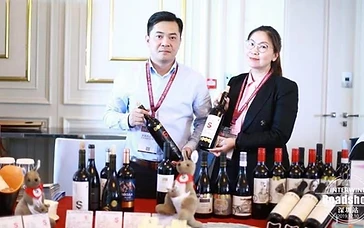
Producers seeking qualified commercial representation in southern and eastern China can directly apply to Become an Exhibitor at upcoming INTERWINE expos.
Practical Next Steps for Winery Principals
- Complete GACC CIFER Enrollment: Register your winery production facility directly via the official customs platform to secure your 18-digit export code.
- Audit Pricing Structures: Model your EXW and CIF export pricing against China's compound 50% tariff/VAT/consumption tax stack, guaranteeing margin room for regional distributors.
- Assemble WeChat Assets: Produce mobile-optimized Chinese-language fact sheets, tech cards, and winery introduction videos hosted on Chinese-accessible servers.
- Schedule Targeted B2B Meetings: Target targeted trade events in Guangdong or Shanghai, capitalizing on professional Business Matching systems to meet pre-vetted regional distributors with active import licenses.
Sources
- Best Wine Importers (2025) - A Wine Exporter's Guide to Finding Buyers in China
- EU SME Centre (2023) - Report: China's Wine Markets
- Wine Australia (2024) - China Export Market Guide
- State Council of the People's Republic of China (2023) - Pilot Free Trade Zone Measures
Key Takeaways
- —Small wineries can register directly on China's GACC CIFER platform without governmental intermediary submission because wine is classified as low-risk.
- —China's composite tariff, VAT, and consumption tax stack adds approximately 50% on top of CIF pricing, requiring strategic margin structuring.
- —Regional targeting in high-spending provinces like Guangdong and Zhejiang delivers faster ROI than fragmented nationwide distribution.
- —Consumer-facing fairs rarely build distribution networks; boutique producers need structured B2B trade platforms and pre-qualified matching.
- —B2B sales enablement in China requires localized collateral on WeChat rather than Western file-hosting links or untranslated PDF sheets.
Frequently Asked Questions
Can small wineries register on the GACC CIFER platform without an agent?
Yes. Under GACC regulations, wine is classified as a low-risk food category. Overseas producers can create an account directly on the CIFER portal using their company tax and registration credentials, provide technical and facility information, and receive an 18-digit GACC registration code valid for five years without requiring third-party broker intervention.
What is the typical landed tax rate for imported bottled wine in China?
As detailed by trade resources such as Best Wine Importers (2025), bottled still wine typically faces a ~14% customs duty, a 13% Value Added Tax (VAT), and a 10% consumption tax. Compounded, these taxes increase the landed CIF cost by roughly 50%.
Should a small winery appoint an exclusive national distributor in China?
Rarely. China is a massive, multi-regional market with regional logistics networks and culinary variations. Appointing regional distributors—for example, one for the Greater Bay Area and another for the Yangtze River Delta—often yields broader shelf presence and prevents brands from languishing under a single disengaged national importer.
What digital assets do boutique wineries need before approaching Chinese wine buyers?
Wineries should prepare simplified Chinese tech sheets, brand storytelling documents, and video clips optimized for mobile viewing inside WeChat. Providing a dedicated Chinese-language brand brochure and clear FOB/CIF pricing schedules ensures serious distributor engagement.
How do boutique wineries find qualified wine importers in China?
The most reliable route is participating in specialized trade-only expos and using structured business matching platforms such as INTERWINE. This pairs overseas producers directly with licensed, vetted regional importers and wholesalers looking for boutique portfolio additions.