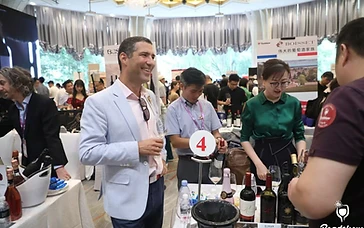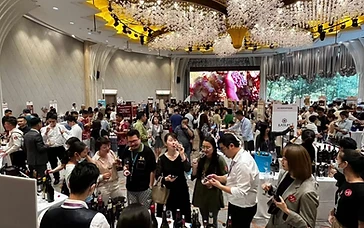
Who Should Visit Interwine?
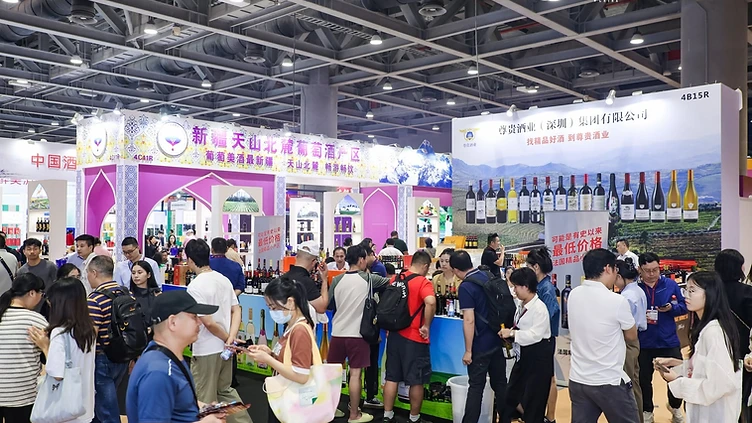
A commercial B2B evaluation outlining who should visit Interwine, covering tier-1 importers, regional distributors, off-trade retail procurement teams, hospitality buyers, and cross-border trade professionals navigating China's wine market.
Interwine (China International Wine & Spirits Exhibition) is strictly a business-to-business platform engineered for licensed importers, regional distributors, retail category managers, food and beverage directors, sommeliers, and international trade intermediaries. If your commercial objective involves sourcing bottled-in-origin wines, securing regional distribution rights, benchmarking competitive pricing across global production regions, or establishing direct procurement channels within mainland China and the Greater Bay Area, visiting Interwine is an essential commercial investment.
Since its founding in 2005—following China's reduction of wine import tariffs from 40% to 14%—Interwine has served as China's premier international gateway for imported wines and spirits. According to market research published by MS Advisory in 2025, China's wine market reached a valuation of approximately $40.4 billion in 2024 and is projected to expand at a compound annual growth rate (CAGR) exceeding 11%. Furthermore, trade historical analysis documented by Wikipedia's trade fair records indicates that over 60% of China's imported wine ecosystem is concentrated in the Guangdong province. For professional trade buyers navigating this high-stakes landscape, attending Interwine provides direct access to vetted global producers, reducing distribution intermediary markups and mitigating portfolio sourcing risks.
To maximize return on attendance, enterprise decision-makers must evaluate whether their corporate procurement profile matches the floor dynamics of Interwine. Below is a detailed breakdown of who should attend, the strategic value Interwine delivers to each commercial profile, and practical instructions to optimize your visit.
1. Licensed Importers and Supply Chain Aggregators
First-tier importers operating in mainland China face margin compression, shifting import tariffs, and fluctuating consumer demographics. Historically, wine trading houses depended heavily on traditional bulk commodity wines or standard Bordeaux classifications. However, empirical trade analysis by Anderson and Puga (2024 via ResearchGate) shows structural realignments in China's average import prices and container volume shares over recent cycles.
For licensed wine importers, Interwine offers:
- Direct Factory-to-Importer Negotiations: Bypassing European and regional intermediary consolidators to negotiate ex-cellar (EXW) or Free on Board (FOB) terms directly with brand owners, estate wineries, and regional consortiums.
- National Pavilion Access: Direct access to government-backed national delegations and regional trade boards—such as boutique producers from Spain, Italy, France, Georgia, South Africa, and Eastern Europe—seeking designated first-tier import partners.
- First-Look Allocation Rights: Exclusive access to secure provincial or national distribution agreements for emerging appellations before they are cataloged by broader competitive trading houses.
Importers looking to evaluate verified producers ahead of the exhibition should consult the official Exhibitor Directory to pre-arrange structured portfolio meetings.
2. Regional Sub-Distributors and Wholesalers (Tier-2 to Tier-4 Cities)
While tier-1 metropolitan centers like Shanghai, Guangzhou, and Shenzhen remain mature, commercial volume growth is increasingly decentralized. Wholesalers and secondary distributors from second-, third-, and fourth-tier inland provinces require high-margin, commercially defensible labels that regional e-commerce discounters cannot undercut.
Regional distribution buyers gain significant competitive advantages at Interwine through:
- Protected Territorial Exclusivity: Securing provincial or municipal sole-distributorship agreements to defend local margin structures against cross-region dumping.
- Tailored Private Label (OEM/ODM) Programs: Collaborating directly with international bulk bottling facilities and estate bottlers equipped to produce custom SKUs adapted to local regional consumer palettes and price sensitivity thresholds.
- Curated Tasting Assessments: Evaluating bottle condition, stability, and taste profiles across identical varietals across differing price bands before committing to pallet-scale inventory orders.
Distributors needing tailored meetings with export managers should utilize Interwine's curated Business Matching services to secure dedicated commercial discussions prior to arriving on the exhibition floor.
3. Off-Trade Retail Procurement: Supermarkets, Wine Boutiques, and E-Commerce Platforms
China's modern off-trade wine ecosystem is split between high-volume grocery retail, specialty brick-and-mortar boutique bottle shops, and digital social-commerce storefronts on channels such as Douyin, JD.com, and Tmall. As reported by Beverage Trade Network (2024), consumer buying behavior in China has undergone a structural pivot toward boutique labels, sustainable certifications, and organic credentials, pushed heavily by younger Gen Z and millennial buyers.
For off-trade procurement specialists, Interwine provides:
- SKU Differentiation for Retail Chains: Direct access to boutique estates that deliver compelling on-shelf storytelling, distinctive visual packaging, and superior price-to-quality ratios versus hyper-commoditized supermarket labels.
- Digital E-Commerce Margin Preservation: Identifying unexploited micro-regions and emerging origins (e.g., Georgian amber wines, high-altitude Ningxia or Yunnan estates, and South African Chenin Blanc) that provide the gross margins required to absorb customer acquisition costs across online ad platforms.
- Stable Logistics and Stock Visibility: Meeting domestic supply partners with bonded warehouse inventories inside the Greater Bay Area, enabling rapid on-demand replenishment without standard 90-day maritime freight wait times.
Procurement managers seeking data on structural shifts within the Greater China alcohol trade should examine the latest data summaries in Market Insights.
4. On-Trade Professionals: Hospitality Directors, F&B Executives, and Head Sommeliers
For five-star hotel chains, restaurant groups, high-end private clubs, and independent bistro bars, a dynamic, profitable wine list is a core operational asset. The post-2024 hospitality landscape demands wines that satisfy discerning corporate entertaining budgets while balancing pouring-cost margins.
On-trade buyers attend Interwine to:
- Build Distinct By-the-Glass (BTG) Programs: Discover entry-level estate pourings that maintain pristine acidity and international credentials at costs that preserve on-premise gross operating margins.
- Uncover Low-Intervention and Natural Wines: Tap into the surging demand across urban dining scenes for biodynamic, natural, amphora-aged, and minimal-sulfite wines showcased within specialized themed pavilions.
- Participate in Masterclasses and Certifications: Attend specialized masterclasses, regional appellation tastings, and sensory forums organized by international master sommeliers and global wine bodies during Interwine Events.
5. Cross-Border Traders and Hong Kong/Macau Beverage Merchants
Guangzhou sits at the core of the Pearl River Delta / Greater Bay Area (GBA) logistics network. Due to duty-free policies in Hong Kong and Macau contrasted with mainland regulatory protocols, cross-border traders represent a crucial visitor segment at Interwine.
Cross-border traders utilize the exhibition to:
- Capitalize on simplified customs and GBA supply chain routes connecting bonded logistics zones in Qianhai (Shenzhen), Nansha (Guangzhou), and Hengqin (Zhuhai).
- Source certified authentic imported wines with full traceability documentation, ensuring frictionless clearance through China Inspection and Quarantine (CIQ) and State Administration for Market Regulation (SAMR) standards.
- Form strategic joint ventures with mainland distributors equipped with active provincial logistics fleets and off-line warehousing.
Strategic ROI: How to Plan and Authorize Your Visit
Attending a trade fair of Interwine’s scale requires capital expenditure, executive time, and rigorous procurement planning. To maximize enterprise return on investment (ROI):
- Pre-Audit Your Inventory Gaps: Determine whether your commercial portfolio requires high-volume entry-level Chilean or Spanish reds, premium Italian or French regional crus, or niche natural wines.
- Secure Travel Documentation and Clearances: International trade buyers requiring entry visas to mainland China must secure appropriate business visas. International buyers can apply directly for official documentation via Invitation Letter and Visa Support to avoid administrative delays.
- Schedule Structured Meetings in Advance: Avoid navigating the exhibition halls without pre-set appointments. Identify potential targets in advance and book business matching sessions directly with winery export managers.
If you are an active commercial buyer, distribution representative, or beverage professional seeking to expand your international portfolio, register your credentials today and Book Your Visit to secure prioritized floor access and VIP business-matching benefits.
Sources
- Interwine China Official Portal: Interwine B2B Wine Fair Overview
- MS Advisory (2025): Wine Market in China: Trends, Growth, and Consumer Preferences
- Anderson, K. and Puga, R. / ResearchGate (2024/2025): China's Wine Market: Recent Shocks, Long-Term Prospects
- Beverage Trade Network (2024): Interwine China: Bridging Global Wines and the Chinese Market
- Wikipedia: Interwine China Trade Fair History & Industry Data
Key Takeaways
- —Interwine is strictly a professional B2B wine and spirits exhibition engineered for licensed importers, regional distributors, off-trade retail category managers, and on-trade beverage directors.
- —Guangdong province accounts for over 60% of China's imported wine trade, making Guangzhou the single most strategically advantageous sourcing hub in mainland China.
- —First-tier importers benefit from direct ex-cellar negotiations with foreign wineries and government pavilions, cutting out costly intermediate trade layers.
- —Regional sub-distributors attend to obtain legally protected territorial exclusivity and private OEM/ODM label bottling rights for second- and third-tier regional markets.
- —Hospitality buyers and sommeliers leverage Interwine to curate high-margin by-the-glass selections and source biodynamic, organic, and boutique wines demanded by modern urban consumers.
Frequently Asked Questions
Can private individual consumers or general retail shoppers attend Interwine?
No. Interwine is structured strictly as a professional business-to-business (B2B) trade platform. Admission requires corporate trade credentials, such as business cards, company registration certificates, or procurement verifications indicating active employment in the wine, spirits, hospitality, or import-export industries.
Why should regional tier-2 and tier-3 Chinese distributors attend Interwine?
Regional distributors attend Interwine to secure direct territorial exclusivity for boutique brands and develop custom OEM private labels. This insulates them from price wars and unauthorized online discounting rampant in standardized tier-1 commercial brands.
What documentation is required for international trade buyers to attend Interwine?
International trade visitors need valid travel identification (a passport) and standard Chinese business visa credentials. The fair organizer provides official commercial visa invitation letters upon pre-registration verification to facilitate standard entry approvals.
Are international spirits and domestic craft beverages showcased alongside wines?
Yes. While premium still and sparkling wines form the foundation of Interwine, the exhibition floor includes dedicated zones for craft spirits, single-malt whisky, cognac, brandy, and cross-category presentations featuring premium Chinese baijiu.
How does visiting Interwine compare to dealing with domestic regional trading agents?
Visiting Interwine allows buyers to eliminate intermediary commission margins by interacting directly with vineyard export managers and national wine boards, ensuring complete vintage authenticity, superior FOB pricing, and formal brand marketing support.