What to Research Before Launching Wine in China

Entering China's wine market requires deep research into regulatory standards, route-to-market models, trademark protections, and digital channels. Discover how international wineries can de-risk market entry and connect with verified buyers.
Launching an international wine brand in China requires shifting away from volume-driven assumptions toward precise commercial validation. According to the USDA Foreign Agricultural Service Wine Market Update 2025, General Administration of Customs China (GACC) data recorded approximately $1.6 billion in imported wine and related products in 2024, with premium tiers, white wines, and sparkling varieties gaining market share even as overall volume consolidates. For international wineries, achieving sustainable market entry depends on evaluating five commercial pillars before shipping inventory: customs compliance, intellectual property protection, regional distributor economics, omnichannel digital execution, and direct importer verification.
1. Regulatory Compliance and Import Feasibility
Regulatory due diligence is the first gatekeeper of any launch strategy. China operates a rigorous border clearance regime governed by the General Administration of Customs of China (GACC) and the State Administration for Market Regulation (SAMR). Failing to satisfy documentation or ingredient standards leads to customs impoundment, administrative fines, or mandatory re-exportation.
Overseas Facility Registration (GACC Decree 248)
All foreign food and alcoholic beverage manufacturers must obtain facility registration under GACC Decree 248 through the China Import Food Enterprise Registration platform (CIFER). Before dispatching a commercial container:
- Confirm whether your national competent authority has verified your facility registration or if direct filing applies.
- Ensure your registration number is printed accurately on external packaging and secondary cartons alongside your shipping manifests.
- Maintain absolute alignment across your export certificates, commercial invoices, and GACC declarations.
Mandatory National Standards (Guobiao - GB)
Your wine must strictly conform to China’s national food safety standards:
- GB 2758 (Fermented Alcoholic Beverages and Their Integrated Alcoholic Beverages): Defines critical safety limits, microbiological criteria, and hygiene thresholds.
- GB 2760 (Standards for the Use of Food Additives): Governs additives, fining agents, and maximum allowable preservative residuals (such as sulfur dioxide, which must be declared in milligrams per kilogram or liters).
- GB 7718 (General Standard for the Labeling of Prepackaged Foods): Outlines mandatory information for the Chinese back-label. Requirements include the product's official Chinese name, net volume, alcohol percentage by volume (ABV), country of origin, year of bottling/vintage, complete list of ingredients, production date, storage instructions, and the legal entity details of the domestic distributor.
Tariff Structures and Preferential Rates
Customs duty, Value-Added Tax (VAT), and Consumption Tax (Excise Tax) significantly shape landed cost calculations. As noted by MS Advisory in 2024, Most-Favored-Nation (MFN) import tariff rates for wine from non-preferential trading partners typically range from 14% to 30%, whereas countries with bilateral free trade agreements (FTAs), such as Chile and New Zealand, trade at 0% base customs tariffs. Factoring composite tax formulas into early cost modeling prevents pricing friction at the wholesale level.
2. Intellectual Property and Trademark Architecture
Protecting commercial identity is essential when planning what to research before launching wine in China. China’s trademark regime adheres strictly to a "first-to-file" principle under the China National Intellectual Property Administration (CNIPA). Brand names that lack formal protection risk being registered by predatory squatter entities, halting port clearance or licensing rights.
Dual-Registration Strategy
Wineries should register both their original Latin-character brand name and a tailored Chinese-character transliteration (Zhongwen) across International Class 33:
- Phonetic Matching: Crafting a name that approximates the phonetic cadence of the original brand while conveying positive attributes (e.g., prosperity, heritage, natural craftsmanship).
- Semantic Meaning: Ensuring the selected Chinese characters avoid negative localized homophones or cultural taboos.
- Defensive Filings: Registering secondary labels, sub-brands, and vineyard heraldry to safeguard against unauthorized third-party filings.
Conduct rigorous clearance searches in the CNIPA database at least six to twelve months prior to market entry. Failing to secure Chinese-character trademarks forces producers into costly rebrands or protracted administrative litigations.
3. Route-to-Market Strategy and Partner Economics
The Chinese domestic distribution architecture is fundamentally decentralized. Relying on a single national importer to cover 23 provinces, 5 autonomous regions, and 4 direct-controlled municipalities often leads to stalled commercial progress outside Tier-1 hubs.
Regional Wholesalers vs. National Importers
While top national trading groups boast wide reach, their portfolios often prioritize legacy global labels. Emerging, boutique, or regional appellation producers frequently find superior commercial alignment by collaborating with specialized regional distributors across specific growth clusters:
- The Greater Bay Area (Guangdong, Hong Kong, Macau): Dynamic gastronomy culture, mature wine appreciation, high volume of independent wine bars, and established cross-border supply chains.
- The Yangtze River Delta (Shanghai, Zhejiang, Jiangsu): The historical hub for premium wine consumption, fine dining on-premise accounts, and early adoption of alternative varietals.
- Tier-2 & Emerging Interior Cities (Chengdu, Wuhan, Changsha): Rapidly expanding middle-class demographics where retail giants like Sam's Club and local direct-to-consumer clubs drive retail velocity.
[ Overseas Winery ]
       │
       ├─► [ National Importer / Tier-1 Trader ] ──► [ Regional Wholesalers ] ──► [ Retail / On-Premise ]
       │
       └─► [ Specialized Regional Importers ]  ──► [ Direct B2B Accounts ]   ──► [ End Consumers ]
Verifying Commercial Alignment and Credit Health
Before assigning exclusive distribution rights, evaluate candidates against strict operational criteria:
- What temperature-controlled warehouse capacity do they maintain in bonded and non-bonded hubs?
- What is their existing channel mix across high-end Horeca (hotels, restaurants, catering), corporate gifting, boutique retail, and social commerce?
- What credit conditions and settlement currencies are proposed? Request detailed credit profiles to mitigate extended payment delays.
4. Consumer Segmentation and Omnichannel Dynamics
China's consumer behavior has shifted from status-driven banquet spending toward lifestyle, personal enjoyment, and informal social occasions. According to research cited by China Briefing from IWSR, China's alcohol e-commerce channel is projected to experience a compound annual growth rate of 6% from 2022 to 2027, highlighting rapid expansion in direct-to-consumer and digital engagement.
Category Preferences: Whites, Bubbles, and Fruit-Forward Profiles
While Cabernet Sauvignon and traditional Bordeaux blends remain foundational, consumer palettes are diversifying rapidly. In its 2025 market analysis, the USDA Shanghai Agricultural Trade Office highlighted rising domestic interest in chilled white wines, refreshing rosés, and sparkling wines, fueled by female consumers, young professionals, and summer social gatherings. Lighter, aromatic profiles (Sauvignon Blanc, Riesling, Pinot Noir) present compelling commercial inroads for wineries entering the market today.
The Digital Matrix: Social Proof and E-Commerce
Traditional retail shelves work in tandem with social proof generated across native digital ecosystems:
- Xiaohongshu (RED): The primary social search engine for lifestyle, wine tasting guides, food pairing recommendations, and aesthetics. Curating targeted creator collaborations creates crucial word-of-mouth validation.
- Douyin (TikTok): A driving engine for social commerce, livestreaming demonstrations, and educational content that converts viewers into direct buyers.
- WeChat Ecosystem: Mini-programs act as direct-to-consumer storefronts and customer relationship management (CRM) portals for wine clubs, VIP tastings, and regional events.
5. De-Risking Launch Execution via Direct B2B Matchmaking
Attempting remote partner discovery through cold outreach carries substantial risk. Finding reliable, solvent partners requires structured, face-to-face engagements with vetted buyers who hold active import quotas and verified cold-chain infrastructure.
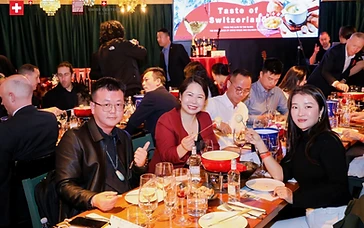
Engaging in professional business matching services enables international wineries to evaluate verified distributors, national importers, and specialized retailers in an efficient, focused setting. Rather than investing months into unvetted channel partners, wineries can secure direct meetings with regional decision-makers whose commercial portfolios complement their price segments.
To build a cohesive market entry, compare this strategy with broader regional data via our market insights analysis, review our comprehensive news and magazine reporting on evolving trade frameworks, or explore how to become an exhibitor to showcase your portfolio directly to professional Chinese trade buyers.
Conclusion: Strategic Steps for Launching in China
Launching a wine brand in China requires deliberate preparation rather than speculative exports. Wineries must prioritize GACC and GB regulatory registration, safeguard intellectual property through Chinese trademark filings, target distinct regional trade hubs, and deploy modern social commerce tactics. By pairing rigorous preliminary research with dedicated, on-the-ground B2B matchmaking, foreign producers can establish resilient, scalable, and profitable distribution channels in this evolving global market.
Sources
- USDA Foreign Agricultural Service: Wine Market Update 2025
- Dezan Shira & Associates / China Briefing: China's Wine Market Outlook: Trends and Opportunities
- MS Advisory: Wine Market in China: Trends, Growth, and Consumer Preferences
Key Takeaways
- —Confirm GACC Decree 248 facility registration and verify compliance with Chinese standards GB 2758, GB 2760, and GB 7718 prior to dispatching wine shipments.
- —Execute trademark filings for both original Latin names and phonetically tailored Chinese-character names with CNIPA to prevent trademark squatting.
- —Evaluate route-to-market strategies by assessing specialized regional distributors across the Greater Bay Area and Yangtze River Delta rather than relying exclusively on single national importers.
- —Capitalize on evolving consumer preferences by introducing aromatic white, rosé, and sparkling categories alongside red wines to appeal to younger demographics.
- —De-risk commercial entry and avoid costly distributor mismatches by utilizing curated B2B matchmaking to connect with pre-screened importers.
Frequently Asked Questions
What is GACC Decree 248 and how does it affect wine exporters?
GACC Decree 248 mandates that all foreign manufacturing, processing, and storage facilities of imported foods and beverages—including wineries—must be registered with the General Administration of Customs of China via the CIFER system. Shipments without a valid registration code printed on both external packaging and declaration documents cannot clear Chinese customs.
Why is it necessary to register a Chinese-character trademark for my wine?
China enforces a strict 'first-to-file' trademark system under CNIPA. If you only register your Latin-character brand name, a third party can legally register your phonetic Chinese equivalent. Having your own localized trademark protects brand equity, prevents counterfeit distribution, and ensures smooth consumer marketing on platforms like Xiaohongshu and Douyin.
What are the mandatory elements required on a Chinese wine back-label?
According to national standard GB 7718, the Chinese back-label must state the formal product name, ingredients, net content, alcohol by volume (ABV), bottling/production date, country of origin, storage conditions, and the name, address, and contact details of the registered Chinese domestic importer or distributor.
Should international wineries prioritize national or regional distributors in China?
While national importers offer broad reach, their portfolios are often saturated with established multinational brands. Emerging or boutique wineries frequently achieve faster market penetration, stronger commercial focus, and healthier margins by partnering with specialized regional importers operating in targeted areas like the Greater Bay Area or the Yangtze River Delta.
How can wineries verify the legitimacy of potential Chinese wine buyers?
Wineries should review domestic business licenses (*yingye zhizhao*), custom import-export registration numbers, temperature-controlled warehousing infrastructure, and existing channel coverage. Participating in dedicated B2B trade platforms and pre-vetted business matching events significantly reduces counterparty credit and operational risks.