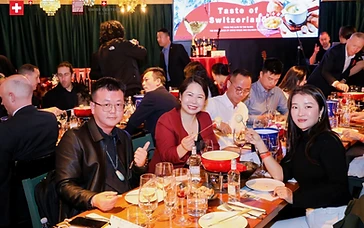
Premiumization in the China Wine Market
A commercial analysis of premiumization in the China wine market, showing how international wineries can leverage rising unit values, shifting consumer demographics, and curated B2B matchmaking to build profitable distribution.
The Value Pivot: Why Premiumization Defines China’s Wine Trade
The narrative surrounding the Chinese wine sector has fundamentally decoupled from volume-driven expansion. Overall import volumes contracted over the past decade, yet the economic reality for exporters tells a more nuanced story: premiumization in the china wine market has shifted commercial upside from high-volume, low-margin bulk distribution to high-value, quality-signaled bottled wines.
According to an academic trade assessment published in the Journal of Wine Economics (Anderson and Puga, 2025), China's average import price per liter climbed substantially over the last two decades even as domestic production contracted continuously from 2015 to 2025 (as documented by Statista, 2026). China's total wine import bill reached approximately $1.42 billion, positioning wine as one of the country's most heavily traded beverage commodities according to OEC Trade Data (2024). For foreign producers, this transition means low-end bulk strategy is economically unviable; success in mainland China now demands clear positioning within the mid-to-high tiers (typically 200 RMB to 800+ RMB retail per bottle).
The Drivers of Chinese Consumer Trade-Up
To build a viable go-to-market strategy, overseas brand owners must understand the behavioral catalysts behind this price elasticity.
1. The "Regret Minimization" Psychology and Brand Signaling
In non-traditional wine markets like China, mainstream buyers do not evaluate technical vintage ratings in isolation. Behavioral research by Dong, Ding, and Zeng published in research surveys (2024–2025) highlights that Chinese wine buyers frequently operate on a "regret minimization" model. Because wine is heavily purchased for formal gift-giving, corporate entertainment, and social dining, selecting an unfamiliar brand carries social friction. Chinese consumers lean into reputation-signaling cues—distinct regional designations (AOC, DOCa, GI), iconic packaging, and proven heritage—as proxies for quality and prestige.
2. Shifting Demographics: Urban Professionals and Female Consumers
While traditional consumption was historically anchored in official banquets and government entertainment, modern demand is steered by educated urban professionals, Gen Z, and female professionals in Tier-1 and Tier-2 cities. As outlined in a market study by MSA Asia (2026), categories like sparkling wine, premium whites, and sustainably produced organic cuvées are recording elevated velocity. These consumers drink less by volume, adopting a "drink less, drink better" approach that fuels higher margins per transaction.
3. Bilateral Realignment and Category Rebalancing
Trade dynamics have undergone profound reshuffling. On March 29, 2024, China officially lifted anti-dumping and countervailing duties of up to 218.4% on Australian bottled wine, ending a three-year freeze (MSA Asia, 2026). While Australian producers rapidly moved to reclaim distributor real estate, European and New World producers from Chile, France, and Italy consolidated their standing in boutique on-premise venues and regional specialty retail. This competitive field requires wineries to clearly communicate terroir credentials rather than relying solely on origin discounts.
Commercial Route-to-Market: Structuring for Margin
Navigating China’s premium wine sector requires avoiding legacy pitfalls. In the past, foreign wineries entered OEM agreements or offloaded containers onto generalist trading firms that lacked temperature-controlled warehousing or wine education capability. Today, premiumization demands a disciplined distribution architecture.
[ Overseas Winery / Brand Owner ]
               │
      Direct Strategic Sourcing
               ▼
   [ Specialized Tier-1 Importer ]
   (Cold-Chain Logistics / Custom Clearance)
               │
       ┌───────┴───────┐
       ▼               ▼
[ High-End HORECA ] [ Specialty Wine Retail / D2C Boutiques ]
  - Fine Dining       - Independent Cellars
  - Sommelier Lists   - VIP WeChat Communities
  - Luxury Hotels     - Douyin Live Premium Showcases
Channel Specialization: On-Premise vs. Boutique Digital
- High-End HORECA: Michelin-starred, Black Pearl-rated restaurants, and upscale Western/bistro hospitality groups are the standard setters. Securing placement on curated sommelier lists provides credibility that cascades into retail.
- Private Client Networks & Boutique Digital: Premium wines above 300 RMB thrive within VIP private tasting clubs, specialized bottle shops in cities like Chengdu, Hangzhou, and Shenzhen, and targeted social commerce channels. Unlike mass discount e-commerce, boutique merchants rely on curated storytelling.
For international wineries aiming to explore these regional buyer landscapes, our comprehensive Market Insights outline how tier-two consumption patterns are evolving across eastern and southern provinces.
Operational Risks and Regulatory Considerations
Wineries pursuing the Chinese premium tier must account for administrative hurdles and supply chain risks:
- GACC Decree 248 Compliance: All overseas food and beverage manufacturers must maintain active registration with the General Administration of Customs of China (GACC). Non-compliance halts shipments at port.
- Labeling Integrity: Chinese back-label regulations require accurate reporting of alcohol content, sulfur dioxide declaration, distributor information, and ingredient transparency. Premium brands cannot afford cargo detention over labeling mismatches.
- Intellectual Property Safeguarding: China remains a "first-to-file" jurisdiction. Trademarking Latin and Chinese transliterated names must precede commercial shipment.
- Logistical Cold-Chain Integrity: A premium bottle compromised by temperature fluctuation during summer transit destroys brand credibility with sommeliers and high-net-worth buyers.
Accelerating China Market Entry with Interwine
Establishing a footprint in a specialized market cannot be accomplished remotely through impersonal emails. Importers and fine-wine distributors demand tactile engagement, direct relationship-building (guanxi), and firsthand portfolio tasting.
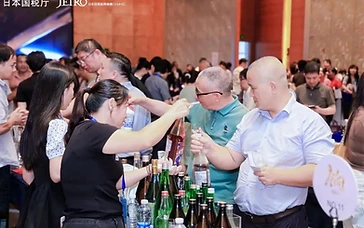
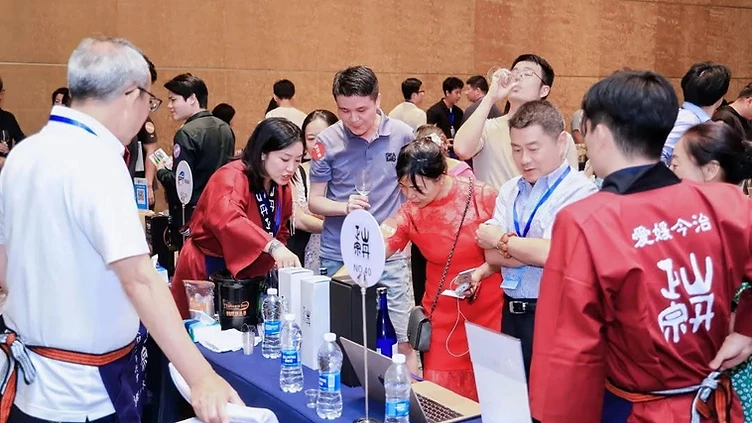
INTERWINE provides direct access to qualified Chinese wine importers, distributors, hospitality procurement managers, and corporate gift buyers across China’s commercial hubs. By booking a dedicated commercial booth and choosing to Become an Exhibitor, your estate gains instant visibility with professional wine trade delegates.
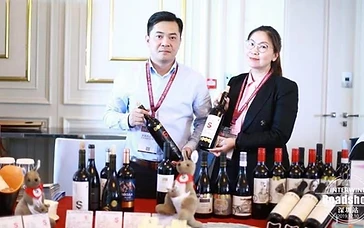
To eliminate the risk of random floor traffic, international participants should leverage our dedicated Business Matching program. This service prescreens qualified regional distributors and schedules targeted one-on-one procurement meetings matched precisely to your wine’s price tier, origin, and minimum order requirements. Before planning your itinerary, explore our global calendar of Interwine Events to choose the right trade cycle for your regional market launch.
Conclusion
Premiumization in the China wine market represents a structural, long-term trade reality. While volumetric consumption has stabilized below historical peaks, unit value and appreciation for distinct, well-crafted wines continue to expand. International estates that pivot their commercial messaging toward terroir integrity, transparent storytelling, and curated importer partnerships will establish durable distribution in one of the world's most profitable wine arenas.
Sources
- MSA Asia – Wine Market in China: Trends, Growth, and Consumer Preferences (2026)
- Journal of Wine Economics (Cambridge) – China's Wine Market: Recent Shocks, Long-Term Prospects (Anderson & Puga, 2025)
- Statista – Wine Production Volume in China 2015–2025 (2026)
- OEC World – Wine in China Bilateral Product Trade (2024)
Key Takeaways
- —China's wine market has shifted from high-volume bulk imports to premium, value-driven bottled selections.
- —Per-liter import prices have climbed as domestic production contracted continuously from 2015 to 2025 (Statista, 2026).
- —Consumer purchasing is heavily guided by 'regret minimization', favoring credible regional appellations, awards, and prestigious packaging.
- —Urban professionals, Gen Z, and female consumers are driving growth in premium whites, sparkling wines, and sustainable viticulture.
- —Bypassing mass-market commodity brokers in favor of structured B2B matchmaking and specialized HORECA importers is essential for brand equity.
Frequently Asked Questions
What price range defines the premium wine segment in China?
In mainland China, premium wines generally retail between 200 RMB and 800 RMB ($28 to $110+ USD) per bottle, with super-premium and icon wines exceeding 800 RMB. Within this bracket, consumers expect certified geographic indications, distinct packaging, and third-party quality recognition.
Why is bulk wine losing ground to bottled imports in China?
Historically, bulk wine was imported for domestic blending. However, as domestic production has declined continuously from 2015 to 2025 (Statista, 2026) and consumers have become more brand-conscious, commercial buyers prefer estate-bottled wines that offer verified origin and reputational safety.
How did the 2024 removal of tariffs on Australian wine impact the market?
China lifted punitive anti-dumping tariffs on Australian wine on March 29, 2024 (MSA Asia, 2026). This re-introduced strong Australian premium brands into the market, intensifying competition across mid-to-high price tiers and pushing competing European and South American producers to highlight distinct terroir and exclusive allocations.
How can an international winery find vetted premium importers in China?
Rather than cold outreach, participating in premier Chinese B2B exhibitions like INTERWINE and utilizing tailored business matching services allows producers to pre-qualify importers with cold-chain infrastructure, existing sommelier relationships, and legitimate customs clearances.