How to Prepare for Meetings With Chinese wholesalers
A commercial B2B guide for winery export directors on how to prepare for meetings with Chinese wholesalers, covering landed cost structures, GACC compliance, business etiquette, and commercial negotiation.
To succeed in meetings with Chinese wine wholesalers, winery export directors must arrive with far more than standard tasting notes. Securing distribution in mainland China requires an audit-ready regulatory footing, transparent landed pricing that factors in multi-tier markups and import tariffs, localized sales assets, and a thorough command of Chinese corporate protocol. Wholesalers and regional sub-distributors operate in an increasingly selective market where commercial viability, regulatory speed, and channel support matter as much as vintage pedigree.
The Shift in Wholesaler Priorities in Mainland China
China's imported wine distribution landscape has evolved dramatically. As analyzed in market briefings by the EU SME Centre (2024), the mainland trade has shifted from speculative bulk volume to disciplined, channel-specific portfolio curation. Chinese wholesalers—ranging from provincial multi-brand powerhouses to specialized regional fine wine merchants—face cautious consumer spending, heightened logistics overhead, and rigid inventory control.
According to an industry overview by BestWineImporters (2024), China once recorded more than 4,000 registered wine importers, but only a concentrated tier commands significant volume, while regional wholesalers and sub-distributors dominate downstream access to restaurants, corporate gifting, and provincial retail. When these buyers sit down with an international wine brand, their baseline question is straightforward: What is my net operating margin after customs clearance, domestic warehousing, and channel rebates, and how easily will this SKU turn over in my territory?
Wineries that prepare only generic Western marketing materials or quote exclusively ex-cellar (EXW) rates without understanding Chinese import duties risk losing credibility immediately.
Financial Architecture: Building Transparent Landed Cost Models
One of the most frequent friction points during initial wholesale negotiations is pricing architecture. Chinese wholesalers rarely purchase under EXW conditions directly unless they maintain their own bonded freight forwarding hubs. Instead, commercial talks revolve around Free on Board (FOB) at your domestic departure port or Cost, Insurance, and Freight (CIF) to major Chinese ports like Shanghai, Shenzhen, Guangzhou, or Ningbo.
To build immediate trust, export managers should arrive at meetings with a transparent spreadsheet modeling the pathway from export quotation to Chinese shelf or dining table:
- Tariff and Tax Calculations: Imported bottled wine entering mainland China faces Most Favoured Nation (MFN) tariffs (typically 14%), consumption tax (10%), and Value Added Tax (VAT, 13%). Cumulatively, customs duties and taxes inflate landed costs by roughly 43% to 50% above the CIF valuation before port handling charges.
- Importer and Wholesaler Margins: As highlighted in BestWineImporters’ trade research (2024), a wine with an FOB price of $5 commonly ends up retailing at three to four times that figure—around $18 to $20—after factoring in duties, tier-one importer margins, provincial wholesale markups, and on-premise/retail margins.
- Channel-Specific Allowances: Wholesalers targeting banqueting, wedding retail, or corporate gifting demand distinct pricing strategies compared to e-commerce partners. Be prepared to detail whether your brand offers volume-based promotional allowances (A&P budgets), sampling support, or staff training subsidies.
If your flagship tier commands high scores from international critics, maintain firm positioning. In tier-one and tier-two metropolitan gifting segments, excessive discounts can dilute brand prestige, causing Chinese trade buyers to question authenticity or legitimacy.
Regulatory Preparedness: GACC Registration and GB Compliance
Technical delays at General Administration of Customs of China (GACC) checkpoints can freeze inventory and erase a wholesaler's operating capital. Showing wholesale partners that your production facility and SKUs already meet regulatory requirements removes major perceived risks.
Before entering commercial negotiations, ensure your technical documentation includes the following:
- GACC Overseas Manufacturer Registration (Decree 248): Under GACC regulations enforced since 2022, overseas alcoholic beverage production and bottling facilities must secure formal registration on the China Import Food Enterprise Registration system before shipments depart. Carry your official registration number (beginning with
C...) directly in your company summary sheet. - National Standards (Guobiao / GB 15037): Ensure your lab analysis documents confirm adherence to China's GB 15037 standard for wine, including legal thresholds for total sulfur dioxide, sorbic acid, copper content, and synthetic colorants.
- Mandatory Chinese Back Label Drafts: Prepare sample designs of your simplified Chinese back labels. Wholesalers review these to confirm required information: Chinese product name, ingredients, legal entity of the importer/distributor, country of origin, alcoholic strength by volume, shelf life, and mandatory health warnings. Presenting pre-audited digital mockups signals market readiness.
Cross-Cultural Protocol and Chinese Meeting Etiquette
Commercial deals in China depend heavily on guanxi (mutual trust and networks) and the preservation of mianzi (face). While commercial viability remains the bottom line, adherence to business etiquette dictates whether a buyer views your management team as long-term partners.
1. Punctuality and Delegation Hierarchy
According to the Trade Commissioner Service of Canada (2024), punctuality in Chinese commerce is an explicit indicator of respect and organizational capability. Arrive 10 to 15 minutes before the scheduled meeting. Chinese business delegations place substantial importance on seniority. The most senior representative of your winery should enter first, initiate handshakes with the wholesaler's principal executive, and open introductory remarks before junior brand ambassadors or commercial analysts take the floor.
2. Exchange of Business Cards (Mingpian)
Have bilingual business cards printed with simplified Chinese on one side. Present your card holding it with both hands, Chinese text facing up and oriented toward the recipient. When receiving a buyer's card, accept it with both hands, inspect it carefully for several seconds to acknowledge their title and corporate standing, and place it respectfully on the conference table before you. Stowing a counterpart's business card immediately into a back pocket or wallet is considered disrespectful.
3. WeChat Integration
In mainland China, standard corporate email often takes a back seat to real-time communication on WeChat. Ensure your mobile device has a functioning corporate WeChat account with active QR codes. Wholesalers prefer exchanging contact cards over WeChat to share technical specifications, logistics updates, and price lists.
4. Banqueting Protocol (Yingchou)
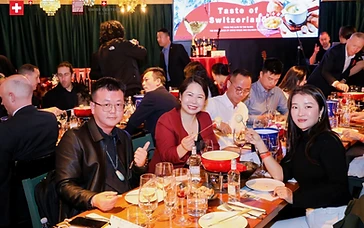
If negotiations extend into lunch or a formal dinner, follow the host’s lead. As noted by the Trade Commissioner Service of Canada (2024), the host directs seating arrangements, with the most honored foreign guest positioned directly to the right of the host. When participating in toasts (ganbei), show humility by tapping the rim of your glass slightly lower than that of your counterpart’s glass.
Tailoring Brand Storytelling for Regional Wholesalers
Generic tales about family terroir rarely resonate with Chinese commercial buyers who are balancing cash flow across multiple provinces. Wineries must adapt their presentation to highlight metrics that drive retail velocity.
+-----------------------+-------------------------------------------------------+
| Strategic Element     | Wholesaler Evaluation Criteria                        |
+-----------------------+-------------------------------------------------------+
| Geographic Fit        | Regional cuisine pairing (e.g., Cantonese vs. Hunan)   |
| Target Channels       | B2B gifting, banquet, high-end on-premise, e-commerce |
| Packaging Integrity   | Heavy glass weight, embossed closures, gift packaging  |
| Commercial Flexibility| Low initial Minimum Order Quantities (MOQs), samples   |
| Regulatory Assurance  | Active GACC facility code, pre-cleared GB lab reports  |
+-----------------------+-------------------------------------------------------+
- Regional Culinary Pairing: Tailor your wine profiles to specific provincial tastes. Bold, fruit-forward red wines with balanced oak and soft tannins often pair well with Northern and Sichuan cuisine, while mineral-driven, low-tannin whites and dry rosés find strong footing in coastal Cantonese seafood dining.
- Packaging Aesthetics: Premium packaging carries substantial cultural weight in gifting and corporate banquets. Wholesalers inspect bottle closures, neck capsules, and paper stock. Consider providing dedicated gift-box options for Mid-Autumn Festival and Chinese New Year distribution cycles.
- Sensory Localization: Ensure tasting notes and technical sheets use descriptors that resonate locally. Analogies such as dried wolfberry, sweet Osmanthus, Chinese plum, and Pu'er tea leaves translate far better across Chinese tasting panels than obscure European wild berries.
Structuring the Commercial Proposition and Closing Terms
Closing an agreement with a Chinese wholesaler requires patience, structured flexibility, and risk mitigation. During negotiations, keep several commercial levers top of mind:
- Managing Minimum Order Quantities (MOQs): Do not demand full container loads (FCL) on the initial contract. Prudent wholesalers prefer an initial test shipment of 1 to 3 mixed pallets or a consolidated partial container load (LCL) to evaluate speed of sell-through in their regional network.
- Territorial Exclusivity: Chinese buyers routinely request national exclusivity during introductory talks. Guard your brand distribution rights carefully. Grant regional, channel-specific, or provincial exclusivity (e.g., Guangdong or Zhejiang province) tied to verifiable quarterly volume milestones, rather than national distribution rights across the entire country.
- Intellectual Property Protection: Register your brand’s Romanized name and Chinese transliteration (Zhongwen) trademark with the China National Intellectual Property Administration (CNIPA) well before entering commercial discussions. Allowing an importer or wholesale intermediary to register your brand locally creates substantial legal leverage against you down the road.
- Payment Security: Standard international terms apply. Seek 30% advance deposits upon order confirmation, with the remaining 70% payable against clean Bills of Lading (B/L) prior to customs clearance handoff, or via confirmed, irrevocable Letters of Credit (L/C).
To meet qualified, pre-screened Chinese distributors and wholesalers face-to-face, consider exhibiting directly at leading Asian wine and spirits platforms. Wineries can become an exhibitor at upcoming trade events to schedule face-to-face buyer sessions. For brands seeking structured supplier-buyer introductions, leveraging curated business matching services provides direct access to provincial procurement heads. In addition, reviewing real-time industry analysis via market insights ensures your entry strategy reflects the latest Chinese market conditions.
Sources
- EU SME Centre: China’s Wine Market Guide for Exporters (2024)
- BestWineImporters: A Wine Exporter’s Guide to Finding Buyers in China and Working with Chinese Wine Importers (2024)
- Trade Commissioner Service of Canada: Business Etiquette in China (2024)
- ChemLinked: China Wine and Alcoholic Drink Regulations (2022)
Key Takeaways
- —Model transparent landed pricing (CIF vs. FOB) incorporating China's ~43-50% cumulative customs tariffs, VAT, and multi-tier wholesale margins.
- —Verify regulatory readiness by securing your GACC overseas manufacturer registration code and verifying compliance with Chinese national standard GB 15037 prior to buyer meetings.
- —Observe Chinese business protocol: ensure strict punctuality, show respect for delegation hierarchy, exchange bilingual business cards with both hands, and connect on WeChat.
- —Adapt brand storytelling to regional culinary pairings, culturally resonant tasting descriptors, and premium gifting packaging.
- —Avoid granting unrestricted national exclusivity; structure agreements around provincial or channel milestones with accessible initial trial MOQs.
Frequently Asked Questions
What landed cost calculation do Chinese wine wholesalers expect?
Chinese wholesalers expect an itemized CIF or FOB quote accounting for China's import taxes: approximately 14% Most Favoured Nation (MFN) tariff, 10% consumption tax, and 13% VAT, producing a cumulative tax rate of 43% to 50%. Quotations must show realistic headroom for tier-one importer handling (15-25%), provincial distributor margins (20-30%), and retail markups.
What regulatory documentation should be ready before meeting Chinese wine buyers?
Producers should present their GACC overseas facility registration code under Decree 248, independent laboratory test certificates matching the GB 15037 standard (total sulfur, sugars, copper, acidity), and compliant simplified Chinese back-label mockups containing mandatory product declarations.
How should export directors handle requests for national exclusivity in China?
Resist granting immediate nationwide exclusivity. Instead, offer provincial-level exclusivity (e.g., covering Zhejiang, Guangdong, or Sichuan) or channel-specific rights (such as five-star hotel groups or corporate gifting), tied to firm quarterly performance milestones and clear Minimum Order Quantities.
What is the proper business card etiquette in Chinese commercial meetings?
Cards should feature professional simplified Chinese translation on the reverse side. Present and accept cards using both hands with the Chinese text facing the recipient. Take a few moments to examine the recipient's card and title before placing it respectfully on the meeting table.
Which communication channels are standard for following up with Chinese buyers?
While formal contracts and official shipping documents are sent via corporate email, routine commercial dialogue, preliminary price checks, and logistical follow-ups are conducted over WeChat. Export managers should have corporate WeChat profiles ready before meetings begin.