How to Prioritize Asian Wine Markets for Expansion
A commercial roadmap for international wineries evaluating Asian wine markets, covering regulatory hurdles, margin structures, tier-one hubs, and emerging ASEAN demand.
The Commercial Reality of Asian Wine Market Prioritization
Expanding into Asia is rarely a singular strategic decision; it is a portfolio of distinct commercial bets across divergent regulatory frameworks, duty regimes, and route-to-market mechanics. International wine brand owners often make the mistake of treating the continent as a monolithic commercial territory. In reality, allocating sales resources to mature, lower-margin hubs like Japan or Singapore requires an entirely different operational architecture than navigating developing, high-tariff markets such as Vietnam or Thailand, or re-engaging the massive scale of Mainland China.
To prioritize Asian wine markets without depleting marketing budgets or straining producer-distributor relationships, wineries must apply an objective commercial lens. Success depends on evaluating duty structures, channel-level gross margins, route-to-market dynamics, and the real cost of distributor engagement. Brand owners can benchmark market intelligence through targeted Market Insights to ground their expansion roadmap in verifiable data rather than optimistic projections.
Strategic Market Categorization: Hubs, Scale, and Emerging ASEAN
To build a pragmatic entry plan, international wine producers should categorize Asian targets into three primary market profiles, each demanding distinct inventory, pricing, and distribution strategies.
Tier 1: Trading Hubs and Compliance Foundations (Hong Kong and Singapore)
Hong Kong and Singapore serve as regional commercial anchors. Hong Kong removed wine excise duties in 2008, maintaining a zero-tariff environment that establishes the city as Asia's primary logistics, re-export, and fine wine fine-dining nexus, documented by the Hong Kong Trade Statistics (Commerce and Economic Development Bureau). Singapore, while taxing alcohol by pure alcohol content (excise duty), offers total transparency, rapid customs clearance, and high corporate compliance.
Both hubs feature sophisticated On-Premise (HoReCa) landscapes and affluent consumers. However, local consumption volume is strictly capped by population size. Brands should utilize Tier 1 hubs for regional brand equity, private-client allocations, and re-export logistics, rather than banking on volume off-take.
Tier 2: Established and Scale Markets (Mainland China, Japan, and South Korea)
These destinations represent core volume and substantial value pools. According to market data from Mordor Intelligence (2024), younger Asian consumers are increasingly driving premium brand adoption, with domestic wine production and imported distribution adjusting to high demand for premiumization. Japan remains an established, reliable, high-volume consumer market characterized by stable consumer preference, although currency fluctuations (such as the depreciation of the Japanese Yen) compress imported wine distributor margins.
Mainland China remains the primary prize for volume-ready brands capable of adapting to shifting regional distributor models. Secondary cities across the Greater Bay Area, Yangtze River Delta, and interior tier-2 provincial capitals present resilient pockets of consumption, where mid-to-high tier brands benefit from structured gifting occasions, business dining, and an evolving retail culture.
Tier 3: Emerging Southeast Asian Growth Engines (Vietnam, Thailand, and the Philippines)
Southeast Asia is experiencing accelerated dynamic growth. Industry reporting from Source of Asia (2026) indicates that the ASEAN alcoholic beverage market is projected to reach $19.05 billion USD by 2034, fueled by urban middle-class migration and lifestyle premiumization.
- Vietnam: Driven by Hanoi and Ho Chi Minh City, imported wine demand is accelerating. Under the EU-Vietnam Free Trade Agreement (EVFTA), import tariffs on European wines are progressing toward full elimination by 2027, with Australian tariffs phasing down by 2028. However, brand owners must balance these duty advantages against a heavy Special Consumption Tax (SCT) of 65% and mandatory Vietnamese-language compliance labeling.
- Thailand: Thailand represents an active on-premise hospitality market. Research by Asia Wine Ratings (2024) recorded Thailand’s imported wine market at approximately $133 million in 2024, supported by an international tourist recovery and an excise tax restructuring that lowered duties on imported wine to stimulate premium hospitality. Nonetheless, retail advertising bans and intricate licensing require seasoned local partners.
Commercial Evaluation Matrix: Key Prioritization Criteria
When scoring potential Asian expansion destinations, wineries should rank prospective markets against four quantitative pillars before initiating shipment discussions:
+-----------------------+-------------------------------------------------------------+
| Evaluation Metric     | Strategic Impact on Commercial Margin                       |
+-----------------------+-------------------------------------------------------------+
| Tariff & Tax Burden   | Compounding ad-valorem taxes, excise duties, and VAT erode  |
|                       | retail competitiveness; determine FOB-to-shelf multipliers. |
+-----------------------+-------------------------------------------------------------+
| Route-to-Market Model | Concentrated retail versus fragmented independent on-trade  |
|                       | dictates required distributor size and promotional spend.   |
+-----------------------+-------------------------------------------------------------+
| Cold-Chain Logistics  | Tropical climates demand strict temperature-controlled      |
|                       | reefers and warehousing; adds $1.50–$3.50/case floor cost.  |
+-----------------------+-------------------------------------------------------------+
| Channel Alignment     | Fine wine labels require specialist private client brokers; |
|                       | high-yield producers require supermarket and bar volume.    |
+-----------------------+-------------------------------------------------------------+
- Landed Cost Multiplier (FOB to Shelf): Calculate the local tax compounding effect. In tariff-free hubs, the final retail price may be 2.5x to 3x FOB. In highly taxed environments like Vietnam or Thailand, compounding import duties, excise or special consumption taxes, and distributor markups push shelf prices to 4x to 6x FOB. Brands positioned in the $10–$15 FOB bracket can inadvertently be priced out into super-premium retail brackets where local consumer awareness does not support the price point.
- Importer Financial Solvency & Portfolio Alignment: Asia’s importer ecosystem is heavily polarized. Mega-importers often carry massive brand portfolios where mid-sized wineries become dormant catalog entries. Boutique importers deliver personalized sales support but often carry limited working capital and struggle to purchase full-container loads (FCL), requiring mixed consolidation.
- Regulatory Clearance Lead Times: Registration processes vary wildly. In markets like Taiwan or Singapore, customs notification takes days; in Mainland China or Vietnam, back-label clearance, lab testing, and health certificate validations can require several months before commercial discharge.
Practical Go-to-Market Execution: From Selection to Distribution
Once target markets have been shortlisted, winery export directors must implement an execution framework designed for buyer retention and volume activation.
Step 1: Establish Direct Trade Connections
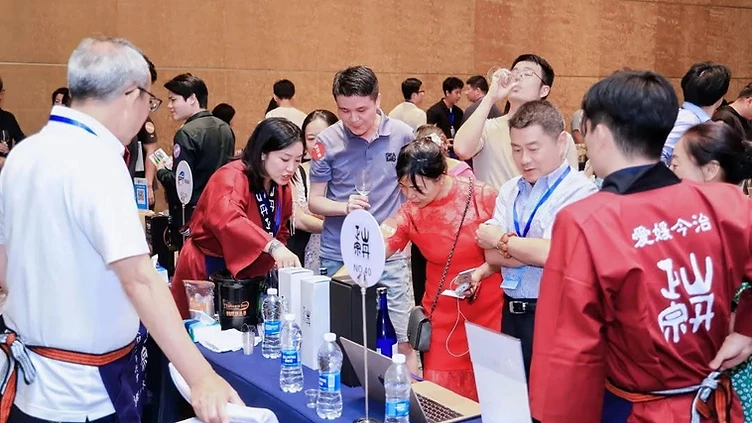
Securing commercial viability starts with face-to-face evaluation of active regional importers. Engaging qualified buyers through structured trade channels like Business Matching allows producers to assess buyer capabilities, financial stability, and warehouse cold-chain standards before committing territorial exclusivity. For brands targeting the wider Asian market, presenting products directly to pre-vetted Asian buyers at events like Become an Exhibitor helps bridge the gap between initial sampling and firm commercial contracts.
Step 2: Formulate Multi-Tiered Channel Support
Distributors in expanding Asian markets look for brand owners who co-invest in market development. Simply shipping pallets to an Asian port is a recipe for inventory stagnation. Successful international wine exporters establish:
- On-Premise Education Budgets: Subsidizing Masterclasses and staff tastings for hotel, restaurant, and bar staff in key metro areas.
- Digital Asset Localization: Translating tasting notes, regional provenance, and pairing guides into Simplified Chinese, Thai, or Vietnamese, factoring in local gastronomic profiles.
- Flexible Shipment Options: Offering split pallets, consolidated warehouse pickups in European or Australian origin hubs, or warehousing via Hong Kong or Singapore bonded facilities to minimize inventory risk for the local distributor.
Step 3: Continuously Review Market Performance
Evaluate distributor performance against depletions rather than initial ex-cellar shipments. If an importer secures an opening order but fails to reorder within nine months, review whether the blockage stems from retail margin compression, lack of channel activation, or competing brands within the importer’s portfolio. Strategic adjustments can be made after analyzing broader industry developments reported across dedicated platforms like News and Magazine.
Conclusion
Prioritizing Asian wine markets for expansion requires trade-savvy realism. By categorizing markets according to logistical ease, compliance frameworks, and long-term volume capacity, wine brands can deploy capital with surgical precision. Rather than scattering samples across the continent, focus on markets where your pricing model withstands local excise structures, your varietals match local culinary habits, and your commercial partners maintain active, direct relationships with key purchasing accounts.
Sources
- Hong Kong Commerce and Economic Development Bureau: Trade Statistics - Hong Kong - Asia's Wine Hub. URL: https://www.wine.gov.hk/en/statistics.html
- Mordor Intelligence (2024): Asia-Pacific Wine Market Size & Share Analysis. URL: https://www.mordorintelligence.com/industry-reports/asia-pacific-wine-market
- Source of Asia (2026): Vietnam vs Singapore vs Thailand: Where Should Wine & Spirits Brands Expand First in ASEAN? URL: https://www.sourceofasia.com/wine-spirits-asean-vietnam-singapore-thailand
- Asia Wine Ratings (2024): Thailand Wine Market: Import Dynamics, Tax Reform & Premium Growth Opportunities. URL: https://asiawineratings.com/en/blog/insights-1/thailand-a-market-shaped-by-tourism-premium-hospitality-import-dependence-and-regulatory-change-39.htm
Key Takeaways
- —Prioritize Asian markets by grouping them into Trading Hubs (Hong Kong, Singapore), Scale Markets (Mainland China, Japan, South Korea), and Emerging ASEAN (Vietnam, Thailand).
- —Calculate the FOB-to-shelf multiplier early; high ad-valorem taxes and excise duties in markets like Vietnam (65% SCT) drastically alter final price positioning.
- —Bypassing regional trading hubs can be costly; temperature-controlled logistics and local compliance requirements require specialized regional warehousing.
- —Rely on verified trade channels and pre-vetted buyer platforms to avoid signing non-performing, exclusive contracts with saturated distributors.
- —Brand owners must provide localized marketing, staff education, and flexible shipping minimums to ensure high inventory turnover.
Frequently Asked Questions
Which Asian wine market is best for first-time exporters?
For first-time international brands, Singapore and Hong Kong provide the clearest regulatory environments, low or zero tariffs, and sophisticated logistics infrastructure. However, for producers seeking volume scalability, entering Mainland China via targeted provincial distribution hubs or exploring rapidly growing ASEAN markets like Vietnam presents higher commercial upside.
How do import duties affect wine pricing across Asia?
Import duties and internal excise structures vary widely across Asia. While Hong Kong charges 0% import duty on wine, Vietnam imposes a 65% Special Consumption Tax along with VAT, and Thailand enforces strict excise calculations. These compounding fees can push retail shelf pricing to 4x to 6x FOB costs, requiring brands to monitor price laddering closely.
How should a wine brand evaluate prospective Asian distributors?
Examine the distributor's existing brand portfolio to ensure your labels do not conflict or get neglected behind dominant legacy houses. Verify their cold-chain logistics capabilities, payment terms, and direct relationships with targeted on-premise (HoReCa) or modern off-premise retail accounts.
Is Free Trade Agreement (FTA) status critical for market entry?
FTAs offer a competitive edge by reducing or eliminating basic import customs tariffs, such as the EVFTA for European wines entering Vietnam or ChAFTA for Australian wines entering China. However, non-tariff barriers, local excise taxes, and consumption duties still apply uniformly to all originating countries.