How Wine Brands Can Build Local Demand in Chengdu
Discover how international wine brands can capture consumer demand in Chengdu, Southwestern China's premier commercial hub, through targeted dining, retail, and distributor activation.
To successfully capture regional market share in China, international wine brands must look beyond the hyper-competitive coastal hubs of Shanghai and Guangzhou. As the economic anchor of Southwestern China, Chengdu represents one of the country's most dynamic wine consumer bases. Building sustainable local demand in Chengdu requires wine producers and regional distribution teams to align their product portfolios with Sichuan's distinct culinary landscape, establish strategic regional distributor partnerships, and activate high-density retail and on-premise channels.
The Strategic Importance of Chengdu in China's Wine Landscape
For decades, foreign wine brands concentrated commercial investment within China's traditional Tier-1 metropolitan markets. However, market analyses indicate that China's regional markets operate under vastly different commercial logics. According to findings highlighted by the China Alcoholic Drinks Association (CADA) and published by the IWSC, China's estimated 52 million wine drinkers are heavily concentrated in Tier-1 cities, with Chengdu standing alongside Shanghai, Beijing, Guangzhou, and Shenzhen as a primary consumer hub. Crucially, consumers aged 20 to 34 represent the core demographic driving regular alcoholic beverage purchasing.
Chengdu serves as the administrative, logistics, and commercial gateway to Sichuan Province and the broader Western China economic zone. Unlike the fast-paced, formal corporate dining culture dominant in northern commercial centers, Chengdu is famous for its relaxed lifestyle, leisure-driven dining, and progressive nightlife economy. International producers that treat China as a monolithic market frequently fail in Western China because they try to export eastern business models directly into Sichuan. Sustainable demand in Chengdu is driven by direct table consumption, bistros, and localized merchant distribution.
Aligning Wine Styles with Sichuan Gastronomy
Building authentic pull-demand among Chengdu's consumers requires an honest evaluation of sensory compatibility. Sichuan cuisine (Chuan cai) is globally renowned for its multi-layered flavor profile dominated by málà—a combination of fiery Sichuan chili peppers and numbing Sichuan peppercorns—alongside garlic, fermented bean pastes, and oil-rich cooking techniques. Heavy, high-alcohol red wines aged in excessive new oak clash violently with this culinary profile, accentuating bitterness and alcohol burn.
To drive high-frequency restaurant sales in Chengdu, wineries should tailor their commercial offerings to styles that complement local dishes:
- Aromatic and High-Acid White Wines: Varietals such as Riesling (dry to off-dry), Gewürztraminer, Sauvignon Blanc, and Chenin Blanc provide crisp acidity and residual fruit notes that cleanse the palate and tame culinary heat.
- Fruit-Forward, Low-Tannin Reds: Gamay, young Pinot Noir, Barbera, and un-oaked Grenache provide vibrant berry profiles and soft textures that do not conflict with chili heat.
- Sparkling Wines and Pet-Nats: Prosecco, Cava, Champagne, and pet-nats cut through the oil-rich broths characteristic of Sichuan hotpot and spiced skewers, making sparkling categories an increasingly viable on-premise volume driver.
- Fortified and Sweet Wines: Lightly chilled Muscat, late-harvest whites, and Pedro Ximénez offer contrast against pungent, savory, and spicy dishes.
Navigating the Local Channel Structure: On-Premise vs. Off-Premise
Chengdu's retail and on-premise ecosystem features unique regional dynamics that foreign brand owners must navigate effectively.
The Vibrant Bistro and Natural Wine Scene
Chengdu hosts one of China’s most concentrated communities of independent wine bistros (jiuguan), specialty cafés that transition to wine bars at night, and progressive casual restaurants. These venues—often clustered in trendy lifestyle districts like Yulin, Jinjiang, and Wangping Street—cater directly to young, middle-class professionals and creative workers. Securing listings in these venues demands proactive work with regional boutique distributors who supply localized, by-the-glass (BTG) programs. Consumer loyalty in these venues is built around discovery, distinct storytelling, and approachable pricing rather than classical appellation prestige.
Regional Retail and O2O Giants
Chengdu is the founding home base of major national retail innovators such as 1919.com, which pioneered rapid-delivery liquor O2O (online-to-offline) networks across urban China, as documented by Decanter China. While major e-commerce platforms handle generic nationwide sales, local Chengdu retail is characterized by strong neighborhood distribution, specialty bottle shops, and integrated on-demand delivery services. To support local demand, wine brands must ensure their regional distributor maintains visible stock across these local delivery nodes.
Overcoming Macroeconomic and Regulatory Headwinds
Expanding into regional China requires a clear understanding of recent market contractions and inventory realities. As detailed in academic research published in the Journal of Wine Economics by Kym Anderson (2025), China's wine consumption peaked in the mid-2010s, and total import volumes fell significantly between 2019 and 2022 due to economic shifts, anti-extravagance policies, and pandemic disruptions. While per-capita wine consumption experienced structural declines, long-term projections by the American Association of Wine Economists suggest stabilization driven by disposable income growth among younger demographics.
In practical commercial terms, this means Chengdu distributors are no longer interested in massive speculative container orders of unproven labels. Regional importers focus strictly on high stock turnover, margin protection, and co-marketing support. To win shelf space and trade loyalty in Sichuan, producers must de-risk the partnership by providing educational collateral in simplified Chinese, sponsoring local masterclasses, and executing structured business matching meetings with vetted buyers.
Commercial Roadmap: Step-by-Step Strategy for Brand Owners
To build sustained regional demand in Chengdu, wineries and exporters should execute a staged commercial rollout:
- Conduct Palate and Price-Point Mapping: Test wine ranges against local consumer tastes. Target retail price bands between 120 CNY and 280 CNY ($17–$40 USD) for high-velocity bistro and casual dining consumption.
- Select Dedicated Southwestern Distributors: Avoid signing exclusive mainland China master distribution agreements with coastal traders who lack feet on the ground in Sichuan. Contract regional partners focused specifically on the Chengdu-Chongqing economic corridor.
- Invest in Regional Trade Education: Partner with local wine schools, sommeliers, and WeChat/Xiaohongshu (RED) opinion leaders to demonstrate wine and Sichuan food pairings through live dinners and consumer tastings.
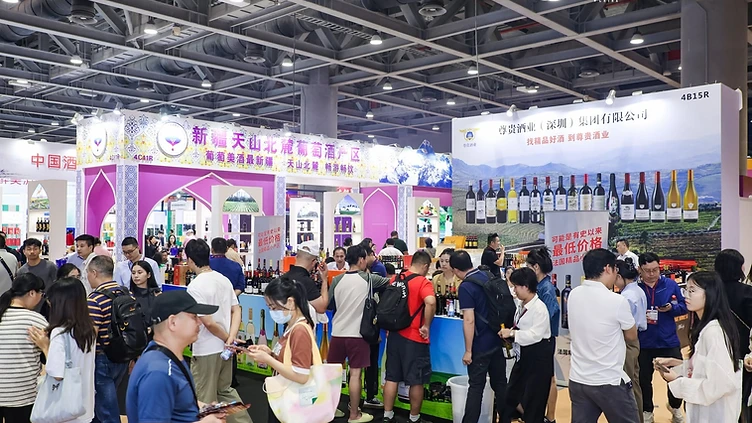
- Engage the Core Industry Ecosystem: Maintain an active presence at major international wine exhibitions and industry events to meet certified importers face-to-face. Connecting with verified commercial buyers allows wineries to gather real-time market insights and establish contractual commitments directly.
Accelerate Your Southwestern China Strategy
Expanding brand presence into inland metropolitan markets requires direct access to pre-qualified regional buyers, hotel and restaurant beverage directors, and established Sichuan logistics partners. Exporters looking to secure wholesale distribution contracts in China’s highest-potential secondary hubs can fast-track their market expansion by securing exhibition space at international trade platforms. Explore how to become an exhibitor with INTERWINE to showcase your wines directly to China's leading wine buyers and regional trade delegations.
Sources
- IWSC Market Insight: The Chinese Wine Market: https://iwsc.net/news/wine/iwsc-insight-the-chinese-wine-market
- Journal of Wine Economics (Cambridge University Press): https://doi.org/10.1017/jwe.2025.10070
- Decanter China: https://www.decanterchina.com/en/news/chengdu-food-and-drinks-fair-chinese-online-wine-shops-plan-to-raise-their-game
Key Takeaways
- —Chengdu is an essential Tier-1 regional wine consumption hub driven by lifestyle dining and consumers aged 20-34.
- —Wine styles must align with Sichuan gastronomy; high-acid whites, low-tannin reds, and sparkling wines outperform heavy, oak-dominated reds.
- —Regional success depends on partnering with Southwestern China distributors rather than relying solely on coastal master importers.
- —Bistros and casual dining venues in Chengdu drive high-velocity consumer trial and brand discovery.
- —Exhibiting at professional trade fairs like INTERWINE provides direct access to qualified regional buyers and distribution networks.
Frequently Asked Questions
Why is Chengdu an important market for imported wine in China?
Chengdu is the commercial and logistics center of Southwestern China, with a large, affluent population of young consumers (ages 20-34) who prioritize dining out, lifestyle experiences, and personal beverage consumption.
Which wine styles perform best with traditional Sichuan cuisine?
Crisp, aromatic white wines (such as off-dry Riesling, Gewürztraminer, and Sauvignon Blanc), sparkling wines, and fruit-forward, low-tannin red wines pair best with Sichuan cuisine because they do not amplify the heat of chilies and peppercorns.
Should wine brands use coastal importers to cover Chengdu?
While coastal master importers can handle customs clearance, brands usually achieve better retail and on-premise penetration by working directly with regional distributors who have established networks in Sichuan and Chongqing.
What is the typical retail price range for wine volume sales in Chengdu bistros?
The core volume price band for everyday casual dining and bistro lists in Chengdu ranges between 120 CNY and 280 CNY ($17 to $40 USD) per bottle.
How can wineries meet legitimate wine distributors in Southwestern China?
Wineries can connect directly with vetted regional distributors and importers by participating in professional B2B wine trade exhibitions like INTERWINE and attending targeted trade matching sessions.