What Chinese Buyers Need to Know About Slovenian Wine

A commercial roadmap for wine producers and regional export bodies on what Chinese wine buyers look for when evaluating Slovenian wine, from skin-contact orange wines to premium reds.
Chinese wine importers, enterprise distributors, and high-end on-trade buyers evaluate boutique European origins through clear commercial filters: gross margin viability, product differentiation against saturated French or Chilean portfolios, and authentic cultural storytelling. What Chinese buyers need to know about Slovenian wine is rooted in its rare market identity. Slovenia is not a bulk-commodity exporter; it represents high-altitude terroir, a benchmark orange wine tradition, low-intervention viticulture, and highly allocated micro-production that fits China's rapidly premiumizing first- and second-tier city channels.
For Slovenian wine producers, cooperative wineries, and regional agricultural export boards, successfully commercializing wines in mainland China requires moving beyond generic European branding. Wineries must present Chinese trade buyers with verifiable data on production allocations, distinct flavour profiles tailored to sophisticated regional palates, compliance clarity under Chinese customs inspections, and strategic B2B channel distribution.
Understanding the Buyer Landscape in Mainland China
China’s wine import landscape has evolved beyond high-volume prestige gifting into a segmented, knowledge-driven market. According to trade analysis published by MSA Advisory (2024), mainland consumers and on-premise sommeliers in tier-1 metropolises like Shanghai, Shenzhen, Guangzhou, and Chengdu increasingly prioritize diverse flavor profiles, lower-intervention winemaking, and distinctive visual packaging. Importers servicing these venues look for labels that satisfy specific commercial criteria:
- Portfolio Differentiation: Professional importers already carry commercial Cabernet Sauvignon and Chardonnay. They look to Slovenia for niche masterstrokes—such as macerated orange wines, indigenous white varieties, and structured, low-yield reds—that carry an authentic narrative and justify retail price premiums.
- Margin Defense in On-Trade Channels: Premium dining establishments, natural wine bars, and boutique bottle shops face fierce price transparency from domestic e-commerce platforms. Slovenian allocations are rarely commoditized online, allowing distributors and restaurants to maintain healthy commercial margins.
- Bilingual Brand Assets and Education: Buyers require tech sheets, point-of-sale materials, and clear pairing narratives formatted for digital platforms like WeChat. Slovenian wineries that provide localized trade marketing collateral convert B2B conversations far more reliably.
Producers seeking to validate their regional strengths against current buyer criteria can benchmark market requirements through curated Market Insights.
Slovenian Viticulture: The Core Commercial Portfolio
To persuade Chinese commercial procurement teams, producers must frame Slovenia's viticultural landscape through three primary macro-regions, each offering specific product-market fits for China's regional distribution channels.
1. Primorska (The Coastal Region): Maritime Intensity and Skin-Contact Excellence
Primorska borders Friuli-Venezia Giulia in Italy and commands substantial international acclaim. Sub-districts like Goriška Brda, Vipava Valley, and the Karst plateau yield wines with distinct export readiness:
- Rebula (Ribolla Gialla): A marquee varietal producing everything from crisp, mineral-driven dry whites to multi-month macerated amber wines. Chinese sommeliers in metropolitan bistros actively seek amber styles to complement complex Cantonese and coastal dining traditions.
- Skin-Contact / Orange Wines: Slovenia is globally recognized as an epicenter of skin-contact winemaking. For China’s natural wine bars, Slovenian macerated bottles serve as category benchmarks.
- Merlot and Cabernet Franc: As documented by The International Slovenia (2024), urban Chinese consumers gravitate toward rich, fruit-expressive reds with integrated acidity and soft, sweet tannins. Primorska’s sun-exposed terraced hills create ripe, textured Merlots that appeal to traditional red wine drinkers while delivering boutique character.
- Teran (Refošk): Grown on the iron-rich terra rossa soils of the Karst, Teran delivers an intense ruby hue, vibrant acidity, and high antioxidant levels, serving health-conscious wine connoisseurs.
2. Podravje (The Drava Region): Aromatic Precision and Crisp Whites
Located in northeastern Slovenia, Podravje is the country’s largest wine-growing region, dominated by mineral-rich, continental hilltops.
- Šipon (Furmint): Offers electric acidity, stone-fruit minerality, and significant cellar longevity. Šipon provides high-end private dining clubs with a compelling European alternative to established dry Rieslings.
- Sauvignon Blanc & Welschriesling (Laški Rizling): Delivers vibrant aromatics and food versatility, well-suited for tier-2 restaurant groups expanding their white wine by-the-glass (BTG) programs.
3. Posavje (The Lower Sava Region): Fresh Blends and Emerging Sparklers
Posavje is historically famous for Cviček—a unique, light-bodied blend of red and white grape varieties with low alcohol (around 8.5% to 10% ABV). Posavje's modern commercial value for China lies primarily in traditional-method sparkling wines (penina). With Chinese sparkling wine consumption climbing across modern retail channels (MSA Advisory, 2024), quality-to-price ratio (QPR) traditional-method sparklers represent a key expansion category.
The Commercial Scarcity Factor: Why Allocation Data Matters
When pitching Chinese importers, Slovenian wineries must explain their supply dynamics. According to European industry analysis from BestWineImporters (2024) and general viticultural records (Wikipedia, 2025), Slovenia consumes the vast majority of its wine production domestically, with per capita consumption exceeding 43 liters per year, and only approximately 6 million liters exported annually worldwide.
Rather than viewing limited production volume as a barrier, savvy Chinese importers leverage this scarcity:
- Exclusivity Value: Importers can secure exclusive national or provincial distribution agreements without fear of grey-market parallel imports undercutting their pricing.
- Targeted SKU Strategy: Boutique producers should not attempt to export 12 disparate SKUs. Selecting 2–3 flagship cuvées (such as one skin-contact white, one indigenous dry white, and one aged single-vineyard red) simplifies import customs, inventory management, and distributor education.
Regulatory, Logistics, and Customs Compliance for Mainland Entry
Chinese buyers demand strict regulatory compliance before placing purchase orders. Any documentation error can lead to extended detention at entry ports such as Ningbo, Shanghai, or Shenzhen.
[Slovenian Winery / Exporter]
       │
       ├─► 1. GACC Producer Registration (Single Window Decree 248)
       ├─► 2. Chinese Back-Label Legal Review (GB 7718 & GB 15037)
       ├─► 3. Official Analysis & Origin Certificates (EU / Slovenian Chambers)
       ▼
[Direct Cold-Chain Ocean / Rail Freight]
       ▼
[Chinese Customs Inspection & Quarantine (CIQ)]
       │
       ├─► Laboratory Testing (SO2, Ochratoxin A, Heavy Metals)
       ├─► Physical Label Verification
       ▼
[National Customs Clearance & Distribution Release]
1. GACC Enterprise Registration (Decree 248)
Under General Administration of Customs of China (GACC) Decree 248, all overseas food and beverage manufacturers must register and secure an 18-digit GACC registration number before goods arrive at the port. Shipments lacking this registered code on both inner labels and shipping outer cartons cannot clear customs.
2. Standard Formulation (GB 15037 & GB 7718)
Wines must meet National Food Safety Standards: GB 15037 (Fermented Wine) and GB 7718 (Prepackaged Food Labeling). Crucial parameters include:
- Total dry extract and sulphur dioxide ($SO_2$) limits.
- Legally mandated Chinese back labels specifying product classification, net volume, alcohol percentage, importer/distributor contact details, date of bottling, and mandatory allergen warnings.
3. Temperature Protection in Transit
Slovenian micro-lots and un-fined, low-intervention natural wines are sensitive to temperature spikes. Importers frequently stipulate thermal insulation blankets or refrigerated containers (reefers) on direct shipping routes from Koper or Northern Italian ports to ensure product integrity on arrival.
Effective Market Entry and Sourcing Channels
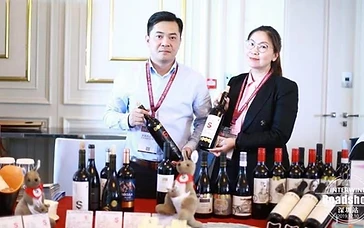
Digital marketing alone rarely convinces seasoned alcohol distributors to commit capital to unknown wine regions. Face-to-face evaluation remains the core bridge between European winemakers and Chinese procurement directors.
Wineries and regional consortiums looking to enter the market should:
- Target Professional Trade Fairs: Participating directly in specialized gatherings in Southern China—the nation's highest-volume imported wine hub—connects wineries directly with vetted buyers. Wineries looking to establish direct commercial presence can Become an Exhibitor at upcoming trade events.
- Utilize Pre-Scheduled Procurement: Wineries should engage in targeted Business Matching to hold structured meetings with qualified distributors, hospitality buyers, and regional wholesalers rather than waiting for cold foot traffic.
- Coordinate with National Wine Consortia: Collaborating with regional promotion agencies creates economies of scale, allowing multiple artisanal producers to share logistics and exhibition footprint.
Producers seeking an overview of the ongoing event landscape can explore scheduled trade gatherings across the Interwine Events calendar.
Conclusion: Capitalizing on the Slovenian Advantage in China
Chinese wine buyers do not need another anonymous white-label wine. They need distinct, defensible, high-margin narratives that resonate with curious, educated consumers. Slovenia delivers on this requirement through millennia-old viticultural history, globally recognized skin-contact craftsmanship, and strictly limited European production volumes.
By executing proper GACC compliance, preparing bilingual tech sheets, understanding regional palate preferences, and directly engaging with qualified distributors at premier Chinese trade exhibitions, Slovenian wine producers can capture a high-margin foothold in the world's most dynamic wine market.
Sources
- MSA Advisory (2024) - Wine Market in China: Trends, Growth, and Consumer Preferences
- BestWineImporters (2024) - Slovenia Wine Importers and Wine Import Trends
- The International Slovenia (2024) - Slovenia's Wine Journey to China
- Wikipedia (2025) - Slovenian Wine Industry and Viticulture Overview
Key Takeaways
- —Slovenian wine offers Chinese buyers clear portfolio differentiation through world-class skin-contact (orange) wines and low-intervention viticulture.
- —China's Tier-1 on-trade channels value Slovenian bottles because low domestic supply and strictly allocated exports defend retail margins against mass e-commerce discounting.
- —The Primorska region serves as the commercial flagship, delivering mineral-driven Rebula, high-scoring skin-contact whites, and rounded, low-acid Merlots favored by Chinese palates.
- —Producers must secure GACC registration under Decree 248 and design compliant Chinese back labels (GB 7718 / GB 15037) prior to shipping.
- —Direct B2B face-to-face engagements and pre-arranged business matching events represent the most effective route to signing qualified importers in mainland China.
Frequently Asked Questions
Why are Chinese buyers interested in Slovenian orange and amber wines?
Slovenia is recognized globally as an epicenter of skin-contact winemaking, particularly from regions like Goriška Brda and Vipava Valley. Chinese sommeliers and natural wine bars seek these unique wines to differentiate their wine programs and offer versatile gastronomic pairings with complex Chinese cuisines.
What grape varieties from Slovenia appeal most to the Chinese palate?
For whites and amber wines, Rebula (Ribolla Gialla), Šipon (Furmint), and Sauvignon Blanc lead buyer interest. For red wines, ripe Merlots and balanced Bordeaux blends from Primorska align well with the traditional preference for smooth, low-acidity reds with soft tannins.
What regulatory approvals are mandatory before exporting Slovenian wine to China?
Wineries must complete overseas manufacturer registration through China Customs (GACC) under Decree 248 to obtain their 18-digit enterprise registration number. In addition, bottles must comply with GB 7718 for labeling and GB 15037 for physical and chemical analysis standards.
How does the low export volume of Slovenian wine impact commercial agreements?
Because Slovenia exports only about 6 million liters annually and consumes most production domestically, Chinese importers can secure exclusive regional or national distribution arrangements. This scarcity protects distributors from grey-market imports and destructive online price competition.
How can Slovenian wine producers connect directly with vetted Chinese wine importers?
The most effective approach is participating as an exhibitor at premier mainland trade fairs such as Interwine, utilizing targeted business-matching services to meet pre-qualified importers, fine-dining procurement directors, and specialty regional distributors.