Why Hungarian Wineries Should Exhibit at Interwine
Discover why Hungarian wineries should exhibit at Interwine. Expand export routes across China and Asia, meet qualified buyers in Guangdong, and leverage premium varietals like Tokaji, Furmint, and Bikavér.
Hungarian wineries should exhibit at Interwine because China and the wider Asian beverage landscape represent an expanding, high-margin export frontier for distinctive Central European wines. While traditional Western European markets contend with saturated retail channels and flat consumption, Hungarian winemakers are experiencing a marked export resurgence driven by premiumization. According to official figures released by the Hungarian Wine Marketing Agency in 2026, Hungarian wine export volume expanded by 15.5% in 2024 to 1.29 million hectoliters, with export value climbing 17.9% to €133.8 million, followed by an additional 4.5% increase in bottled wine export volumes reaching 40.3 million liters in 2025.
To sustain this momentum beyond domestic borders and intra-European trade, Hungarian producers and export consortiums must establish direct commercial footholds in Asia. As the foremost international B2B alcoholic beverage platform in Southern China, Interwine offers a focused gateway into the Greater Bay Area—China’s wealthiest regional market—allowing Hungarian producers to capture high markups, secure vetted importers, and elevate national varietals like Furmint, Hárslevelű, Tokaji Aszú, and Kékfrankos.
The Commercial Case for Hungarian Wine Diversification
For decades, Hungarian wine exports have maintained high exposure to neighboring Central and Eastern European partners alongside mature Western destinations like Germany and the United Kingdom. However, an empirical study published in the Journal of Wine Economics (Cambridge Core) in 2025 demonstrated that international market diversification creates a measurable "learning-by-exporting" effect, enabling Hungarian wineries to maintain structurally higher pricing markups compared to producers restricted to regional channels.
Capturing these margins requires penetrating markets with strong purchasing power and an appetite for premium foreign products. According to MS Advisory (2026), China’s wine sector was valued at $40.4 billion in 2024 and is projected to expand at a compound annual growth rate (CAGR) exceeding 11%. As consumers in tier-one and tier-two cities seek authentic heritage wines beyond standard mass-market labels, Hungarian wines present an ideal value proposition often described as "exotic familiarity." They offer centuries of documented European pedigree, such as the royal heritage of Tokaj, while presenting novel grape varieties that refresh tired restaurant lists and specialty retail shelves. Producers seeking to establish commercial relationships with active distributors can become an exhibitor to position their portfolios directly in front of this high-yield audience.
The Strategic Advantage of Guangdong and the Greater Bay Area
Location dictates distribution efficiency when entering Mainland China. The Greater Bay Area (GBA)—encompassing Guangdong province, Hong Kong, and Macau—forms the economic engine of China's imported wine trade. Industry trade data recorded in the Interwine Trade Index indicates that over 60% of Mainland China's wine importers are headquartered in Guangdong. With an affluent provincial population exceeding 110 million and an established culture of corporate entertaining and fine dining, the region possesses both the capital and the logistics infrastructure necessary to move imported wine inland.
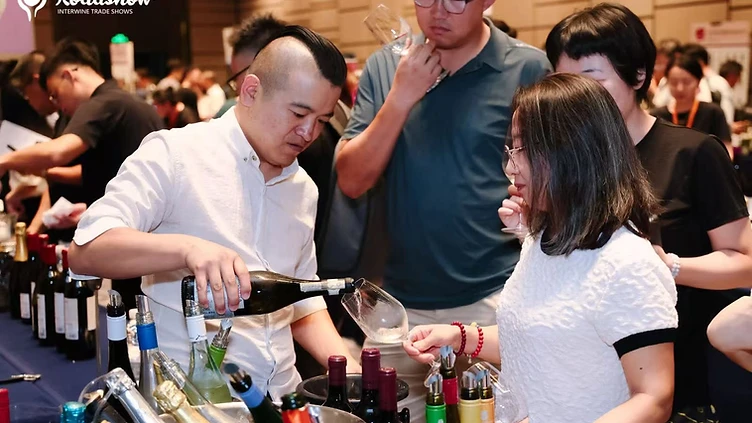
Interwine takes place biannually in Guangzhou at the Canton Fair Complex (Pazhou), operating as the only international wine and spirits exhibition in the Greater Bay Area officially approved by the Ministry of Commerce of the People's Republic of China. Unlike generalized consumer food fairs, Interwine operates strictly on a professional B2B format. Hungarian cellars do not spend exhibition hours pouring samples for casual attendees; instead, booths interface directly with vetted commercial distributors, state-owned enterprise procurement directors, boutique hotel food-and-beverage heads, and regional supply chain aggregators. Producers planning their travel logistics can review regional connectivity via arrival and transportation to optimize transit to the venue.
Matching Hungarian Portfolios to Chinese Market Demands
Successful trade execution requires aligning Hungarian regional strengths with evolving Chinese consumer preferences. Far from being a monolithic market, Chinese purchasing behaviors have divided into clear functional tiers where Hungarian wines hold structural competitive advantages:
1. Tokaj and the Premiumization of Sweet Wines
China has consistently maintained strong consumption demand for balanced, naturally sweet dessert wines. Tokaji Aszú and late-harvest Furmint represent global benchmarks with world-renowned standing. Tokaj's status as a UNESCO World Heritage cultural landscape provides immediate marketing credibility. At Interwine, Hungarian producers of Tokaji Aszú (5 and 6 Puttonyos) can pitch these premium bottles directly to private-client clubs, high-end gift supply companies, and luxury hotel hospitality buyers seeking prestigious alternatives to Sauternes or Icewine.
2. Mineral-Driven Dry Whites: Furmint and Hárslevelű
China's major urban culinary centers—particularly the Cantonese gastronomic traditions of Guangdong—place an exceptional emphasis on freshness, delicate seafood, and subtle umami balance. Volcanic, high-acid dry Furmint and aromatic Hárslevelű cut through rich dim sum, roasted poultry, and shellfish with precision. As the Chinese wine market shifts toward crisp white wines and lower-intervention winemaking, dry Hungarian whites offer sommelier-backed novelty that fits both premium on-premise dining and modern bistros.
3. Food-Friendly Reds: Bikavér and Single-Varietal Kékfrankos
While full-bodied Cabernet Sauvignon historically dominated Chinese imports, modern consumers increasingly prefer balanced, food-friendly red profiles. Egri Bikavér (Bull's Blood) and Szekszárd blends, alongside indigenous Kadarka and spicy Kékfrankos, provide expressive fruit, vibrant acidity, and manageable alcohol levels. In commercial tastings, Hungarian reds routinely outperform comparably priced Western European appellations, providing commercial importers with robust profit margins without sacrificing structural quality.
To discover upcoming sommelier panels, masterclasses, and regional showcases scheduled for the next trade fair, review the latest interwine events agenda.
Commercial Risk Mitigation and Buyer Matching
Entering Asian trade corridors presents legitimate operational risks: regulatory compliance under China’s General Administration of Customs (GACC), navigating bilingual labeling rules, managing trademark registrations, and identifying distributors with actual liquidation capability. Hungarian wineries cannot afford speculative market visits that fail to produce binding contracts.
Interwine systematically mitigates these risks through structured commercial services:
- Targeted Business Matching: Interwine's dedicated pre-fair matchmaking team pairs overseas wineries with verified buyers according to price point, style, volume, and target channel (retail, on-premise, corporate gifting, or e-commerce). Exhibitors can utilize tailored business matching meetings throughout the exhibition.
- Extensive National Roadshow Network: Interwine operates regional trade tasting tours across more than 40 tier-two and tier-three Chinese cities annually, providing foreign wineries year-round exposure to regional distribution networks well beyond standard coastal hubs.
- Administrative Support: To ensure smooth travel compliance for winery executives, Interwine provides official documentation and visa assistance via invitation letter and visa support.
Strategic Recommendations for Hungarian Exhibitors
To maximize return on investment at Interwine, Hungarian wineries and regional export bodies should implement a deliberate commercial playbook:
- Lead with Hero Appellations: Present a cohesive national story anchored by Tokaj and supported by high-performing regions such as Eger, Villány, Szekszárd, and Lake Balaton. Coordinated collective pavilions organized through trade associations consistently attract heavier trade footfall than isolated small stands.
- Offer Dual Portfolio Pricing: Provide entry-level dry wines intended for scalable distribution alongside limited-allocation, high-scoring premium bottles targeted at private corporate allocations and specialty retail.
- Prepare Clear Technical and GACC Documentation: Ensure that all nutritional, analytical, and origin certificates comply with Chinese import standards in advance, allowing qualified buyers to calculate landed costs immediately at the stand.
- Host Focused Masterclasses: Onsite guided tastings led by recognized wine educators demystify indigenous grapes (like Furmint, Olaszrizling, and Juhfark), turning curiosity into concrete wholesale purchase orders.
Summary and Next Steps
As Hungarian wine exports build upon their sustained volume and revenue increases, expanding into Asia is no longer a secondary option—it is an economic imperative. With China's imported wine sector expanding and the Greater Bay Area driving over half of national imports, Interwine provides the focused B2B infrastructure Hungarian winemakers need to establish reliable distribution channels. Secure your presence on the trade floor by choosing to become an exhibitor at the upcoming edition of Interwine.
Sources
- Hungarian Wine Marketing Agency (bor.hu) - Official Hungarian wine export volume, revenue, and bottled trade statistics (2026).
- Journal of Wine Economics (Cambridge University Press) - Wine markups, learning-by-exporting, and international trade performance in Hungary (2025).
- MS Advisory - China wine market size, projected CAGR, and consumer dynamics (2026).
- Interwine Trade Index (Wikipedia) - Guangdong imported wine distribution shares and exhibition overview (2025).
Key Takeaways
- —Hungarian wine exports demonstrated strong momentum, with export revenues rising 17.9% in 2024 to €133.8 million and bottled exports expanding by 4.5% to 40.3 million liters in 2025.
- —China's wine market was valued at $40.4 billion in 2024 and is projected to expand at an 11%+ CAGR, creating high-margin opportunities for European producers.
- —Over 60% of Mainland China's wine importers are based in Guangdong, making Interwine in Guangzhou the strategic epicenter for regional market entry.
- —Hungarian indigenous grapes such as Furmint, Hárslevelű, and Kékfrankos align cleanly with modern Chinese gastronomic trends and seafood-centric Cantonese cuisine.
- —Interwine offers structured business matching, city roadshows across 40+ markets, and official visa support to streamline B2B export contracts.
Frequently Asked Questions
What makes the Chinese market viable for Hungarian wineries today?
China represents a $40.4 billion wine market (2024) projected to grow at over 11% CAGR. While standard mass-market wines face saturation, urban Chinese consumers and professional sommeliers are actively seeking authentic, terroir-driven European heritage wines with unique flavour profiles—a category where Hungarian Furmint, Tokaj, and Bikavér hold a distinct quality-to-price advantage.
Why is Interwine held in Guangzhou, Guangdong province?
Guangdong is the economic hub of the Greater Bay Area and accounts for more than 60% of Mainland China's imported wine distribution. Guangzhou provides direct proximity to this dense network of importers, wholesalers, corporate buyers, and high-end hospitality venues, making it the most commercially effective location to secure regional trade contracts.
Which Hungarian wine styles show the strongest demand in Southern China?
Tokaji Aszú and late-harvest dessert wines perform exceptionally well in luxury hospitality and corporate gifting. Concurrently, crisp, mineral-forward dry whites (Furmint and Hárslevelű) pair seamlessly with delicate Cantonese cuisine, while elegant, food-friendly reds like Egri Bikavér and Kékfrankos appeal to younger, health-conscious urban drinkers.
How does Interwine assist overseas wineries with buyer matchmaking?
Interwine provides specialized pre-fair matchmaking services that evaluate each winery's pricing, volume, and target segments to arrange one-on-one meetings with verified Chinese distributors. In addition, Interwine runs annual roadshows across more than 40 Chinese cities, ensuring ongoing distributor engagement.
Does Interwine offer logistics and visa assistance for Hungarian exhibitors?
Yes. Interwine supplies official government-approved invitation letters for trade visa applications and connects exhibitors with certified logistics and customs partners who specialize in sample clearance, GACC registration, and bilingual labeling requirements.