Industry Interview: A HoReCa wine buyer on Distribution partnership lessons


In this candid B2B industry interview, a veteran HoReCa wine buyer breaks down critical distribution partnership lessons, supply chain metrics, and margin protection strategies.
Selecting the right wine portfolio is only half the battle for hospitality operators; the mechanics of how that wine reaches the cellar determine whether a beverage program survives. In this B2B industry interview, we sit down with a seasoned HoReCa beverage director managing multisite hotel and dining operations to unpack practical distribution partnership lessons, margin defense, and supply chain alignment.
The Shifting Realities of HoReCa Wine Procurement
Interwine Editorial: Over the past two seasons, macroeconomic volatility, inventory carrying costs, and distributor consolidations have forced hospitality operators to rethink procurement. What is the fundamental issue facing beverage directors today?
HoReCa Buyer: The core issue is that many distributors still operate like transactional freight carriers rather than active commercial partners. According to data reported in the Shanken Impact Databank Report (2024), wholesale distribution has consolidated heavily—with the top two wholesalers controlling a projected 53% of the U.S. market, and the top 10 capturing 81.5%. This level of consolidation across major global markets means distributor books are bloated with thousands of SKUs. When you operate a high-volume hotel lounge or a fine-dining dining room, you cannot afford to have a distributor whose sales rep does not understand vintage turnover, temperature-controlled transit, or lead times.
For HoReCa buyers, wine is an operational risk. If a by-the-glass (BTG) placement runs out on a Friday evening because the distributor failed to meet their delivery window, our front-of-house staff bears the cost, and our gross profit takes an immediate hit. The modern on-premise buyer looks for tight operational reliability, audited storage conditions, and direct producer transparency.
Lesson 1: Vetting Wholesale Partners on Supply Chain Integrity
Interwine Editorial: When establishing a contract with a new wine distributor or importer, what operational metrics take precedence over catalog size?
HoReCa Buyer: Catalog depth is often a distraction. A distributor showing 2,000 labels means very little if 70% of them sit out of stock at regional bonded warehouses. Academic research on modern wine supply chains published by the Association for Supply Chain Management (ASCM) and ResearchGate (2025/2026) emphasizes that beverage logistics require integrated physical and digital information flows. Wine must be kept within precise temperature thresholds (ideally around 50°F to 55°F) throughout warehousing and intermodal trucking to avoid heat degradation before it hits our cellar.
In our vendor scorecards, we assess three primary operational pillars:
- On-Time, In-Full (OTIF) Delivery Rates: We require a baseline OTIF score of at least 96%. Anything lower disrupts service rotas and forces us to hold excess safety stock.
- Cold-Chain Auditability: Distributors must demonstrate temperature-controlled consolidation hubs and refrigerated delivery fleets, particularly during peak summer logistics.
- Inventory Visibility via EDI/API: We prioritize distributors that offer live inventory feeds over legacy sales sheets that get updated once a month.
Buyers who want to secure robust distribution pipelines should attend professional trade forums and engage in structured business matching to assess how effectively importers manage logistics from dock to cellar door.
Lesson 2: Direct Producer Engagement and Eliminating 'Ghost SKUs'
Interwine Editorial: Many HoReCa operators complain about listing a boutique estate on their list only to discover six weeks later that vintage exhaustion or regional depletion prevents reorders. How do you mitigate this?
HoReCa Buyer: This is the classic 'ghost SKU' problem. Wholesalers pitch an allocation, get it placed on our physical menu—which costs money to print and train staff on—and then reveal they only held three cases in inventory.
Our solution has been establishing direct relationships with producers even when statutory laws require procurement via licensed intermediate distributors. By establishing direct lines with estate owners and export managers at international trade exhibitions, we negotiate ring-fenced allocations before the inventory lands at the distributor. When evaluating potential supplier partners, we study verified profiles on the exhibitor directory to confirm production capacity, harvest stability, and export consistency before committing to physical menu listings.
Lesson 3: Negotiating Margins, Credit Terms, and Pouring Rights
Interwine Editorial: With hospitality margins tightening under labor and energy pressures, how must procurement teams structure pricing agreements with distributors?
HoReCa Buyer: Transparency in pricing tiers is mandatory. The traditional wholesale approach was built on opaque retrospective discounts and complex rebate schemes. Today, we insist on net-net commercial pricing upfront.
Key contractual mechanisms we employ include:
- Fixed-Margin BTG Agreements: For high-volume pouring wines, we fix carton pricing across a 12-month window with predetermined escalation caps tied to verified excise or logistics index increases.
- Staff Training and Educational Subsidies: If a distributor wants portfolio exclusivity or multiple placements on our reserve list, their certified sommeliers must deliver structured cellar training and service education for our team.
- Flexible Payment Terms: We balance standard 30-day settlement windows against dynamic early-settlement discounts (e.g., 2% 10 Net 30), ensuring cash flow stability for both parties.
To see how global operators align pricing structures against emerging consumer trends, reviewing comprehensive market insights provides vital benchmarks against regional price sensitivities.
Lesson 4: Navigating Consolidation and Identifying Specialist Importers
Interwine Editorial: Given the consolidation among legacy distributors, how do you discover emerging regions and independent producers that deliver distinctive guest experiences?
HoReCa Buyer: Mega-distributors are great for commodity volume, but they rarely provide discovery. To find character-driven wines—whether indigenous varietals from Central Europe, low-intervention estates from the Mediterranean, or boutique New World projects—we deliberately divide our vendor mix. We award roughly 60% of baseline volume to top-tier logistics distributors for reliability, and 40% to agile, specialist regional importers.
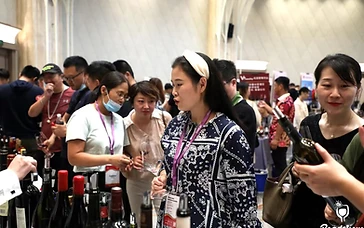
Meeting these focused importers requires getting out of the restaurant and onto the exhibition floor. Attending regional and international trade fairs is indispensable for tasting current vintages alongside the people who make and clear them through customs. Hospitality operators preparing their annual buying itineraries should plan ahead and book your visit to high-yield trade fairs, ensuring dedicated time to meet vetted commercial partners who understand the specialized demands of the HoReCa channel.
Strategic Takeaways for Wine Buyers and Producers
The lessons from on-premise procurement are straightforward: distribution is an operational partnership, not a paper transaction. Wine buyers must hold wholesalers accountable to quantitative performance standards, demand cold-chain verification, and build direct rapport with producers to safeguard continuity. Concurrently, wineries seeking hospitality placement must equip their distribution partners with accurate allocation schedules, promotional collateral, and real-time inventory commitments.
Sources
- USA Wine Ratings: U.S. Wholesale Wine Distribution Today & What the Future Promises
- Association for Supply Chain Management (ASCM): Innovation by the Glass - Lessons from the Wine Supply Chain
- ResearchGate: Supply Chain Management in the Wine Market
- International Wine Challenge (IWC): The New Geography of American Wine Buying
Key Takeaways
- —Distributor consolidation requires buyers to audit actual operational performance rather than book size.
- —A baseline On-Time, In-Full (OTIF) delivery rate of 96% protects hospitality programs from margin-killing out-of-stock events.
- —Direct producer engagement eliminates 'ghost SKUs' by securing ring-fenced allocations prior to wholesale warehousing.
- —Cold-chain logistics and continuous temperature-controlled warehousing are critical contractual requirements for quality preservation.
- —A split-vendor model (60% legacy logistics distributors, 40% specialized boutique importers) balances scale with catalog distinctiveness.
Frequently Asked Questions
What is the biggest operational risk in HoReCa wine distribution partnerships?
The primary operational risk is inventory inconsistency resulting in 'ghost SKUs' and low On-Time, In-Full (OTIF) delivery rates, which directly harm beverage sales and customer satisfaction when printed menu placements are out of stock.
How do hospitality buyers assess distributor logistics reliability?
Buyers evaluate distributor performance using quantitative scorecards measuring OTIF fulfillment rates, cold-chain transport auditability (maintaining ~50°F to 55°F), and the availability of live electronic inventory data (EDI/API integration).
Why should HoReCa buyers connect directly with producers if buying through distributors?
Connecting directly with estate owners and export managers allows buyers to secure ring-fenced volume allocations, verify vintage changeovers, and arrange educational support, eliminating reliance on intermediary sales reps who may not prioritize small allocations.
What is the recommended supplier split for modern on-premise wine programs?
A balanced procurement model typically allocates 60% of volume to high-capacity wholesale distributors for staple, high-turnover lines, and 40% to agile, boutique importers who supply distinctive, high-margin artisan wines.