Finding Champagne and Sparkling Wine Importers in China: A Channel-Fit Guide

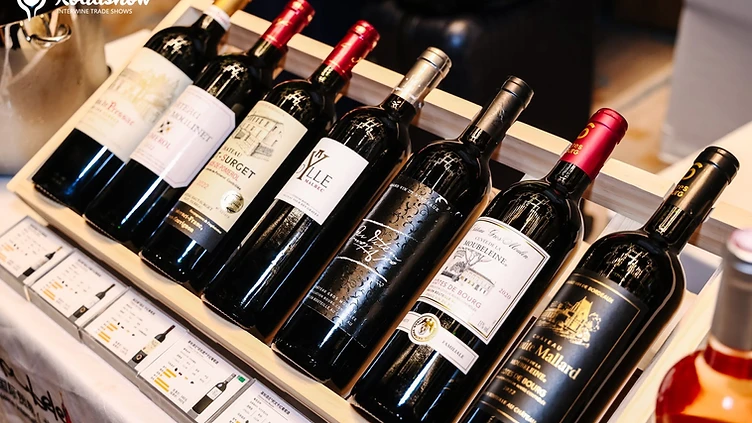
A commercial B2B guide for wine producers and export managers evaluating route-to-market channels, regulatory requirements, and importer profiles for Champagne and sparkling wine across mainland China.
Finding the right champagne and sparkling wine importers in China requires moving past broad distributor lists and aligning your product profile with distinct downstream sales channels. In China's premiumizing beverage landscape, sparkling wine (HS code 220410) has demonstrated counter-cyclical resilience. Data reported by the USDA Foreign Agricultural Service revealed that sparkling wine imports to China grew by 15.3% year-on-year across January–May 2026, while the broader wine category experienced volume contraction alongside rising average per-liter prices ($6.86/L in 2025).
For international sparkling wine producers, sparkling cuvées, Cava, Franciacorta, Prosecco, and Champagne houses, success does not stem from signing an all-encompassing national importer on day one. It requires auditing channel mechanics—from upscale on-premise dining and regional boutique retail to social commerce—and partnering with importers equipped with cold-chain storage and channel-specific accounts.
China's Sparkling Wine Landscape: Premiumization and Segmentation
While still wine imports faced broad volume corrections in recent years, sparkling wine has benefited from shifting social habits among younger, affluent urban demographics across Tier-1 and emerging Tier-2 hubs like Shanghai, Shenzhen, Guangzhou, and Chengdu. MS Advisory notes that the market is transitioning into a mature, selective landscape where consumers increasingly demand premium experiences for celebrations, casual social gatherings, and food pairings.
However, entering this market requires navigating the structural bifurcation of sparkling wine distribution:
- Prestige Cuvées and Grower Champagnes: Sourced almost exclusively by specialized on-premise importers, bespoke hospitality suppliers, and private client distributors operating across Michelin-starred restaurants, luxury hotel bars, and high-end member lounges.
- Accessible Sparkling Categories (Prosecco, Cava, Sekt, Cremant): Distributed via contemporary retail (such as Ole’, Sam’s Club, Costco, and Hema Fresh) as well as emerging social commerce platforms (such as Douyin and RED/Xiaohongshu), requiring high delivery efficiency and promotional agility.
Producers examining broader regional dynamics can explore our overview of the Asia Wine Market to contextualize mainland China alongside Southeast Asian growth corridors.
Evaluating Chinese Importers by Channel-Fit
Selecting an import partner should never be based solely on catalogue size. Importers specialize in targeted routes to market, each with unique pricing dynamics, payment terms, and inventory turnover rates.
Importer Channel Comparison Table
| Channel Archetype | Target Accounts & Outlets | Margin & Price Dynamics | Shelf-Life & Velocity | Typical Importer Profile | | :--- | :--- | :--- | :--- | :--- | | Luxury On-Trade & Fine Dining | 5-star hotels, rooftop lounges, private clubs, bistro circuits | High margins (3x–4x CIF), protected pricing, limited discounting | Low to moderate velocity; temperature control is paramount | Boutique regional fine wine specialists; direct sommelier networks | | Modern Premium Grocery | Ole’, Hema Premier, Sam’s Club, Costco | Lower producer margin; listing and slotting fees common | High turnover, seasonal spikes (Mid-Autumn, Lunar New Year) | Large-scale FMCG distributors; state-backed or multinational logistics hubs | | Cross-Border E-Commerce (CBEC) & Social | Douyin livestreaming, Tmall Flagship, RED boutique shops | Price-sensitive, heavy discount expectations during shopping festivals | Fast volume movement; high marketing budget requirement | Digital-first agency importers; MCN (Multi-Channel Network) retail operators | | Regional Secondary Wholesalers | Tier-2/Tier-3 regional dining networks, corporate gift buyers | Intermediate margins; regional pricing disparities if unmonitored | Irregular, relationship-driven ordering cycles | Local provincial traders; strong local corporate network ties |
Regulatory and Compliance Prerequisites
Before an importer can clear a consignment of sparkling wine through General Customs Administration of China (GACC), foreign producers must satisfy essential regulatory baselines established by Chinese authorities. (Note: The following guidance reflects standard procedures; producers should consult licensed customs brokers or legal counsel for individual shipments.)
1. GACC Enterprise Registration (CIFER Platform)
Under GACC Decrees 248 and 249, every foreign manufacturing, processing, and storage facility exporting alcoholic beverages to China must hold valid facility registration. As detailed by the EU SME Centre, wine is classified as a low-risk food product, allowing producers to complete self-registration directly on the CIFER platform using their national business registry identity. Upon approval, GACC issues an 18-digit registration code valid for five years, which must be clearly printed on export documentation and packaging.
2. Label Compliance and Ingredient Declarations
Sparkling wine labels must be compliant with national food safety standards (GB standards):
- Chinese Back-Labels: Must detail the Chinese product title, ingredients (including explicit sulfite declarations), alcoholic strength, net volume, country of origin, producer name, and the legal entity details of the mainland importer.
- Uncertified Claims: Foreign organic, biodynamic, or natural certifications cannot appear in Chinese text or as recognized official claims on the label unless formally certified under domestic Chinese certification systems.
- QR Code Integration: Increasingly, importers leverage back-label QR codes linking to traceability data, sensory profiles, or official brand channels.
- Wood Packaging Materials: Wooden pallets and packaging crates must comply with the international ISPM 15 heat-treatment standards.
3. Landed Duty and Cost Calculations
Standard import duties, consumption taxes, and VAT apply to bottled sparkling wine imports. Even if tariffs vary based on free trade agreements (FTAs), producers must evaluate landed costs. As the EU SME Centre notes, landed wholesale or retail pricing in China typically ranges between 2.5 to 3.5 times the original CIF cost once clearance, domestic freight, warehousing, and channel margins are factored into calculations.
Practical Due Diligence: Vetting an Importer's Channel Reality
When entering discussions with candidate distributors, wineries should conduct thorough operational due diligence to confirm channel authenticity:
- Inspect Cold-Chain and Storage Infrastructure: Sparkling wines, specifically bottle-fermented styles with delicate effervescence, deteriorate rapidly in uncontrolled conditions. Verify whether candidate importers utilize temperature-controlled warehousing, especially in southern ports like Guangzhou or Shenzhen during summer months.
- Audit Channel Exclusivity vs. Territory: Avoid broad "exclusive national distribution" contracts with unproven partners. Grant exclusivity tied to defined channels (e.g., exclusively for on-premise boutique hotels) or specific geographical territories (e.g., the Greater Bay Area or the Yangtze River Delta), with explicit minimum volume performance clauses.
- Price Preservation Protocols: High visibility on e-commerce channels can lead to severe discounting during e-commerce events (such as 618 or 11.11), which can dismantle on-premise sommelier support. Ensure distribution contracts define strict minimum advertised price (MAP) terms across digital channels.
Hypothetical Commercial ROI Model: General Trade Allocation
To understand the financial mechanics of supporting an import partner in China, review this hypothetical economic breakdown based on a single pallet trial of premium sparkling wine.
Assumptions (Hypothetical Model):
- Shipment Volume: 1 pallet (112 cases = 672 bottles of 750ml traditional-method sparkling wine)
- Producer Ex-Cellar Price: €12.00 per bottle (€8,064 total turnover)
- Direct Production Cost (COGS): €4.50 per bottle (€3,024 total)
- Reefer Logistics & Insurance to Shanghai/Guangzhou: €1,200 total
- Dedicated Marketing Support / Point-of-Sale (POS) Contribution: €1,000 total
- Regulatory CIFER and Label Verification Consulting: €600 total
Financial Calculation:
- Gross Revenue: €8,064
- Total Direct Costs: €3,024 (COGS) + €1,200 (Freight/Insurance) + €1,000 (POS/Marketing) + €600 (Compliance) = €5,824 total project expenditure.
- Producer Contribution Margin: €8,064 - €5,824 = €2,240 (or ~27.8% net project margin on the initial trial pallet).
Strategic Takeaway: While initial pallet margins reflect setup and compliance overheads, subsequent containerized orders (typically 14,000+ bottles) amortize fixed compliance outlays, increasing the operational contribution margin while establishing stable brand volume.
Meeting Qualified Importers Face-to-Face
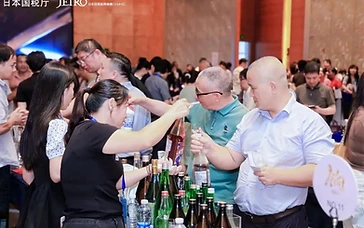
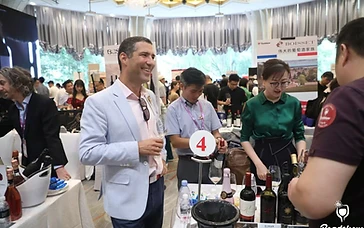
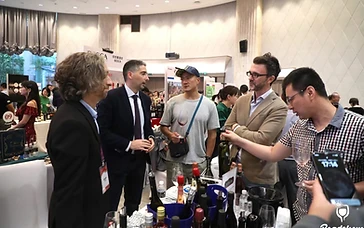
Long-distance correspondence rarely yields signed import agreements in China. Sustainable distribution relationships require in-person engagement, structured tastings, and structured commercial validation.
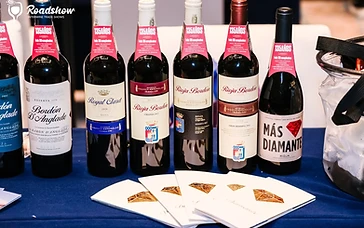
Wineries planning market entry should prepare for regional commercial exhibitions and specialized business matching. Producers looking to verify active regional buyers and network structures can review current market participants in the Exhibitor Directory, or access tailored one-to-one scheduling via Business Matching.
Key Trade Exhibition and Tour Dates
- Autumn Guangzhou 2026: 16–18 November 2026 at the China Import and Export Fair Complex / Pazhou, Guangzhou.
- Hanoi Roadshow 2026: 20 November 2026.
- Spring Guangzhou 2027: 7–9 May 2027 at China Import and Export Fair Complex / Pazhou, Guangzhou.
- Asia Roadshow 2027: Hanoi (11 May), Kuala Lumpur (13 May), Singapore (15 May), Bali (17 May).
- Vietnam Expo 2027: 6–8 July 2027 at the SECC, Ho Chi Minh City.
- Autumn Guangzhou 2027: 31 October–2 November 2027 at China Import and Export Fair Complex / Pazhou, Guangzhou.
Producers ready to establish their distribution presence across China and broader Asian distribution corridors can evaluate participation directly through our Become an Exhibitor portal.
Practical Importer Onboarding Checklist
Use this operational checklist before signing a supply agreement:
- [ ] GACC Producer Registration Verified: Production site registered in CIFER, receiving the official 18-digit export code.
- [ ] Mandatory Chinese Back-Label Drafted: All ingredients, sulfites, volumes, and import entity details aligned with national standards.
- [ ] Cold-Chain Logistics Confirmed: Verification that marine transport and domestic mainland warehousing feature constant climate-controlled refrigeration.
- [ ] Channel Boundaries Defined: Contractually specified channels (e.g., regional on-premise vs. digital platforms) avoiding cross-channel price cannibalization.
- [ ] Payment & Commercial Terms Fixed: Transparent Letters of Credit (L/C) or structured advance payments settled prior to bonded customs release.
- [ ] Digital Asset Protection Secured: Brand trademarks registered in China across relevant classes (Class 33) prior to initial public marketing.
Sources
- USDA Foreign Agricultural Service / American Vineyard Magazine (2026)
- EU SME Centre: China's Wine Market(s) Report (2023)
- MS Advisory: Wine Market in China Trends & Evolution (2026)
Key Takeaways
- —Sparkling wine (HS 220410) showed strong counter-cyclical growth of 15.3% year-on-year in China during early 2026 according to USDA data.
- —Importer selection must be segmented by channel: luxury on-premise, modern high-end grocery, or social e-commerce.
- —Facility registration via the GACC CIFER platform is mandatory to receive an 18-digit export code prior to shipping.
- —Uncertified organic or biodynamic claims cannot appear on Chinese back-labels without domestic regulatory approval.
- —Exclusivity agreements should be strictly limited to distinct geographic territories or specific distribution channels.
- —In-person business matching remains the primary method for vetting reputable mainland importers with certified cold-chain logistics.
Frequently Asked Questions
What import regulations apply to shipping sparkling wine to mainland China?
Producers must obtain an 18-digit registration code from the General Administration of Customs of China (GACC) through the CIFER platform prior to export. In addition, bottles must carry compliant Chinese back-labels detailing alcohol by volume, ingredients, sulfite declarations, country of origin, and importer details. Packaging must adhere to ISPM 15 standards.
Why is channel-fit critical when choosing a Chinese wine importer?
Distributors in China generally specialize in specific channels. Boutique importers focus on Michelin-starred restaurants and hotel lounges that preserve price integrity, whereas digital and mass-retail distributors prioritize volume and discounting. Signing an importer without channel alignment can result in price erosion or unsold stock.
Are organic or natural sparkling wine labels accepted on Chinese imports?
China does not recognize foreign organic or biodynamic certifications automatically. Overseas organic claims and logos cannot be included on the official Chinese back-label unless the product has been formally evaluated and certified by accredited Chinese certification bodies.
How can wineries meet verified Chinese wine and spirits buyers?
Wineries can participate in dedicated trade exhibitions and structured business matching programs such as Interwine Guangzhou, as well as focused regional roadshows across Asia, where foreign producers connect directly with pre-screened importers, hospitality managers, and retail procurement teams.