Planning Your 2027 Interwine Programme: Guangzhou, Vietnam and Asian Roadshows

A commercial roadmap for winery owners and export managers planning their 2027 Interwine calendar across Guangzhou, Vietnam, and Southeast Asian roadshows.
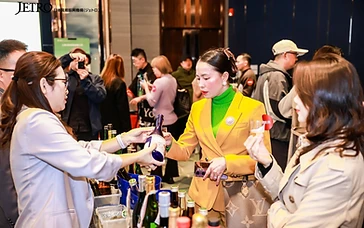
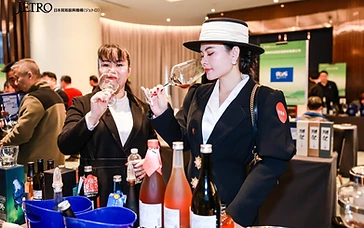
For international wine producers, national trade pavilions, and spirits export directors, planning a cohesive Asian market campaign requires synchronizing anchor exhibitions with targeted multi-city engagements. Interwine’s 2027 calendar offers an integrated trade architecture across Mainland China and Southeast Asia. The schedule features the flagship Spring Guangzhou fair (7–9 May 2027 at the China Import and Export Fair Complex / Pazhou), a high-speed four-nation Asia Roadshow (Hanoi on 11 May, Kuala Lumpur on 13 May, Singapore on 15 May, and Bali on 17 May), Interwine Vietnam (6–8 July 2027 at the Saigon Exhibition and Convention Center / SECC, Ho Chi Minh City), and the flagship Autumn Guangzhou fair (31 October–2 November 2027 at Pazhou).
Rather than executing disconnected, one-off market entries, brand owners can consolidate their shipping, travel schedules, and distribution pipelines into a coordinated commercial trajectory.
The Strategic Rationale: Anchor Hubs vs. Agile Roadshows
International market entry across Asia demands two complementary sales formats: large-scale anchor trade exhibitions and fast-paced regional trade tastings. Anchor expos like Interwine Guangzhou and Interwine Vietnam deliver broad exposure to tier-one importers, regional wholesalers, state-owned distribution groups, and modern retail buyers across South China and the Indochina corridor. Conversely, the boutique May roadshow provides direct, focused touchpoints in key tier-one capitals and hospitality centers across Vietnam, Malaysia, Singapore, and Indonesia.
The Flagship Gateways: Spring and Autumn Guangzhou 2027
Guangdong Province remains one of China’s preeminent commercial hubs for imported wine and distilled spirits, serving as the commercial gateway to the Pearl River Delta and the wider Greater Bay Area. Interwine’s biannual fairs at the China Import and Export Fair Complex in Pazhou (7–9 May 2027 and 31 October–2 November 2027) establish the primary order-writing and contract-negotiation benchmarks for the calendar year.
The May fair aligns with early summer procurement cycles and mid-year inventory planning, while the autumn edition captures distribution deals ahead of the critical Chinese New Year and Mid-Autumn Festival wholesale windows. Producers looking to establish or reinforce their market presence can evaluate commercial participation through the Become an Exhibitor portal.
The Southeast Asian Corridor: Vietnam and the May Roadshow Circuit
Southeast Asia's alcoholic beverage landscape is expanding rapidly. According to a market report published by IMARC Group (2023), the Vietnam wine market reached USD 2.1 billion in 2025 and is projected to expand to USD 2.9 billion by 2034, registering a compound annual growth rate (CAGR) of 3.59% over the 2026–2034 period. Interwine Vietnam (6–8 July 2027 at SECC, Ho Chi Minh City) positions brands directly in the nation's commercial capital to tap into premium on-trade venues, corporate gifting channels, and specialized retail chains.
Preceding this standalone exhibition is the intensive four-stop Asian Roadshow in May 2027:
- Hanoi (11 May): Institutional buyers, traditional importers, and corporate procurement networks in northern Vietnam.
- Kuala Lumpur (13 May): Premium on-premise venues, international hotel chains, and boutique spirits distributors in Malaysia.
- Singapore (15 May): Regional trading conglomerates, fine-wine portfolio managers, and regional duty-free operators.
- Bali (17 May): Destination resort hospitality managers, upscale beach-club beverage directors, and hotel food and beverage purchasing teams in Indonesia.
Producers seeking detailed travel advice and logistics planning across these destinations can consult our dedicated Event Guides.
Master Itinerary and 2026–2027 Chronology
To maximize sales pipelines, commercial teams should review both the late-2026 preparatory milestones and the formal 2027 circuit.
| Event / Leg | Scheduled Dates | Venue / City | Primary Commercial Focus | | :--- | :--- | :--- | :--- | | Interwine Guangzhou 2026 | 16–18 November 2026 | Pazhou, Guangzhou, China | Year-end clearance, 2027 contract renewals, PRD distribution | | Hanoi Roadshow 2026 | 20 November 2026 | Hanoi, Vietnam | Early sampling with North Vietnam importers | | Interwine Spring Guangzhou 2027 | 7–9 May 2027 | Canton Fair Complex, Pazhou | National China distribution, Greater Bay Area wholesale accounts | | Asia Roadshow 2027: Hanoi | 11 May 2027 | Hanoi, Vietnam | Political/commercial capital off-trade & government corporate networks | | Asia Roadshow 2027: KL | 13 May 2027 | Kuala Lumpur, Malaysia | Urban on-premise dining, specialty retail, craft spirits distribution | | Asia Roadshow 2027: Singapore | 15 May 2027 | Singapore | Regional trading desks, Southeast Asia re-export hubs, fine wine collectors | | Asia Roadshow 2027: Bali | 17 May 2027 | Bali, Indonesia | Luxury resort hospitality, dynamic on-premise tourism accounts | | Interwine Vietnam 2027 | 6–8 July 2027 | SECC, Ho Chi Minh City | Full-scale trade fair: commercial importers, mass retail, HCMC on-trade | | Interwine Autumn Guangzhou 2027 | 31 October–2 November 2027 | Canton Fair Complex, Pazhou | Pre-Chinese New Year order finalization, nationwide volume programs |
Customs, Registration, and Regulatory Compliance
Exporting alcoholic beverages into Asian markets requires adhering to distinct customs frameworks. Wineries must not treat Southeast Asia and China as a single regulatory territory.
China Import Requirements
As noted in compliance documentation by the EU SME Centre (2023, updated 2025), all overseas food and beverage manufacturing, processing, and storage facilities exporting to Mainland China must maintain active enterprise registration via the General Administration of Customs of China (GACC) CIFER platform. Exporters must ensure:
- Compliant Chinese-language back labels reflecting mandatory national standards (GB standards) are approved prior to port inspection.
- Declarations of alcoholic strength, ingredients, net volume, origin, and shelf life align with GACC regulations.
- Production batch certificates and certificates of analysis (covering total sulfur dioxide, free sulfur dioxide, and volatility) are authenticated.
Vietnam and ASEAN Import Requirements
Vietnam requires specialized alcohol import licenses, strict excise tax compliance (Special Consumption Tax), and mandatory pre-market food hygiene registration filings through the Ministry of Industry and Trade or Ministry of Health. Malaysia and Indonesia impose multi-tiered licensing on imported alcoholic beverages alongside strict excise and labeling mandates. Exporters should use temporary customs entry protocols (ATA Carnets or temporary bond entries where applicable) for sample handling across multi-leg roadshows, or arrange clearance through designated logistics partners.
Note: This information provides operational guidance and does not substitute for licensed customs brokerage or formal legal counsel. Exporters can evaluate registered distribution networks via Interwine’s Business Matching service.
Financial Planning: Labelled Hypothetical ROI Model
Exhibiting across multiple stops requires balanced budgeting across registration fees, shipping, travel, and on-the-ground activations. The financial outcome depends heavily on unit contribution margins and repeat orders.
Labelled Hypothetical Example: Multi-Market Route
Scenario: An estate winery participates in Spring Guangzhou 2027 and the 4-city May Asia Roadshow with a portfolio of mid-to-high tier wines.
1. Total Estimated Direct Costs (Hypothetical):
- Stand registration & showcase fees (Guangzhou booth + Roadshow showcase tables): $18,500
- Sample freight, temperature-controlled consolidation, and duty/clearance: $4,500
- Flights, intra-Asia travel, lodging, and per diems (1 executive, 14 days): $6,500
- Collateral, translation, marketing materials, and miscellaneous on-site expenses: $1,500
- Total Investment Cost: $31,000
2. Commercial Revenue & Contribution Margin:
- Average FOB export price per 6-bottle case: $60.00
- Winery cost of goods sold (COGS) per case: $28.00
- Unit Contribution Margin per case: $32.00 (53.3% gross contribution margin)
- Initial distribution agreements closed across South China, Vietnam, and Malaysia: 1,800 cases (three 20-foot container equivalents across 3 importers)
- Total Initial FOB Revenue: 1,800 cases × $60.00 = $108,000
- Total Gross Contribution Generated: 1,800 cases × $32.00 = $57,600
3. Return on Investment (ROI) Calculation: $$\text{Net Commercial Return} = \text{Total Gross Contribution} - \text{Total Investment Cost} = $57,600 - $31,000 = $26,600$$ $$\text{Hypothetical ROI} = \left( \frac{$26,600}{$31,000} \right) \times 100 = 85.8%$$
This calculation illustrates first-order trade dynamics. Sustained ROI improves substantially over subsequent re-orders, provided that the overseas producer protects product consistency, market pricing structures, and importer relationships.
Actionable Pre-Tour Operational Checklist
To execute this nine-month timeline without disruption, export teams should follow this structured quarterly workflow:
Q4 2026: Strategy & Logistics Initiation
- [ ] Finalize corporate approval and budget allocation for Spring 2027 Asia operations.
- [ ] Submit booth registrations via the Become an Exhibitor portal.
- [ ] Audit Chinese CIFER registration statuses and ensure valid importer-of-record filings.
- [ ] Verify passport validities (minimum 6 months validity across all target nations).
Q1 2027: Regulatory, Labels, and Consolidation
- [ ] Prepare CIFER-compliant Chinese label drafts and submit for preliminary customs audit.
- [ ] Consolidate wine and spirits samples into air/ocean freight shipments to Guangzhou and roadshow distribution hubs.
- [ ] Schedule dedicated B2B meeting slots via Business Matching.
- [ ] Secure business visas and travel documentation for China, Vietnam, Malaysia, Singapore, and Indonesia.
April 2027: Pre-Show Marketing and Pipeline Preparation
- [ ] Dispatch pre-invitations to your regional buyer database and local importer contacts.
- [ ] Finalize regional sell-sheets with FOB, CIF, and suggested retail pricing tiers.
- [ ] Prepare localized digital marketing materials (WeChat brand pages, localized technical data sheets).
May–July 2027: Execution & Lead Nurturing
- [ ] Conduct on-site meetings at Spring Guangzhou (7–9 May).
- [ ] Execute the Asia Roadshow circuit (Hanoi 11 May, KL 13 May, Singapore 15 May, Bali 17 May).
- [ ] Input every qualified contact into your CRM within 48 hours of meeting.
- [ ] Prepare freight consolidation and sample dispatches for Interwine Vietnam (6–8 July, SECC Ho Chi Minh City).
Conclusion
Navigating Asian wine and spirits markets requires systematic, sustained commercial presence rather than isolated marketing visits. By connecting Interwine’s 2027 flagship expos in Guangzhou and Ho Chi Minh City with targeted roadshow stops across Hanoi, Kuala Lumpur, Singapore, and Bali, brand principals can build a resilient, diversified commercial network.
Producers and brand owners looking to anchor their Asian expansion in 2027 should initiate their applications via Become an Exhibitor or consult our regional Event Guides to tailor their roadshow itineraries.
Sources
- IMARC Group: Vietnam Wine Market Report 2024–2034
- EU SME Centre: Importing Wine to China – Regulatory Guidelines
- EU SME Centre: China's Wine Market Drivers and Technical Requirements
- Agriculture and Agri-Food Canada: Sector Trend Analysis – Wine, Beer, and Spirits in Vietnam
Key Takeaways
- —Interwine 2027 links anchor expos in Guangzhou and Vietnam with a rapid four-city roadshow in Hanoi, Kuala Lumpur, Singapore, and Bali.
- —Spring Guangzhou runs 7–9 May 2027, followed immediately by the Asian Roadshow from 11–17 May 2027.
- —Interwine Vietnam takes place 6–8 July 2027 at SECC in Ho Chi Minh City, targeting a domestic market projected by IMARC to reach USD 2.9B by 2034.
- —China market clearance requires active GACC CIFER registration and Chinese-compliant back labels.
- —Multi-market route planning enables producers to consolidate sample logistics, travel expenses, and importer prospecting across Asia.
Frequently Asked Questions
What are the exact dates and venues for Interwine's 2027 flagship expos?
Interwine Spring Guangzhou takes place 7–9 May 2027 and Autumn Guangzhou takes place 31 October–2 November 2027, both at the China Import and Export Fair Complex (Pazhou) in Guangzhou. Interwine Vietnam is scheduled for 6–8 July 2027 at the Saigon Exhibition and Convention Center (SECC) in Ho Chi Minh City.
What stops are included in the May 2027 Interwine Asia Roadshow?
The May 2027 Asia Roadshow runs immediately after the Spring Guangzhou exhibition, visiting Hanoi on 11 May, Kuala Lumpur on 13 May, Singapore on 15 May, and Bali on 17 May.
What mandatory requirements must wine producers fulfill before shipping samples to China?
Overseas producers must have an approved manufacturing registration via China's GACC CIFER platform, ensure labels comply with national Chinese GB standards, and supply authentic certificates of origin and laboratory analysis reports.
Why should wine exporters combine the Guangzhou flagship fair with the Southeast Asian roadshows?
Combining the Guangzhou fair with the Southeast Asian roadshow allows wine exporters to maximize travel and logistics investments, leverage regional consolidation for sample shipping, and engage both tier-one Chinese distributors and dynamic Southeast Asian hospitality and retail buyers within a single continuous trip.