How to Prepare a Wine Portfolio for Chinese Buyers

A commercial roadmap for winery export directors on how to structure a wine portfolio for Chinese distributors, regional wholesalers, and corporate buyers.
To successfully present an imported wine portfolio to Chinese buyers, winery export directors must abandon the traditional Western trade catalog approach. Modern Chinese distributors, regional wholesalers, and on-premise group buyers look for tightly curated selections mapped directly to high-margin commercial channels, compliant with mandatory General Administration of Customs of China (GACC) filing standards, and backed by ready-to-execute promotional assets. Presenting 15 SKUs with uniform margins no longer works in a mature, price-transparent environment.
Achieving commercial cut-through in mainland China requires segmenting offers across specific price bands, anticipating strict regulatory requirements such as GACC registration, ensuring strict Chinese back-label conformity, and backing your sales pitches with localized brand assets.
The Chinese Buyer Profile: How Purchasing Criteria Have Changed
Chinese wine import dynamics have matured into a selective, margin-sensitive landscape. According to an economic analysis published in the Journal of Wine Economics (2025), imported wine volumes experienced a sharp recalibration between 2019 and 2022, declining by 47% before bottoming out and shifting away from speculative volume imports toward disciplined, demand-driven inventory.
Consequently, buyers in tier-one and emerging tier-two commercial hubs evaluate wine portfolios against three non-negotiable filters:
- Channel Specificity: Importers refuse to purchase a single range of SKUs that will immediately compete on major e-commerce platforms like JD.com or Tmall against their own off-premise or banqueting allocations.
- Immediate Administrative Feasibility: Buyers will not spend capital on overseas sampling or contractual negotiation until an overseas production facility has completed foreign establishment registration with the General Administration of Customs of China (GACC) via CIFER, as detailed by the EU SME Centre (2024).
- Margin Protection Across Tiers: Wholesalers expect guaranteed price architecture that protects sub-distributor margins in lower-tier cities while guarding against predatory discounting.
Export directors who structure their portfolios around these operational expectations dramatically shorten the sales cycle.
Designing a Three-Tier Portfolio Architecture for China
A common mistake among overseas wineries is pitching their entire domestic catalog. For the Chinese market, a focused portfolio of four to six active SKUs divided into three clearly differentiated tiers delivers superior commercial traction.
1. The Volume Driver: Everyday Dining and Gifting (Entry-to-Mid Tier)
- Target CIF Price: $2.50 – $5.00 per bottle (RMB 88 – RMB 168 retail shelf range).
- Style Profile: Fruit-forward, smooth tannins, approachable acidity, primarily red varieties (Cabernet Sauvignon, Merlot, Shiraz). Market reports by Market Research Future (2026) confirm that red wine remains the volume driver in Chinese dining and corporate hospitality due to cultural association with health, status, and auspicious celebration.
- Commercial Purpose: High-velocity turnover in regional distribution networks, corporate event banqueting, and introductory retail programs.
2. The Brand Builder: Premium On-Premise and Private Clients (Mid-to-High Tier)
- Target CIF Price: $8.00 – $18.00 per bottle (RMB 250 – RMB 500 retail shelf range).
- Style Profile: Single-vineyard expressions, oak-matured reds, or distinct regional whites (e.g., Marlborough Sauvignon Blanc, Chablis, German Riesling) tailored to sophisticated bistros and hotel dining programs in tier-one cities.
- Commercial Purpose: Generates sustainable margins for fine-wine distributors and acts as the anchor product for brand reputation.
3. The Flagship Icon: Corporate Gifting and Collector Allocations
- Target CIF Price: $35.00+ per bottle (RMB 800+ retail shelf range).
- Style Profile: Top-tier cuvées with critical acclaim (93+ points from reputable international critics), numbered bottles, heavy-weight glass, and specialized presentation boxes.
- Commercial Purpose: Gives the importer prestige leverage when pitching to corporate procurement teams, private banking events, and government-business banqueting accounts.
Regulatory Prerequisites: What Must Be Ready Before You Pitch
A Chinese buyer's primary operational risk is customs clearance delay. Export directors must confirm and document regulatory readiness in their initial technical trade sheet.
[ Overseas Winery / Production Facility ]
                    │
                    ▼
 Mandatory GACC CIFER Registration (Decree 248)
                    │
                    ▼
 Bilingual Labelling Compliance (GB 7718 / GB 15037)
                    │
                    ▼
 Chinese Trademark Registration (CTMO First-to-File)
                    │
                    ▼
 Port-of-Entry Customs & CIQ Clearance Inspection
GACC CIFER Registration
Under GACC Decrees 248 and 249, overseas alcoholic beverage manufacturers must be registered within the China Import Food Enterprise Registration (CIFER) system. Importers cannot file import customs declarations without the overseas manufacturer’s 18-digit registration code. Ensure your GACC registration number is active and visible on your technical sell sheets.
Mandatory Back-Label Standards
Chinese national standards (including GB 7718 for prepackaged food labelling and GB 15037 for wine) govern imported bottle labelling. Chinese labels must be either printed directly or affixed securely over the original back label before or during customs inspection in bonded zones. Mandatory data includes:
- Official Chinese product name (and wine type classification);
- Country of origin, region, and grape varieties;
- Alcohol by volume (% ABV), net content (e.g., 750ml), and shelf life/storage advice;
- Producer details, legal Chinese importer/distributor contact information, and mandatory health warnings regarding underage and pregnant drinking.
Having compliant Chinese mock-up labels pre-drafted demonstrates commercial professionalism that sets you apart from amateur exporters.
Packaging and Sensory Adaptation for the Market
Packaging drives immediate purchasing perception among Chinese buyers and corporate end-users. Evaluating your portfolio through local cultural and logistical expectations prevents costly shelf resistance.
- Bottle Weight and Finishes: While Western European markets increasingly adopt lightweight glass for sustainability, the Chinese trade still associates heavier glass and deep punt indentations with high-value wine, especially in the premium gifting tier.
- Color and Closure Strategy: Red and gold remain traditional signifiers of prosperity for celebratory occasions. Screwcaps are widely accepted for fresh whites and younger entry wines in urban centers, but premium and corporate gift reds still strongly demand natural cork and branded capsules.
- Sensory Expectations: While palate preferences in major metropolises like Shanghai and Shenzhen have diversified into crisp whites, sparkling wines, and lighter reds, secondary regional markets still prioritize rich, rounded fruit profiles with integrated tannins and lower perceived acidity.
Pricing Architecture and Distributor Margin Modeling
Chinese importers face multi-layered import taxation that impacts shelf pricing. To build an accurate portfolio price sheet, export directors must understand how CIF pricing converts to domestic landed cost.
Landed wine costs in China typically factor in Customs Duty (variable based on Free Trade Agreements), Consumption Tax (10%), and Value-Added Tax (VAT, 13%). A standard CIF calculation requires approximately a 1.4x to 1.5x multiplier on landed cost before domestic freight, bonded warehousing, and distributor margin tiers are applied.
| Pricing Tier | Target CIF (Per Bottle) | Estimated Landed Cost (Per Bottle) | Expected Importer Margin | Typical Retail (RMB) | | :--- | :--- | :--- | :--- | :--- | :--- | | Entry Tier | $2.50 – $4.00 | $3.60 – $5.80 | 18% – 25% | ¥88 – ¥138 | | Mid Tier | $6.00 – $12.00 | $8.70 – $17.40 | 25% – 35% | ¥188 – ¥350 | | Premium / Icon| $25.00+ | $36.00+ | 35% – 50%+ | ¥688 – ¥1,288+ |
Winery exporters should never issue a generic Ex-Cellar list. Always quote both Ex-Cellar and CIF at key Chinese ports (such as Guangzhou, Shenzhen, or Shanghai). Importers prioritize producers who understand currency fluctuations and calculate realistic margins down to sub-wholesalers and restaurant wine lists.
Protecting Intellectual Property and Local Brand Collateral
Before initiating commercial discussions or mailing samples to prospective buyers, secure your trademarks through the China National Intellectual Property Administration (CNIPA). China strictly operates under a "first-to-file" system. Failing to register your brand’s original Latin name and a carefully transliterated Chinese phonetic trademark puts your brand at risk of bad-faith squatting.
In addition to legal protection, your commercial collateral must be localized. Provide professional digital assets optimized for the WeChat ecosystem, including:
- A concise Chinese company introduction (1-page overview in Simplified Chinese);
- Standardized Chinese tasting notes and pairing suggestions that reference local cuisine;
- High-resolution bottle photography on pure white backgrounds alongside lifestyle table-setting imagery;
- Direct contact credentials for an authorized international export director or local representative.
Validating Your Portfolio with Qualified Chinese Trade Partners
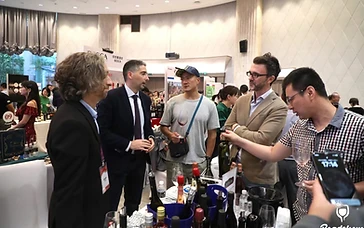
Desktop preparation is only the starting point. The final and most critical step in tailoring your portfolio is gathering direct, face-to-face feedback from qualified importers, regional wine distributors, and food and beverage directors who manage distribution across mainland China.
Wineries seeking qualified commercial representation should evaluate industry exhibition platforms to test price sensitivity, benchmark product reception, and schedule private procurement meetings. You can explore trade resources in Market Insights or access curated meetings through structured Business Matching services. To secure an on-site stand and present your portfolio directly to nationwide Chinese buyers, Become an Exhibitor at Interwine.
Sources
- Journal of Wine Economics (2025): China’s wine market: Recent shocks, long-term prospects, Cambridge University Press: https://www.cambridge.org/core/journals/journal-of-wine-economics/article/chinas-wine-market-recent-shocks-longterm-prospects/E6B6F8B046CEA34C52282747311389C2
- EU SME Centre (2024): How can I export wine to China? Mandatory GACC and Labelling Compliance: https://www.eusmecentre.org.cn/faq/how-can-i-export-wine-to-china/
- Wine Australia (2026): China Export Market Guide and Regulatory Standards: https://www.wineaustralia.com/selling/export-market-guide-china
- Market Research Future (2026): China Wine Market Size, Share and Segment Analysis: https://www.marketresearchfuture.com/reports/china-wine-market-44526
Key Takeaways
- —Structure portfolios into three distinct tiers: volume drivers (CIF $2.50-$5.00), brand builders (CIF $8.00-$18.00), and icon cuvées ($35.00+) to prevent channel conflict.
- —Ensure mandatory foreign production facility registration with the General Administration of Customs of China (GACC via CIFER) is active prior to pitch meetings.
- —Pre-draft bilingual back-label mockups compliant with GB 7718 and GB 15037 standards to reassure buyers on clearance reliability.
- —Register both Latin and Chinese phonetic trademarks with the CNIPA under China's first-to-file legal system before sharing samples.
- —Build CIF pricing models reflecting the cumulative burden of customs duty, consumption tax (10%), and VAT (13%) alongside realistic sub-distributor margins.
Frequently Asked Questions
What is the most critical regulatory requirement before presenting a portfolio to Chinese wine buyers?
Overseas wine producers must have an active registration number issued by the General Administration of Customs of China (GACC) through the CIFER platform under Decrees 248 and 249. Chinese importers cannot submit customs declaration filings without this mandatory foreign establishment registration code.
How many wine SKUs should an export director present to a new Chinese importer?
Keep the portfolio focused to four to six SKUs divided across three clear commercial roles: an accessible volume driver for retail or banqueting, two mid-tier single-variety or regional brand builders, and one flagship icon cuvée for corporate gifting. Pitching dozens of SKUs complicates clearance logistics and dilutes importer focus.
Why is trademark registration essential prior to sample tasting in China?
China enforces a strict 'first-to-file' intellectual property system with the China National Intellectual Property Administration (CNIPA). If a brand name or its phonetic Chinese translation is not registered early, third-party squatters can register it, blocking your legal distribution and customs clearance.
What back-label details are strictly mandatory for imported wine in China?
Under national standards GB 7718 and GB 15037, Chinese back labels must declare the Chinese product name, wine classification, alcoholic strength (% ABV), net bottle volume, vintage, country/region of origin, grape varieties, shelf-life/storage conditions, mandatory health warnings, and legal contact details of the registered Chinese importer.
How do Chinese import taxes impact wine portfolio price modeling?
Imported wine is subject to Customs Duty (which depends on applicable Free Trade Agreements), a 10% Consumption Tax, and a 13% Value-Added Tax (VAT). Wineries should calculate CIF pricing multiplying to roughly 1.4x-1.5x landed cost to ensure competitive shelf pricing while leaving adequate margins for regional sub-wholesalers.