How to Find Non-Alcoholic Wine Importers in China
Discover how to identify, qualify, and secure non-alcoholic wine importers in China, navigate dealcoholized beverage customs classification, and execute high-margin B2B distribution.
To successfully find non-alcoholic wine importers in China, international producers must target two distinct buyer categories: progressive fine wine distributors modernizing their portfolios, and specialized premium beverage/FMCG importers supplying high-end modern retail (Hema Fresh, Ole') and tier-1 corporate hospitality. Securing reliable distribution requires navigating specialized customs classification (HS code 2202.99 versus 2204), validating GACC producer registrations, presenting commercially viable unit economics, and engaging qualified buyers directly through structured matchmaking platforms like Business Matching.
Understanding China's Demand for Non-Alcoholic Wine
China's beverage market is undergoing a structural transformation driven by wellness, corporate etiquette shifts, and generational changes. According to a market report by Grand View Research (2026), China's non-alcoholic wine market is projected to expand at a compound annual growth rate (CAGR) of 18.1% between 2026 and 2033.
Historically, China's wine consumption was heavily tied to banqueting culture where high alcohol-by-volume (ABV) beverages dominated toasting traditions. As highlighted by Vino Joy News (2025), non-alcoholic wine consumption in China has gained commercial traction precisely within business dining and modern corporate banquets. Dealcoholized wine allows business executives, government contractors, and young professionals to observe social rituals and show "mianzi" (face) without the legal liabilities of strict drunk-driving enforcement or the physical consequences of heavy alcohol consumption.
Simultaneously, female consumers, fitness-conscious urban professionals, and Gen Z demographics across Shanghai, Beijing, Shenzhen, and Guangzhou represent a growing consumer base for zero-proof alternatives that pair naturally with dining.
Qualifying China Importers: Traditional Wine vs. Premium Beverage
Finding the right partner requires recognizing that traditional wine importers and premium FMCG importers handle dealcoholized wine differently. International brands must segment prospective partners according to their existing channel strengths:
| Criteria | Traditional Fine Wine Importers | Premium Beverage / FMCG Importers | | :--- | :--- | :--- | | Core Channel | On-trade (bistros, western fine dining, wine bars), corporate private clients. | Modern off-trade (Ole', Hema Fresh, City'super), premium e-commerce (JD, Tmall, Douyin). | | Licensing | Holds standard wholesale/retail alcohol distribution permits. | Holds general prepackaged food and beverage import licenses. | | Commercial Mindset | Terroir-, varietal-, and rating-driven; may view non-alcoholic wines as niche. | Volume-driven, margin-conscious, shelf-life and brand-marketing focused. | | Typical Advantage | High brand prestige, established sommelier relationships, corporate gifting access. | Fast retail turnover, structured supply chain logistics, direct listing power. | | Key Challenge | Slower movement if sales staff are incentivized solely on high-value alcoholic SKUs. | Requires higher slotting fees, joint business planning, and trade marketing budgets. |
Rather than assuming established alcohol giants like Summergate or ASC Fine Wines (Beverage Trade Network) are your only targets, foreign producers should also engage diversified food and beverage distributors who already supply premium non-alcoholic drinks to China's hospitality sector.
Sourcing Channels for Non-Alcoholic Wine Buyers
1. Dedicated Trade Exhibitions and Targeted Matchmaking
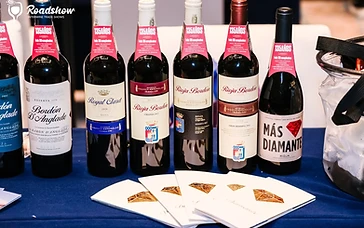
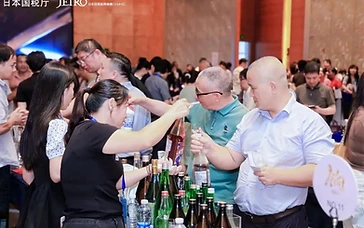
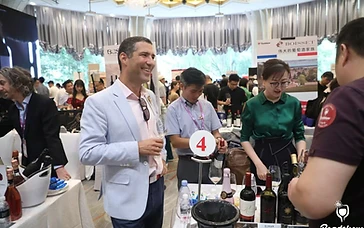
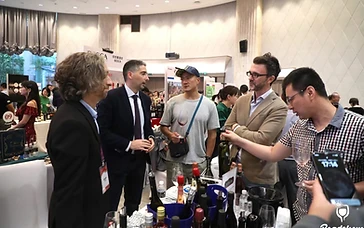
Connecting with decision-makers face-to-face remains the most cost-effective path to closing import contracts in mainland China. Dedicated trade hubs allow wineries to meet pre-vetted buyers who are specifically actively seeking no-and-low alcohol lines. Exporters can utilize dedicated sourcing hubs like Interwine Events, including the flagship trade show in Guangzhou and regional Asian roadshows:
- Guangzhou Fair: 16–18 November 2026
- Hanoi Roadshow: 20 November 2026
- Spring Guangzhou Fair: 7–9 May 2027 at the China Import and Export Fair Complex / Pazhou, Guangzhou
- Asia Roadshow 2027: Hanoi (11 May), Kuala Lumpur (13 May), Singapore (15 May), and Bali (17 May)
- Autumn Guangzhou Fair: 31 October–2 November 2027 at the China Import and Export Fair Complex
Participating brands should reserve time for pre-scheduled, 1-on-1 supplier-to-buyer sessions through Business Matching to evaluate buyer portfolios prior to shipment.
2. GACC Verification and Importer Directories
Before committing samples, confirm whether prospective partners maintain active import operations through the General Administration of Customs of China (GACC) filing records. Exporters can cross-reference registered beverage distributors with public directories and curated platforms such as the Exhibitor Directory and verified import directories provided by Best Wine Importers (2026).
3. Digital B2B Ecosystems and Cross-Border Platforms
Importers managing multi-channel retail often scan WeChat B2B mini-programs, Tmall Global supplier portals, and specialized food/drink trade databases. Building an official presence on WeChat with Chinese-language technical sheets is essential before launching digital outreach.
Regulatory and Customs Clearance Requirements
Dealcoholized and non-alcoholic wines do not always follow the same customs procedures as conventional alcoholic wines. General guidance requires producers to review both classifications with professional trade counsel before exporting:
1. HS Code Classification (2204 vs. 2202)
- Standard Wine (HS 2204): Covers fermented grape must with actual alcoholic strength by volume usually exceeding 0.5% vol. Subject to standard wine tariffs, 13% Value-Added Tax (VAT), and a 10% consumption tax (Best Wine Importers, 2026).
- Dealcoholized Wine / Non-Alcoholic Beverages (HS 2202.99): Under Chinese customs standards and World Customs Organization guidelines, beverages where the alcohol content is reduced to 0.5% ABV or lower are typically classified under HS Code 2202.99 (other non-alcoholic beverages).
Regulatory distinction: Products cleared under HS 2202 are generally exempt from the 10% alcohol consumption tax applicable to alcoholic grape wines, but must comply with the National Food Safety Standards for Beverages (GB 7101) rather than the standard for fermented alcoholic beverages (GB 2758).
2. GACC Producer Registration (Decree 248)
Overseas manufacturers of non-alcoholic beverages must obtain a manufacturing facility registration number with the GACC before shipping. Shipments lacking a valid registration number printed on both the inner and outer packaging will be quarantined or rejected at the port of entry.
3. Chinese Back-Label Compliance (GB 7718)
Every bottle must feature an approved Chinese back-label. Crucial mandatory declarations for non-alcoholic wines include:
- Standardized Chinese product name (e.g., 脱醇葡萄酒 for dealcoholized wine or 无酒精葡萄饮料 for non-alcoholic grape beverage).
- Accurate alcoholic strength statement (e.g., "Alcohol content: ≤ 0.5% vol" or "0.0% vol").
- Full ingredient list arranged in descending order of inbound weight.
- Net content and shelf life / expiration date (mandatory under general beverage standards).
- GACC Overseas Facility Registration Number.
- Name, address, and domestic contact information of the registered Chinese importer/distributor.
Practical Due Diligence Checklist for Exporters
When evaluating a potential Chinese importer for your zero-proof brand, run through this commercial due diligence checklist:
- [ ] GACC Filing Verification: Does the importer possess valid customs registration and a track record of clearing food and beverage products under HS 2202?
- [ ] Cold-Chain Logistics Capability: Does the distributor maintain temperature-controlled warehousing in major arrival hubs (e.g., Shanghai, Shenzhen, Ningbo)? Dealcoholized wines lack the preservative qualities of high alcohol and require strict temperature management to prevent spoilage.
- [ ] Target Account Alignment: Does their current distribution network reach tier-1 on-trade dining, specialized coffee and beverage venues, or high-end grocery outlets (e.g., Ole', Sam's Club, Hema)?
- [ ] Digital & Social Channel Execution: Can they support brand education on Xiaohongshu (RED) and WeChat to educate consumers on zero-proof sensory profiles?
- [ ] Payment Terms: Have you agreed on secure settlement structures (such as a 30%–50% advance deposit via Telegraphic Transfer with the balance paid against the Bill of Lading, or an Irrevocable Letter of Credit)?
To better understand broader route-to-market strategies, consult Interwine's resource hub on Wine Import & Distribution.
Hypothetical Commercial ROI & Unit Economics Model
When pitching a Chinese importer, you must demonstrate sustainable margins across the value chain. Non-alcoholic wine carries a perception hurdle: consumers expect wine-like sophistication but sometimes evaluate it against soft beverage pricing.
Below is a clearly labelled hypothetical financial example illustrating the landed cost and contribution margins for an export consignment of dealcoholized wine (clearing under HS 2202.99 at 0.5% ABV or lower):
Assumptions (Hypothetical Consignment)
- Order Volume: 6,000 bottles (1,000 cases of 6 bottles)
- FOB Unit Price: €4.00 / bottle
- Freight & Insurance (CIF to Shanghai): €0.50 / bottle (Total CIF: €4.50 / bottle)
- Assumed Exchange Rate: 1 EUR = 7.80 RMB (CIF = ¥35.10 RMB)
- Tariff (General MFN): ~20% (Assumed benchmark under HS 2202.99; check preferential trade agreements)
- Consumption Tax: 0% (Applicable to non-alcoholic beverages ≤0.5% ABV)
- Value-Added Tax (VAT): 13%
Cost Breakdown per Bottle (Hypothetical Model)
- CIF Shanghai: ¥35.10
- Import Customs Duty (20%): ¥35.10 × 20% = ¥7.02
- Landed Value for VAT: ¥35.10 + ¥7.02 = ¥42.12
- VAT (13%): ¥42.12 × 13% = ¥5.48
- Port Clearance, Labelling & Domestic Drayage: ¥4.00
- Total Landed Cost to Importer Warehouse: ¥51.60 RMB
Downstream Pricing Structure
- Importer Wholesale Price (40% Gross Margin): ¥51.60 / (1 - 0.40) ≈ ¥86.00 RMB
- Retailer / On-Trade Purchase Price: ¥86.00 RMB
- Retail Shelf Price Target (45% Retail Margin): ¥86.00 / (1 - 0.45) ≈ ¥156.00 RMB (~$21.50 USD)
Strategic Takeaway
At an on-shelf price of ¥150–¥168 RMB, your brand competes directly with entry-level premium imported still wine while providing the importer and on-trade account with attractive contribution margins. Presenting this structured pricing waterfall during initial meetings demonstrates trade maturity and commercial viability.
Next Steps for International Brands
Breaking into China's fast-growing non-alcoholic wine segment requires verified partner alignment, compliant product formulation, and targeted market entry. To start building your importer pipeline:
- Review market-entry strategies across the Market Insights portal.
- Align your technical specifications and ingredient certifications with Chinese GB standards.
- Secure direct meetings with active Chinese food and beverage distributors by registering through Interwine's Business Matching platform.
Sources
- Grand View Research: Non-Alcoholic Wine Market Size & Share Report (2026-2033)
- Vino Joy News: China’s Non-Alcoholic Wine Booms Is All Business (2025)
- Best Wine Importers: A Wine Exporter’s Guide to Finding Buyers in China and Working with Chinese Wine Importers (2026)
- Beverage Trade Network: Wine Distributors in China
Key Takeaways
- —China's non-alcoholic wine sector is forecast to expand at an 18.1% CAGR from 2026 to 2033, driven by corporate dining demand and health-conscious consumer segments.
- —Non-alcoholic wines (≤0.5% ABV) are typically classified under HS 2202.99 rather than standard wine (HS 2204), affecting applicable consumption taxes and GB food safety standards.
- —Exporters must secure overseas manufacturing registration via GACC Decree 248 and prepare Chinese compliant back-labels prior to shipping commercial samples.
- —Targeting a hybrid of progressive fine wine distributors and specialized FMCG beverage importers yields better results than approaching traditional wine buyers alone.
- —Structured in-person matchmaking at international trade shows remains the most direct way to vet qualified importers and evaluate commercial margins.
Frequently Asked Questions
What HS code is used to import non-alcoholic wine into China?
Dealcoholized wine containing 0.5% ABV or less is generally classified under HS code 2202.99 (other non-alcoholic beverages) rather than HS 2204 (grape wine). This classification alters the tax framework, typically removing the 10% alcohol consumption tax, while subjecting the beverage to China's GB 7101 standard.
Do non-alcoholic wine producers need GACC registration?
Yes. Under GACC Decree 248, all overseas food and beverage manufacturing, processing, and storage facilities must be registered with the General Administration of Customs of China before their goods can be exported to mainland China.
Which retail and on-trade channels consume non-alcoholic wine in China?
Core channels include premium modern grocery chains (such as Ole', City'super, and Hema Fresh), tier-1 city corporate dining, luxury hotel lounges, Western bistros, and health-focused e-commerce platforms like Tmall and JD.com.
How can wineries meet vetted Chinese non-alcoholic wine buyers?
Wineries can connect directly with verified buyers and specialized beverage distributors by joining scheduled B2B sessions at Interwine Guangzhou and regional Asian roadshows through the Interwine Business Matching program.