What Chinese online marketplace buyers Expect From Imported Wine Brands
Discover what Chinese online marketplace buyers expect from imported wine brands, including margin structures, Douyin live-commerce assets, and compliance.
Chinese online marketplace buyers and platform category managers operate in the world's most dynamic digital retail ecosystem. For international winery export directors, entering China's digital shelves is no longer just about listing a bottle on an app; it requires a deep operational alignment with how Chinese e-commerce operators actually do business.
According to China Briefing's 2025 market outlook, over 53 percent of alcohol buyers in China purchase products online—nearly double the rate observed in other major global markets. Projections by the International Wine and Spirits Research (IWSR) cited in that analysis indicate that online wine sales in China will expand at an 8 percent compound annual growth rate (CAGR) between 2022 and 2027. Consequently, marketplace category buyers, authorized flagship store operators (TPs, or Tmall Partners), and live-commerce multi-channel networks (MCNs) have set precise expectations for imported wine brands.
Wineries seeking sustainable sales must understand what these professional buyers expect before pitching their portfolio.
High Commercial Margins to Absorb Digital Traffic Costs
One of the most frequent friction points between European, South American, or Australasian wine exporters and Chinese e-commerce buyers is pricing structure. Export directors often evaluate pricing through standard distributor margins based on classic FOB (Free on Board) calculations. However, online retail in China operates under steep customer acquisition costs (CAC).
Online platforms like Tmall (which commanded roughly 50% of online wine sales in recent market surveys) and JD.com (accounting for nearly 25%, as reported by Mobility Foresights (2025)) require brands to participate in costly paid-traffic algorithms, daily discount coupons, and major retail festivals like 11.11 (Singles' Day) and 618.
Chinese online marketplace buyers expect imported brands to provide commercial pricing models that accommodate:
- Tariff and Tax Loads: Standard bottled wine imports face an import tariff (~14%), VAT (13%), and alcohol consumption tax (10%), which cumulatively compound to approximately a 50% increase over CIF landed value, according to trade import data published by BestWineImporters (2026).
- Platform Promotional Subsidies: Retailers require sufficient margin buffer (often 35% to 50% gross margin for the online distributor) to absorb platform commissions, slotting fees, and return logistics without wiping out profitability.
- Pricing Integrity Across Channels: Online buyers intensely monitor offline retail and regional distribution. If your brand is dumped at deep discounts by an offline regional wholesaler, online marketplace algorithms will flag the price discrepancy, dampening listing visibility.
To discover how leading producers benchmark their commercial terms for mainland retail, consult our Market Insights hub.
Ready-to-Use Digital Assets for Social and Live Commerce
Traditional specification sheets and generic English tasting notes are entirely unusable for China’s domestic e-commerce teams. Modern online alcohol purchasing is increasingly driven by social commerce channels like Douyin (TikTok's Chinese counterpart), Kuaishou, and Xiaohongshu (RED).
Marketplace buyers expect wineries to supply localized digital marketing toolkits tailored for mobile consumption:
Short-Form Video Formats
Buyers and MCN agency streamers demand raw vertical video footage (9:16 ratio) showing genuine harvest operations, barrel tastings, family heritage, and authentic vineyard terroir. Rather than polished corporate ads, Chinese consumers value authenticity that can be easily repurposed into 15-second streaming hooks.
Chinese Brand Identity and Simplified Chinese Copy
As highlighted in China Briefing's 2025 analysis, establishing an officially registered, culturally resonant Chinese brand name (中文商标) is critical for commercial success. Marketplace buyers expect brands to provide translated sensory notes that align with domestic flavor references—such as hawthorn, dried jujube, osmanthus, or Chinese plum—rather than Western references like elderflower, blackcurrant, or brioche.
Visual Sensory Proof and Influencer Samples
Buyers expect a streamlined allocation of sampling inventory for Key Opinion Leaders (KOLs) and Key Opinion Consumers (KOCs). They look for packaging aesthetics that stand out on mobile screens: clear front labels, embossed foils, premium capsule quality, and durable protective gift boxes for parcel delivery.
Flawless Supply Chain Logistics and Packaging Integrity
Selling wine online in China involves rigorous express logistics dominated by courier networks like SF Express and JD Logistics. Marketplace category managers expect suppliers to anticipate shipping hazards and satisfy regulatory timelines:
- Anti-Breakage Transit Packaging: Standard six-bottle cardboard dividers frequently fail in automated sortation facilities. Online buyers prefer suppliers that offer drop-test certified outer packaging, impact-resistant pulp inserts, or single-bottle premium gift cases suitable for direct courier dispatch.
- Shelf-Life and Lot Traceability: Online consumers scrutinize back labels. Marketplace buyers favor producers that guarantee consistent vintages with transparent bottling dates and verifiable customs compliance codes.
- Cross-Border E-Commerce (CBEC) Agility: For boutique producers testing the waters without local inventory registration, buyers on Tmall Global or Kaola expect wine brands to leverage bonded warehouse models, shipping full pallets under optimized customs frameworks.
Overseas brands planning their logistics and regulatory strategy can connect directly with licensed importers and distributors by signing up to Become an Exhibitor at our next international gathering.
Brand Willingness to Invest in Ground Education
Chinese marketplace buyers avoid taking on 'silent brands'—wines whose producers simply ship containers and expect the platform algorithm to handle sales. Given that China’s total wine market reached an estimated valuation of $40.4 billion in 2024, as cited in MS Advisory's 2026 report, domestic consumers have countless choices from France, Chile, Italy, Australia, and burgeoning domestic regions like Ningxia and Yunnan.
To earn priority placement on digital storefronts, wine brands must demonstrate genuine market commitment:
- A Shared Co-Marketing Budget: Buyers expect wineries to co-fund digital campaigns, pay-per-click banners on Tmall/JD, and sponsored livestreams during peak sales windows (e.g., Mid-Autumn Festival and Chinese New Year).
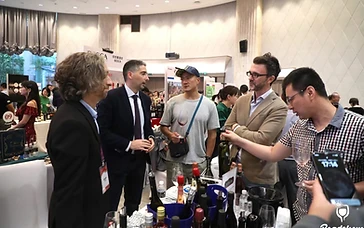
- Winemaker Presence and Masterclasses: Buyers highly value winemakers who participate in virtual livestreams or travel to China for roadshows and city masterclasses. Experiential learning reinforces trade confidence and drives digital search volume.
- Direct B2B Networking: Online platform buyers still validate partners in person. Meeting buyers face-to-face allows brand owners to discuss customized stock keeping units (SKUs), exclusivity arrangements, and volume targets.
Wineries looking to build personal relationships with Chinese digital retailers and verified importers should schedule direct appointments through Interwine's Business Matching services or plan an executive presence via Interwine Events.
Next Steps for Winery Export Directors
Winning over Chinese online marketplace buyers requires a shift from transactional exporting to collaborative brand building. Before initiating outreach, winery leaders should register their Chinese trademark, audit their price waterfall to secure at least a 40% margin buffer for online channels, and assemble modular, mobile-ready digital assets.
China’s digital ecosystem moves rapidly, but brand equity and retail partnerships are still cultivated through verified trade touchpoints. Meeting platform buyers, Tmall Partners, and leading multichannel distributors face-to-face remains the fastest path to establishing credibility.
Sources
- China Briefing (2025): China’s Wine Market Outlook: Trends and Opportunities - https://www.china-briefing.com/news/chinas-wine-market-outlook-trends-and-opportunities/
- MS Advisory (2026): Wine Market in China: Trends, Growth, and Consumer Behavior - https://msadvisory.com/wine-market-in-china
- BestWineImporters (2026): A Wine Exporter’s Guide to Finding Buyers in China and Working with Chinese Wine Importers - https://www.bestwineimporters.com/fr/blog/resources/a-wine-exporters-guide-to-finding-buyers-in-china-and-working-with-chinese-wine-importers/
- Mobility Foresights (2025): China Wine Market 2024-2030 - https://mobilityforesights.com/product/china-wine-market
Key Takeaways
- —Over 53% of Chinese alcohol consumers buy wine online, making e-commerce platforms like Tmall, JD.com, and Douyin essential channels for imported brands.
- —Online marketplace buyers expect margin structures of 35% to 50% to absorb heavy platform commissions, PPC advertising, and shopping festival discounts.
- —Producers must supply localized digital assets, including 9:16 vertical video for live commerce and tasting notes translated into domestic sensory descriptors.
- —Drop-tested packaging and registered Chinese trademark names (中文商标) are non-negotiable operational requirements for e-commerce operators.
- —Digital buyers favor wineries willing to co-invest in local brand education, livestream appearances, and face-to-face B2B trade networking.
Frequently Asked Questions
What gross margins do Chinese online wine buyers expect?
Chinese e-commerce retailers and Tmall Partners typically expect gross distributor margins between 35% and 50%. This margin is necessary to absorb digital platform traffic fees, influencer commissions, return handling, and deep discounts during shopping festivals like 11.11 Singles' Day.
Why is an officially registered Chinese brand name necessary for online sales?
Most Chinese consumers search e-commerce platforms using Chinese characters rather than Latin alphabets. Furthermore, platforms like Tmall and JD.com require clear trademark documentation to prevent intellectual property disputes and open official brand flagship stores.
How important is vertical video content for Chinese wine buyers?
Vertical short-form video (9:16) is essential. Platforms such as Douyin, Kuaishou, and Xiaohongshu rely heavily on live commerce and video hooks. Buyers expect raw, high-resolution footage from vineyards and cellars that can be easily edited for live broadcast pitches.
What packaging standards are required for imported wine shipping in China?
Wines fulfilled through domestic parcel networks must withstand automated sorting and long-distance transport. Buyers expect heavy-duty transit cartons, drop-tested pulp or air-column packaging, and robust single-bottle presentation boxes tailored for gift deliveries.