Canadian Wine Market Opportunities in China
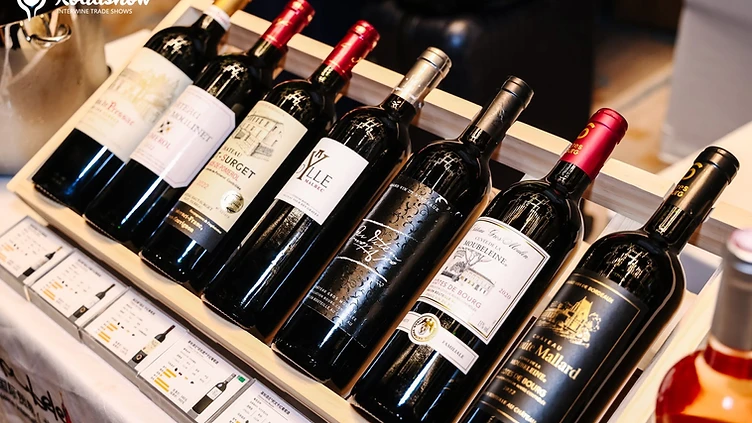
A commercial roadmap for Canadian wineries looking beyond Icewine to capture high-margin market share in China's evolving premium wine sector.
Canadian wine producers stand before an unprecedented commercial opening in Mainland China. While China’s wine import volumes experienced a post-pandemic consolidation—with total imports reaching $879 million across January–July 2025, according to the USDA Foreign Agricultural Service (2025)—the market fundamentals point to massive structural opportunities for boutique and high-value foreign estates. Industry analysts at Deep Market Insights (2025) value China’s total wine market at $36.59 billion in 2025, forecasting it to hit $59.24 billion by 2034.
For Canadian producers and regional export bodies, the strategic imperative has shifted: moving beyond traditional reliance on Niagara Icewine to aggressively establish British Columbia, Ontario, and Nova Scotia cool-climate table wines within Tier-1 and emerging Tier-2 distribution channels. For producers looking to meet importers and scale distribution, participating as an exhibitor via Become an Exhibitor at trade exhibitions remains the decisive path to secure face-to-face commercial partnerships.
Shifting Macro Dynamics: Why China Needs Canadian Cool-Climate Wines
For more than two decades, the Canadian wine story in China revolved around a single flagship: authentic VQA Icewine. Pioneers like Pillitteri Estates Winery proved that Chinese corporate gift-givers and luxury hospitality venues value Canadian purity, traceability, and artisanal craft, as documented in regional trade initiatives by the Government of Ontario. However, over-reliance on a luxury dessert category created an artificial ceiling for export volumes.
Today, consumer habits across Tier-1 metropolises such as Shanghai, Shenzhen, and Guangzhou, as well as high-growth hubs like Chengdu and Hangzhou, are undergoing rapid evolution. Urban Chinese consumers—particularly Gen Z and millennial professionals—are moving away from ostentatious banqueting toward mindful, lifestyle-oriented social drinking. According to industry analyses from Deep Market Insights (2025), still wine remains China's dominant category, accounting for $16.68 billion in 2025, while premium and super-premium tiers continue to outpace volume growth.
Furthermore, geopolitical realignments and tariff volatility have driven Chinese importers to actively diversify supplier portfolios. As trade friction and escalating tariffs disrupted major global flows—with US wine trade facing severe tariff headwinds exceeding 200% at various points as highlighted by international trade analysts in the Times Colonist (2025)—Chinese merchants are seeking stable, premium alternative origins. Canada provides an optimal answer: a reputation for pristine natural environments, rigorous VQA standards, and distinctive cool-climate varieties.
Portfolio Strategy: What Chinese Importers Actually Want
To build recurring order books, Canadian export associations and wineries must balance heritage luxury with everyday premiumization. A successful multi-tiered catalog strategy should focus on three specific segments:
1. Cool-Climate Dry Reds: Pinot Noir and Cabernet Franc
Chinese consumers have historically gravitated toward red wine due to cultural associations and dining habits. However, the palate is transitioning away from excessively heavy, over-oaked styles toward nuanced, food-friendly profiles. Canadian Pinot Noir from the Okanagan Valley and Niagara Peninsula offers bright red-fruit notes, balanced acidity, and refined tannins that pair seamlessly with regional Cantonese, Huaiyang, and Sichuan dishes. Similarly, Ontario Cabernet Franc—already revered by international sommeliers—fills an empty niche for structured, aromatic red wine that differentiates forward-thinking bistros from standard Bordeaux-heavy wine lists.
2. High-Acid Aromatic Whites and Chardonnay
Seafood consumption in coastal China (Guangdong, Zhejiang, Fujian) provides a natural commercial home for cool-climate Chardonnay, Riesling, and Pinot Gris. Unoaked and lightly oaked Chardonnays matching coastal gastronomy are seeing accelerated adoption in modern wine bars. Producers can benchmark regional consumer shifts and retail pricing dynamics through our comprehensive Market Insights.
3. VQA Icewine as a Prestige Brand-Builder
Icewine must not be abandoned; rather, it should function as an elite halo product. Due to widespread domestic and international imitations, Chinese buyers are exceptionally vigilant regarding authenticity. Certified VQA seals, counterfeit-resistant packaging, and traceable harvest histories command premium gift-box pricing, opening doors for distributors to cross-sell dry table wines across their corporate and hospitality networks.
Regulatory Compliance and Customs Clearance in China
Navigating China’s customs environment requires strict operational compliance before products depart Canadian ports. The General Administration of Customs of China (GACC) enforces meticulous standards under Decree 248 and Decree 249.
CANADIAN WINERY EXPORT ROADMAP TO CHINA

[Step 1: Regulatory Registration]
  └── Register facility with GACC (CIFER system)
  └── Secure single registration number printed on inner/outer packaging

[Step 2: Label & Technical Compliance]
  └── Verify GB standards (GB 2758 for fermented alcoholic beverages)
  └── Affix compliant Chinese back label before port entry
  └── Obtain VQA origin & lab analysis certificates (SO2, sugar, ABV, heavy metals)

[Step 3: Route-to-Market Execution]
  └── Form partnership with licensed domestic beverage importer
  └── Select commercial hub (bonded warehouse / free-trade zone in South China)
  └── B2B engagement via targeted trade matching & exhibition platforms
Key compliance parameters include:
- GACC Facility Registration: Wineries must complete overseas manufacturer registration through the China Import Food Enterprise Registration (CIFER) portal. The issued registration code must appear on external cases and individual bottle labels.
- Chinese Back Labeling: Labels must comply with GB 7718 (Prepackaged Food Labeling) and GB 2758 (Alcoholic Beverage Standards), including precise declarations of ingredients (e.g., grape juice, sulfur dioxide), net volume, alcoholic strength, storage conditions, and domestic importer distributor details.
- Tariff & Tax Architecture: Wine imported into China incurs three cumulative taxes: Customs Duty, Value-Added Tax (VAT at 13%), and Consumption Tax (10%). Ensuring proper valuation documentation prevents costly customs delays.
Route-to-Market: Navigating Distribution Channels
Choosing the right partner structure determines whether an export program thrives or stalls. China's beverage distribution ecosystem is categorized across three core pathways:
Specialized Tier-1 Importers and Regional Sub-Distributors
Boutique Canadian wineries should avoid massive volume-driven commodity distributors who demand unrealistic marketing support and price concessions. Instead, target mid-sized, fine-wine importers who manage direct supply lines to upscale western restaurants, luxury hotel chains, and private VIP cellars. Connecting with curated buyers through structured Business Matching services allows wineries to pre-screen distributor credentials and sales channel alignments.
Omnichannel and Direct-to-Consumer (D2C) E-Commerce
While traditional physical retail remains significant—representing $16.49 billion of China’s wine market in 2025 as noted by Deep Market Insights (2025)—online sales through Tmall, JD.com, and livestreaming channels like Douyin continue to disrupt beverage distribution. Boutique wineries can leverage bonded cross-border e-commerce (CBEC) frameworks to test consumer appetite with lower regulatory entry barriers before committing full sea-freight containers.
The South China Commercial Gateway
Guangzhou and Shenzhen serve as the commercial engines of the Greater Bay Area (GBA), boasting the highest per-capita disposable income and the most sophisticated fine-wine consumption culture in Mainland China. Securing an import base in Guangdong provides streamlined logistics into both mainland economic centers and adjacent Asian markets.
Commercial Execution: Next Steps for Canadian Exporters
Building sustainable export volume in China cannot be accomplished via remote correspondence or generic digital outreach. Commercial success requires boots on the ground, sensory validation, and active engagement with verified buyers.
Canadian wineries, provincial associations, and marketing boards should execute a definitive entry plan:
- Consolidate Export Portfolios: Curate SKUs displaying clear cool-climate differentiation, distinct VQA certifications, and visually compelling labeling suitable for retail and gifting.
- Audit GACC Compliance: Ensure all production facilities are active within the CIFER system and packaging conforms to standard Chinese labeling regulations.
- Engage directly in Southern China Trade Fairs: The most efficient route to secure distribution is exhibiting directly before qualified national distributors, regional wholesalers, and high-end hospitality sommeliers.
To lock in prime regional pavilion space and schedule pre-screened distributor meetings at Asia's premier beverage platform, review your commercial options and Become an Exhibitor with INTERWINE today.
Sources
- USDA Foreign Agricultural Service (2025) - Wine Market Update China
- Deep Market Insights (2025) - China Wine Market Size, Trends & Forecast Analysis
- Times Colonist (2025) - Wineries Capitalize on Global Wine Market Gaps
- Ontario Newsroom (2015) - Ontario Expanding Wine Exports to China
Key Takeaways
- —China's wine market was valued at $36.59 billion in 2025 and is projected to expand toward $59.24 billion by 2034, creating robust demand for premium imports.
- —Boutique Canadian producers have a clear window to expand beyond Icewine into high-margin cool-climate table wines like Pinot Noir, Chardonnay, and Cabernet Franc.
- —Geopolitical shifts and tariff volatility have prompted Chinese importers to diversify away from traditional origins, positioning Canadian VQA wines favorably.
- —Customs clearance requires strict adherence to GACC Decree 248 facility registration (CIFER) and compliant GB back labels before arriving in Chinese ports.
- —Direct participation in trade fairs and structured business matching platforms in South China represents the fastest, most cost-effective route to secure verified distributors.
Frequently Asked Questions
What varieties of Canadian wine have the greatest market potential in China?
While VQA Icewine remains an established prestige product for corporate gifting and luxury dining, Canadian cool-climate dry table wines are experiencing growing demand. In particular, Okanagan and Niagara Pinot Noir, Cabernet Franc, and high-acid Chardonnays match the evolving preferences of urban Chinese consumers seeking refined, food-friendly options.
What are the mandatory GACC registration requirements for Canadian wineries?
Under Decrees 248 and 249, all overseas alcoholic beverage production and storage facilities must be registered with the General Administration of Customs of China (GACC) through the CIFER portal before shipping. The unique registration number assigned by GACC must be printed on both the outer carton and the inner bottle label.
How are imported Canadian wines taxed upon entry into China?
Bottled wine imported into China from Canada is subject to three standard taxes assessed at customs: Customs Import Duty (standard MFN rate of 14% for bottled wine), Value-Added Tax (VAT at 13%), and Consumption Tax (10%). Taxes are calculated cumulatively on the CIF (Cost, Insurance, and Freight) value.
How can Canadian wineries connect with verified wine distributors in China?
The most effective method is participating directly in specialized B2B trade platforms like INTERWINE. Exhibiting provides brand exposure, on-site sensory tastings, and access to pre-vetted buyer matching programs with distributors from the Greater Bay Area and national Tier-1 and Tier-2 markets.