Interwine Guide to Import compliance preparation
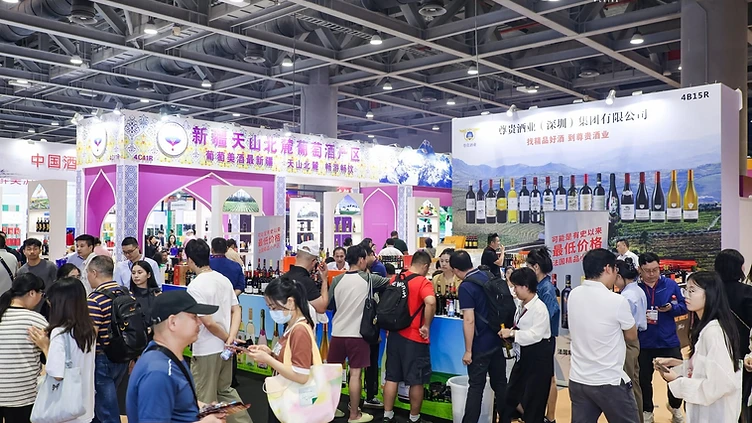
A commercial roadmap for wineries and spirits producers navigating Chinese customs, GACC registration, GB labeling standards, and exhibition sample logistics before entering Asian distribution channels.
To successfully expand international wine and spirits distribution across China and the broader Asian market, producers must address regulatory clearance with the exact same rigor applied to brand positioning and commercial negotiation. Navigating Chinese customs is not merely an administrative hurdle; it is a critical baseline that directly affects brand credibility, inventory velocity, and contractual trust with Asian distributors. According to the TTB International Trade Division guidance on the People's Republic of China, imported bottled wine and distilled beverages are governed under the oversight of the General Administration of Customs of China (GACC), requiring strict technical alignment spanning overseas enterprise registration, laboratory health certificates, and mandatory Chinese-character labeling under national food safety standards (GB).
For international wineries planning commercial launches or targeting major trade platforms such as INTERWINE in Guangzhou, import compliance is divided into two distinct operational streams: commercial volume clearing for nationwide wholesale, and temporary trade-sample clearance for professional exhibitions. Failing to distinguish between these mechanisms leads to costly border delays, impounded sample pallets, and missed distributor meetings. Preparing documentation months ahead allows international producers to de-risk their Asian market entry, safeguard sample stock, and present a commercially ready portfolio to premier trade buyers.
The Chinese Customs Regulatory Architecture (GACC & Decree 248)
Commercial importation of alcoholic beverages into China operates under strict regulatory oversight administered by the General Administration of Customs of China (GACC). Since the formal enforcement of GACC Decrees 248 and 249, overseas manufacturing, processing, and storage facilities exporting foodstuffs—including grape wine, spirits, and fermented beverages—must complete formal enterprise registration through the official China Import Food Enterprise Registration platform (often referred to as CIFER).
Without an approved GACC registration number, overseas shipments cannot obtain customs clearance at Chinese sea or air ports of entry. This registration number must be correctly tracked and reflected across commercial shipping paperwork. Furthermore, as outlined in official trade documentation compiled by the TTB International Trade Division, international wine shipments arriving in China require a comprehensive documentation package, notably including a Consolidated Wine Export Certificate (which unifies the Certificate of Origin, Certificate of Health/Sanitation, and Certificate of Authenticity/Free Sale into a recognized structure), commercial invoices, customs value declarations, and certified packing lists. Distilled spirits and beers must provide corresponding distinct certificates verifying sanitary compliance and production origin.
Understanding local market concentration is equally crucial for commercial strategy: historical industry figures documented on Interwine's Trade Profile note that over 60% of mainland China's imported wine volume centers within the Guangdong and Greater Bay Area trade networks, positioning Guangzhou as the primary logistics gateway and compliance nexus for entering mainland distribution.
Chinese Label Compliance: National Standards (GB 7718 and GB 15037)
One of the most frequent points of border rejection for imported wine involves label non-compliance. In mainland China, foreign-language original labels may remain affixed to the bottle, but a compliant Chinese back label must be affixed prior to inspection and commercial release, conforming strictly to national standards, primarily National Food Safety Standard GB 7718 (General Standard for the Labeling of Prepackaged Foods) and GB 15037 (National Standard for Wine).
According to import compliance data from Beverage Trade Network and GACC guidelines, a compliant Chinese wine label must clearly display:
- Standard Product Name and Category: The product type must be formally declared (e.g., dry red wine, semi-dry white wine, sparkling wine) matching legal definitions under GB 15037.
- Complete Ingredient and Allergen Declarations: Declarations must list grape juice, additives, and processing aids such as sulfur dioxide ("contains sulfites" / 含二氧化硫).
- Alcoholic Strength and Sugar Metrics: Exact alcohol content expressed as % vol, alongside sugar content classifications (g/L).
- Country of Origin: A distinct declaration of the country of origin (e.g., 原产国:法国 / Country of Origin: France).
- Domestic Importer/Distributor Entity: The legal Chinese company name, registered address, and valid telephone contact details of the mainland importer or distributor responsible for the product.
- Mandatory Chinese Health Warnings: Statements such as "Excessive drinking is harmful to health" (过量饮酒有害健康) or "Pregnant women and children shall not drink" (孕妇和儿童不宜饮酒).
- Durability Information: While wines above 10% ABV are generally exempt from displaying an explicit expiry date under international practice, products at or below 10% ABV require a designated minimum durability or shelf-life date.
Specialized commercial claims introduce additional oversight. As confirmed by the TTB International Trade Division, organic wine claims cannot simply rely on foreign organic certifications; they require verification and official certification from China's Certification and Accreditation Administration (CNCA) under the 2019 Rules on Organic Standard and Certification (amended in 2022) before commercial customs release will be granted.
Tariff and Tax Composition on Imported Wine and Spirits
Commercial pricing models in China must reflect the composite tax structure assessed at customs clearance. Tariffs and internal duties on imported alcoholic beverages are calculated based on three interrelated components administered by GACC:
- Most Favoured Nation (MFN) or Bilateral Preferential Customs Duties: Applied to the CIF (Cost, Insurance, and Freight) value. Certain producer nations benefit from Free Trade Agreements (FTAs) that adjust baseline duty rates, whereas standard MFN tariffs apply to others.
- Consumption Tax: Levied as an excise duty on luxury goods, spirits, and wines based on specific ad valorem and volume thresholds.
- Value-Added Tax (VAT): Calculated against the landed value including customs duty and consumption tax.
Understanding how these taxes compound is critical during commercial margin modeling. When overseas winemakers enter distribution negotiations with Chinese buyers, knowing whether wholesale terms are quoted on an EXW, FOB, or CIF/DDP basis prevents sudden price erosion and ensures that both parties calculate importer margins accurately based on fully cleared, landed costs.
Preparing Exhibition Samples vs. Commercial Shipments
For brands entering China to showcase their portfolio to professional buyers, navigating sample freight logistics is just as critical as commercial compliance. International trade fairs operate under stringent administrative and temporary customs regimes.
As highlighted in the official Interwine Exhibitor Manual, exhibitors transporting tasting samples to China are strongly advised to coordinate through authorized official exhibition freight partners—such as BEX Logistics, APT Showfreight, or CITGO. These licensed logistics forwarders manage specialized exhibition customs clearance, bonded warehouse storage, and delivery directly to the venue halls at the Canton Fair Complex or Poly World Trade Centre in Guangzhou.
There are two primary routes for fair samples:
- Temporary Import under Customs Bond (ATA Carnet or Exhibition Bond): Goods enter China designated solely for demonstration and sampling under monitored customs supervision, bypassing standard commercial market labeling but requiring strict consumption reconciliation or re-export of unopened stock.
- Pre-cleared Duty-Paid Commercial Samples: Samples are fully cleared, customs duties and taxes are paid, and products are labeled for standard tasting and client handover, allowing representatives to distribute sample bottles directly to prospective distributors post-fair.
Exhibitors must coordinate shipping schedules at least 60 to 90 days before fair opening dates. The Interwine Exhibitor Manual highlights that customs formalities, documentation validation, and freight transit demand strict adherence to cut-off windows to ensure tasting bottles arrive safely on the stand prior to the official setup registration period.
Step-by-Step Compliance Checklist for International Producers
To ensure flawless execution, international brand owners and export managers should structure their Asian compliance journey across a five-stage operational timeline:
Stage 1: Facility Registration (CIFER / GACC)
- Submit production facility details into the CIFER registration portal.
- Secure official registration code from GACC and verify its presence on production tracking documents.
- Validate that product categories match Chinese HS customs code classifications.
Stage 2: Laboratory Testing and Certificate Generation
- Conduct required laboratory analysis on chemical composition (ABV, total acid, free and total SO2, copper, iron, heavy metals, methanol levels).
- Obtain official Certificate of Origin and sanitary certificates via competent government agencies in your home jurisdiction.
- Prepare the Consolidated Wine Export Certificate if exporting from qualified jurisdictions.
Stage 3: Label Pre-Screening and Design
- Create Chinese-compliant back labels incorporating mandatory statements under GB 7718 and GB 15037.
- Review health warning fonts, font height rules, allergen declarations, and sugar descriptions.
- Submit label proofs to your logistics partner, customs broker, or local importing entity for formal pre-clearance review before final printing.
Stage 4: Logistics and Trade Event Preparation
- Determine sample logistics channel (bonded exhibition route vs. duty-paid commercial entry).
- Apply for commercial travel visas using an official trade fair invitation letter; organizers provide an official stamped invitation document for entry administration, as outlined in the Interwine Exhibitor Manual.
- Consign sample pallets to designated forwarders well before port delivery deadlines.
Stage 5: Commercial Negotiation and Handover
- Arm your on-site sales team with complete compliance dossiers, spec sheets, laboratory certificates, and CIF landed cost calculations.
- Demonstrate to visiting distributors that your brand has cleared technical compliance, removing the single largest barrier to closing immediate purchasing agreements.
Accelerate Your Asian Market Expansion with Interwine
Compliance preparation is the foundation upon which profitable, long-term wine distribution is built. Once technical clearances, facility registration, and labeling workflows are established, the next strategic imperative is securing access to vetted, commercial buyers with established import licenses and active regional networks.
As detailed on the Interwine Official Platform, INTERWINE convenes more than 30,000 professional buyers, importers, and regional distributors alongside 650+ international producers from over 50 countries. Held across flagship editions in Guangzhou—the epicentre of China's imported wine trade—and targeted Southeast Asian editions in Vietnam, INTERWINE bridges the gap between regulatory preparation and commercial contracts. By preparing your compliance infrastructure in advance, your brand enters the exhibition hall ready to conduct high-value distribution agreements without administrative delays.
Explore tactical market entry, secure targeted partner meetings, and position your portfolio before qualified Asian trade buyers: Become an Exhibitor at INTERWINE today.
Sources
- Alcohol and Tobacco Tax and Trade Bureau (TTB) - People's Republic of China Requirements
- General Administration of Customs of the People's Republic of China (GACC)
- Interwine Exhibitor Manual (Official Document)
- Beverage Trade Network - China Wine Label and Import Requirements
- Interwine Asia Official Platform
Key Takeaways
- —Commercial importation into mainland China requires mandatory overseas production facility registration under GACC Decrees 248/249 prior to dispatch.
- —Chinese back labels must strictly comply with GB 7718 and GB 15037 standards, displaying mandatory health warnings, allergen statements, sugar content, and domestic importer details.
- —Wine import duties combine customs duty, consumption tax, and VAT, requiring winemakers to calculate landed CIF/DDP costs accurately during distributor negotiations.
- —Organic claims cannot rely on foreign labels alone; they necessitate formal accreditation through China's CNCA certification framework.
- —Exhibition samples require specialized customs handling via designated logistics forwarders under bonded or pre-cleared regimes to prevent booth delivery failures.
Frequently Asked Questions
What is GACC facility registration and why is it mandatory for wine producers?
Under GACC Decrees 248 and 249, all overseas food and beverage manufacturing, processing, and storage facilities exporting to mainland China must register with the General Administration of Customs of China via the CIFER platform. Shipments lacking an approved GACC registration number are denied customs entry.
What are the mandatory elements required on a Chinese wine label under GB standards?
Under GB 7718 and GB 15037, Chinese back labels must include the official product name and category, alcoholic strength (% vol), net volume, complete ingredient/allergen list (such as sulfur dioxide), sugar content (g/L), country of origin, Chinese importer/distributor contact details, production date, and mandatory health warning statements.
Can international wineries ship tasting samples directly to their booth at INTERWINE?
Exhibitors must not send unaccompanied international parcels directly to the exhibition hall. Samples must be routed through INTERWINE's official freight logistics forwarders (such as BEX, APT Showfreight, or CITGO), who manage customs clearance, bonded transit, and on-site delivery directly to the venue stand.
Can a wine brand retain its international organic certification label in China?
Original organic logos may appear on the bottle, but organic claims cannot be formally promoted or highlighted on the Chinese label unless certified by the Certification and Accreditation Administration of China (CNCA) under China's national organic standards.
How are customs duties and taxes calculated for wine imported into mainland China?
Taxes on bottled wine are assessed on a compounding basis across three tiers: Customs Duty (applied on CIF value based on country-specific MFN or FTA rates), Consumption Tax (an excise levy on alcohol), and Value-Added Tax (VAT) calculated on the combined value of CIF duty and excise tax.