How to Find Buyers for Your Wine Brand in China

Discover how to find buyers for your wine brand in China through targeted distributor vetting, multi-tier regulatory compliance, regional market segmentation, and high-impact trade exhibitions.
Finding the right buyers for your wine brand in China requires shifting from opportunistic exporting to structured, on-the-ground commercial partner acquisition. Entering mainland China demands navigating distinct regional consumer palettes, multi-layered regulatory standards, evolving digital distribution platforms, and relationship-driven procurement cycles. According to data from the General Administration of Customs China (GACC) cited in the USDA FAS Wine Market Update (2025), China imported approximately $1.6 billion of wine and related products in 2024. While overall import volumes reflect broader macroeconomic adjustments, demand is actively polarising: legacy commercial labels face volume pressure, whereas regional sub-categories—such as premium whites, sparkling wines, and distinctive terroir-driven reds—continue to gain traction among specialized importers and younger urban consumers.
To capture market share, international winery export directors must establish a systematic prospecting framework. This guide outlines how to evaluate Chinese wine trade tiers, navigate tariff and customs structures, segment target regional markets, and convert prospective commercial relationships into sustainable distribution contracts.
Understanding the China Wine Buyer Landscape
Mainland China does not operate as a single, uniform wine market. Commercial buyers belong to distinct operational categories, each requiring different pricing models, order volumes, and brand-support commitments:
1. National Importers and Master Distributors
National importers maintain bonded warehouse storage across primary logistics hubs such as Guangzhou, Shenzhen, and Shanghai, running domestic sub-distribution networks across Tier-1 and Tier-2 cities. These firms manage customs clearance, national excise declarations, and Chinese back-label compliance. However, large national portfolios carry hundreds of SKUs; foreign wineries must negotiate dedicated sales support and promotional budgets to prevent their bottles from sitting idle in regional warehouses.
2. Regional and Sub-Tier Distributors
Covering specific provincial clusters (such as the Greater Bay Area, the Yangtze River Delta, or Sichuan-Chongqing), regional distributors supply municipal wholesalers, independent dining establishments, and corporate gifting networks. Working directly with regional importers allows brands to establish focused footholds without competing directly against multinational corporate wine conglomerates on supermarket shelves.
3. Direct-Sourcing Supermarket Chains and Warehouse Clubs
As documented in the USDA Foreign Agricultural Service Wine Market Update (2025), retail warehouse giants like Costco China and Sam’s Club have expanded direct-sourcing models for their wine selections. These buyers seek volume reliability, strict quality control, and competitive ex-cellar pricing, offering massive distribution reach in exchange for tighter profit margins.
4. Specialized On-Trade and Independent Retail Wholesalers
Boutique importers supplying Michelin-starred venues, standalone bistros, and independent wine bars in top-tier cities focus on niche production: biodynamic certification, low-intervention techniques, indigenous grape varieties, or emerging appellations. Volumes per order may be modest, but these buyers elevate brand prestige and accelerate consumer trial.
Essential Channels to Identify and Connect with Wine Buyers
Finding qualified buyers requires deploying a multi-channel sourcing strategy that balances direct digital outreach with indispensable face-to-face commercial networking.
1. In-Person International Trade Exhibitions
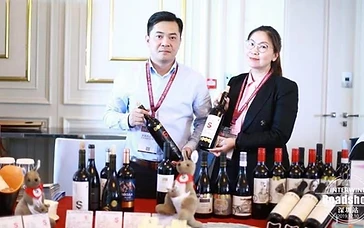
In the Chinese alcoholic beverage sector, personal interaction remains the foundation of commercial trust (guanxi). Specialized industry trade shows provide direct access to verified purchase managers, commercial directors, and regional wholesalers. Exhibiting at a targeted platform such as Interwine allows wine producers to conduct live portfolio tastings, assess real-time buyer sentiment, and negotiate sample shipments with importers actively sourcing new SKUs.
To optimize time on the trade floor, wineries should take advantage of structured business matching services to pre-schedule one-on-one meetings with verified regional wine distributors before arriving in China.
2. Industry Databases and Customs Import Records
Commercial platforms such as BestWineImporters (2025) track active license holders across Chinese port jurisdictions. Analyzing bill of lading records and historical trade volumes helps export directors identify which distributors currently move stock from specific production regions and price tiers. Cross-referencing trade intelligence from Market Insights enables brands to identify underrepresented geographical origins or emerging varietal niches.
3. B2B Ecosystems and Chinese Digital Communication
Western email outreach generates low response rates in mainland China. High-level B2B trade communication takes place primarily via WeChat. Professional winery export managers establish dedicated WeChat business accounts containing product technical sheets in simplified Chinese, brand origin videos, awards records, and ex-cellar pricing structures. Furthermore, monitoring trade procurement trends across Vino Joy News (2026) provides granular perspective on which mainland importers are restructuring their balance sheets or expanding into new categories.
Qualifying Chinese Wine Importers: Commercial Due Diligence
Securing a signed contract with an overseas distributor is meaningless if the partner cannot move stock through secondary channels. Before committing exclusive provincial or national distribution rights, export directors must evaluate candidates against five commercial benchmarks:
- GACC Registration and Customs Licensing: Verify that the prospective partner maintains valid enterprise registration with China Customs and possesses domestic permits for food and alcohol trading. Importers must have an established bonded or temperature-controlled logistics network to preserve wine integrity during transit through hot, humid southern coastal regions.
- Active Portfolio Overlap and Conflict: Examine the importer’s current inventory. If they represent three competing brands from your exact appellation at the same FOB price point, your wines risk serving as secondary filler or leverage against other wineries rather than an active priority.
- Channel Reach: Clarify whether the buyer primarily supplies institutional state-owned enterprise (SOE) gifting networks, on-trade dining, boutique bottle shops, or e-commerce storefronts on JD.com and Tmall. According to trade analysis from Asia Pro Distribution (2026), online sales account for roughly 28% of wine distribution in China, highlighting the importance of verifying an importer's digital distribution capabilities.
- Financial Terms and Payment Integrity: Standard payment terms for new trade relationships should involve an upfront deposit (typically 30% to 50%) with the balance settled via confirmed, irrevocable Letter of Credit (L/C) or Telegraphic Transfer (T/T) before the bill of lading is released.
- Marketing Investment Commitments: Establish whether the importer will co-invest in masterclasses, consumer tastings, sommelier education, and localized digital assets, or whether they expect the winery to fund all domestic marketing via retrospective deductions.
Regional Market Segmentation: Aligning Wine Styles to Local Demographics
A common mistake among overseas wineries is treating China as a monolithic market. Commercial preferences, price elasticity, and consumer usage vary substantially across geographic corridors:
| Region / City Cluster | Key Trade Centers | Dominant Wine Styles | Primary Sales Channels | | :--- | :--- | :--- | :--- | | Greater Bay Area | Guangzhou, Shenzhen, Dongguan | Premium red blends, aged vintages, prestige white wines | Corporate hospitality, private collectors, retail bottle shops | | Yangtze River Delta | Shanghai, Hangzhou, Ningbo | Organic/biodynamic wines, Champagne/sparkling, crisp whites | Sophisticated on-trade (bistros/wine bars), direct e-commerce | | North China Corridor | Beijing, Tianjin, Qingdao | Full-bodied reds, structured Bordeaux blends, oak-aged styles | Institutional procurement, seasonal gifting, banquet dining | | Southwestern Interior | Chengdu, Chongqing | Aromatic white wines, fruit-forward, lower-tannin reds | Casual dining, hotpot pairings, social live-stream commerce |
Pricing Architecture, Duty Calculations, and Compliance
Accurately calculating landed costs is critical to setting sustainable distributor pricing. In China, imported bottled wine (HS Code 2204.21) faces three standard import taxes calculated consecutively on the Cost, Insurance, and Freight (CIF) value:
- Most-Favoured-Nation (MFN) Customs Tariff: Standard rate is 14% (subject to bilateral Free Trade Agreements; for example, Australian bottled wine returned to zero tariffs following the lifting of trade restrictions in March 2024, as reported by Asia Pro Distribution (2026)).
- Consumption Tax (Excise): Fixed at 10%.
- Value-Added Tax (VAT): 13%.
According to BestWineImporters (2026), cumulative customs taxes typically add approximately 50% on top of CIF entry values for nations trading under standard MFN terms. A wine leaving the cellar door at €5.00 FOB can easily reach a landed wholesale cost of €8.50–€9.00 and an end-consumer shelf price exceeding €20.00–€25.00 after distributor, regional wholesaler, and retail margins are compounded. Establishing realistic ex-cellar price structures protects down-channel margins and ensures your brand remains commercially competitive.
Label Compliance and Regulatory Approvals
All foreign wine manufacturing facilities must register with the GACC via the China Import Food Enterprise Registration platform (Decree 248/249). Furthermore, every bottle entering customs must feature an approved, simplified Chinese back-label indicating product category, origin country, grape varieties, alcoholic strength, net volume, manufacturing date, domestic importer contact details, and mandatory Chinese health warnings.
Step-by-Step Action Plan to Secure Your First Distribution Contract
- Register Facility and Trademarks Early: Secure Chinese trademark rights for your Latin name and a carefully chosen Chinese phonetic equivalent. Chinese trademark law operates on a strict "first-to-file" system. Complete your GACC enterprise production registration before initiating shipments.
- Prepare Localized B2B Sales Collateral: Translate wine technical sheets into simplified Chinese. Include specific food pairing suggestions that match Chinese regional culinary traditions (such as Cantonese dim sum, Sichuan spiced dishes, or northern roasts) alongside international ratings.
- Schedule Structured Buyer Meetings: Engage in domestic trade missions or showcase your portfolio directly at major regional expos. Prepare samples, CIF price sheets for Chinese main ports (Shanghai, Shenzhen, Guangzhou), and clear distributor margin models.
- Audit Prospective Partners: Request references from existing winery partners in the importer's portfolio. Conduct on-site inspections of their regional storage facilities to verify temperature and humidity controls.
- Draft Clear Commercial Contracts: Outline minimum annual case volume targets, defined regional territories, termination clauses for non-performance, and strict intellectual property covenants before transferring exclusive distribution rights.
Expanding your wine distribution into mainland China requires sustained commercial focus, verified channel partners, and persistent market engagement. Secure direct access to hundreds of pre-qualified Chinese wine importers, wholesalers, and national retail buyers by registering to become an exhibitor at the next Interwine trade fair.
Sources
- USDA Foreign Agricultural Service: Wine Market Update (2025)
- BestWineImporters: A Wine Exporter’s Guide to Finding Buyers in China (2026)
- Asia Pro Distribution: How to Find a Wine Importer in China (2026)
- General Administration of Customs People's Republic of China (GACC)
Key Takeaways
- —China imported $1.6 billion in wine and related products in 2024 (GACC), with growth concentrating in white, sparkling, and value-driven premium segments.
- —B2B wine procurement is regionalized; successful market entry demands targeting specific commercial hubs like the Greater Bay Area or Yangtze River Delta rather than seeking a single national distributor.
- —Landed costs in China typically incur approximately ~50% in cumulative import duties, VAT, and consumption taxes on CIF value for standard MFN suppliers.
- —Face-to-face commercial networking at professional wine exhibitions remains the highest-converting method to vet Chinese buyers and build commercial trust (guanxi).
- —Digital ecosystems like WeChat and Douyin are now mandatory B2B and B2C brand tools that professional Chinese wine importers expect overseas producers to support.
Frequently Asked Questions
How do foreign wineries qualify prospective wine importers in China?
Exporters should verify the importer's GACC registration, validate import and food circulation licenses, review existing brand portfolios to avoid SKU conflict, inspect temperature-controlled warehousing capabilities, and review historical payment terms before offering regional or provincial exclusivity.
What import taxes apply to bottled wine entering China?
Standard Most-Favoured-Nation (MFN) imports into China face a 14% customs tariff, a 10% consumption tax, and a 13% value-added tax (VAT). Cumulatively, these taxes add roughly 50% on top of the shipment's Cost, Insurance, and Freight (CIF) valuation.
Do wineries need to register with Chinese customs before shipping?
Yes. Under GACC Decrees 248 and 249, all overseas food and beverage manufacturing and storage facilities must be registered through the official China Import Food Enterprise Registration platform prior to customs clearance.
Why is face-to-face exhibition important for selling wine in China?
Chinese business culture places significant value on personal relationships (guanxi) and sensory verification. Wine buyers demand live tastings, direct interaction with winery owners or export heads, and real-time negotiation before committing to container or pallet orders.
Which Chinese regions offer the strongest demand for imported wines?
The Greater Bay Area (Guangdong, Shenzhen) and the Yangtze River Delta (Shanghai, Zhejiang, Jiangsu) represent the largest volumes and highest purchasing power. Emerging interior hubs like Chengdu and Chongqing are also showing rapid growth for aromatic whites and lighter food-friendly reds.