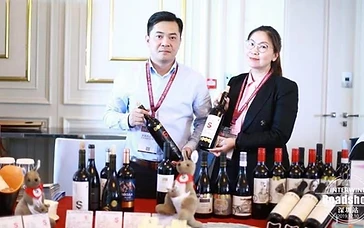
Armenian Wine Market Opportunities in China

Armenian wine producers face a historic opening in China's evolving alcoholic beverage market. Discover trade data, route-to-market strategies, and B2B growth pathways.
China's imported wine sector is undergoing a profound structural evolution. For Armenian producers and export bodies seeking market diversification away from legacy Eurasian destinations, this transition represents a decisive commercial opportunity. Rather than competing directly in the commoditized, high-volume segments dominated by global industrial brands, Armenian wine is positioned to capture value within China’s rapidly expanding boutique, alternative-origin, and storytelling-driven wine categories.
According to an export analysis published by Armenian Lawyer in 2024, the first half of 2024 saw Armenian wine exports expand by 3.6% in volume to 2.1 million liters, while customs value increased by 10.1% to USD 8.3 million. This significant divergence between volume and value growth confirms that Armenian winemakers are successfully moving up the premiumization ladder. However, the data also highlights an urgent strategic requirement: Russia accounted for 82.7% of Armenia's wine exports in the first half of 2024. While down slightly from 85.5% in 2023, this extreme concentration underscores the need for Armenian wineries to establish long-term, high-margin commercial footholds across East Asia, led by Mainland China.
Simultaneously, Deep Market Insights reported in 2024 that the China wine market reached a valuation of USD 57.25 billion in 2024, with forecasts projecting expansion to USD 93.92 billion by 2033 at a compound annual growth rate of 5.63%. Still wine remains the largest product category. For wine associations and ambitious cellars, understanding the practical mechanics of penetrating this market is vital.
The Commercial Case for Armenian Wine in China
Armenia’s viticultural proposition aligns with current consumption patterns among China’s Tier 1 and 'New Tier 1' cities, notably in regional commercial centers such as Guangzhou, Shenzhen, Shanghai, and Chengdu. In a 2024 market brief by Beverage Trade Network discussing Interwine China’s regional trade dynamics, industry observers noted that emerging wine regions—including Eastern Europe and the Caucasus—are gaining measurable traction across Chinese commercial channels because buyers and younger consumers demand authentic varietals, heritage, and strong price-to-quality ratios.
Three structural pillars make Armenian wine commercially competitive in mainland trade:
- Indigenous Terroir and Varietal Distinctiveness: Flagship indigenous varieties such as Areni Noir, Voskehat, Haghtanak, and Sireni offer commercial buyers something absent in saturated Cabernet Sauvignon and Merlot inventories. Areni Noir provides a structured, elegant alternative that bridges the sensory gap between medium-bodied Pinot Noir and structured Nebbiolo, perfectly suited to regional Chinese cuisines and high-end gastronomy.
- The Ancient Winemaking Narrative: With archaeological provenance centered on the Areni-1 cave complex (dating back over 6,100 years), Armenia controls one of the most compelling origin stories in global viticulture. In the Chinese market, where product provenance and cultural prestige heavily influence corporate gifting and premium dining, historical authenticity commands pricing power.
- Volcanic Soils and High-Altitude Precision: Modern Chinese sommeliers and tier-two regional distributors seek out high-elevation and volcanic terroir stories. Armenia’s vineyards—frequently situated between 1,000 and 1,800 meters above sea level—yield fresh acidity, refined aromatics, and lower alcohol profiles that align with modern consumer health awareness and refined palates.
For additional trade data and category breakdowns, producers can explore current Market Insights to calibrate their regional entry strategy.
Navigating China’s Trade and Regulatory Architecture
Capitalizing on these advantages requires careful navigation of China’s administrative, customs, and distribution compliance frameworks.
General Administration of Customs (GACC) Registration
Under Decree 248 and Decree 249 implemented by the General Administration of Customs of China (GACC), all overseas beverage production, processing, and storage facilities must be registered on the official China Import Food Enterprise Registration platform prior to shipping. Armenian producers must coordinate facility data accurately, ensuring that registration numbers correspond precisely with outer export cartons, commercial documentation, and internal labels.
National Food Safety Standards (GB Standards)
Armenian wines must meet China's National Food Safety Standards, notably:
- GB 2758: General standard for fermented alcoholic beverages, dictating chemical limits (including sulfur dioxide limits, methanol thresholds, and heavy metal allowances).
- GB 7718: Standards for prepackaged food labeling. Simplified Chinese back-labels must be verified prior to customs clearance, stating product category, net content, imported agent/distributor details, alcohol by volume, and specific allergen warnings.
Discrepancies in grape variety translation, vintage certification, or additive declarations are common causes of port demurrage. Working with accredited local forwarders and professional trade representatives eliminates these compliance hurdles.
Route-to-Market: Strategic Channels and B2B Positioning
Armenian wineries cannot rely on standard commodity import methods. Maximizing margins requires an intentional, multi-tier distribution model tailored to regional nuances.
Specialized Importers and Fine Wine Distributors
Rather than targeting mega-importers focused on high-volume FMCG retail, Armenian wineries achieve the highest retention rates by partnering with boutique, regional fine wine importers. These companies operate in second- and third-tier metropolitan areas throughout Guangdong, Jiangsu, Zhejiang, and Sichuan, where independent retail and bespoke hospitality venues seek regional exclusivity.
High-End On-Premise and Gastronomy
Wine bars, international hotel collections, and private dining clubs in southern China are eager to differentiate their wine programs. Areni Noir and amphora-aged (karas) white wines from Voskehat possess natural advantages in Cantonese private kitchens and contemporary Asian dining rooms due to their versatile pairing profile and distinct textural mouthfeel.
Private Client Networks and Corporate Gifting
Corporate wine purchasing accounts for a considerable share of off-trade value in China. Packaging plays an outsized role: premium heavy-weight bottles, tactile labels emphasizing Armenian heritage, and dedicated wooden gift cases unlock entry into corporate seasonal purchasing programs.
Producers seeking qualified commercial importers are encouraged to review the official Exhibitor Directory to benchmark established import partners across the region.
Mitigating Commercial Risks and Building Brand Equity
Entering China involves tangible business risks that require proactive mitigation strategies:
- Trademark Preemption: China operates under a strict 'first-to-file' intellectual property system. Armenian estates must register their Latin brand names alongside localized Chinese phonetic and conceptual trademarks with the China National Intellectual Property Administration (CNIPA) before introducing samples to prospective buyers.
- Channel Cannibalization: Without clear regional contracts, grey-market imports and unauthorized cross-border e-commerce discounting can erode offline margins. Producers must demand territorial exclusivity terms linked to explicit quarterly minimum order quantities (MOQs).
- Educational Investment Deficit: Armenian wine does not benefit from the widespread consumer awareness enjoyed by French or Australian origins. The burden of market education must be shared. Exporters must equip local distributors with professional digital assets, Masterclass materials, and translated sales collateral.
Accelerating China Market Entry Through Professional Trade Platforms
For overseas wineries, trying to navigate China's fragmented distribution landscape from Yerevan or Areni is both expensive and inefficient. Direct personal interaction, professional tastings, and structured distributor negotiations remain indispensable for closing reliable contracts.
Participation in targeted Asian trade fairs delivers the fastest path to verified importer matchmaking. Through organized exhibitions, masterclasses, and curated B2B programs, brand owners can directly present their portfolios to pre-vetted regional buyers. Trade-focused initiatives like Business Matching allow producers to screen distributors according to distribution capacity, payment terms, and retail reach.
To establish your commercial distribution network, negotiate face-to-face with professional importers, and capitalize on the growing demand for authentic, ancient-origin wines, secure your stand directly: Become an Exhibitor at Interwine.
Sources
- Armenian Lawyer - Investing in Armenia's Wine Industry: Opportunities & Growth (2024)
- Deep Market Insights - China Wine Market Size, Trends & Forecast Analysis 2025-2033 (2024)
- Beverage Trade Network - Interwine China: Gateway to Global Wines in the Chinese Market (2024)
Key Takeaways
- —Armenia's wine export value increased by 10.1% to USD 8.3 million in H1 2024, reflecting an ongoing shift toward higher-margin premium products.
- —With 82.7% of Armenian exports concentrated in Russia as of H1 2024, diversifying into China is a strategic commercial necessity for producers.
- —China's overall wine market was valued at USD 57.25 billion in 2024 and is projected to reach USD 93.92 billion by 2033, driven by still wine demand.
- —Indigenous Armenian varieties such as Areni Noir and Voskehat match the surging Chinese demand for alternative, boutique, and heritage wine regions.
- —Successful penetration requires adherence to China's GACC Decree 248/249 protocols, pre-registration of Chinese trademarks, and targeted B2B exhibition networking.
Frequently Asked Questions
What is the export volume and value growth of Armenian wine?
According to data reported by Armenian Lawyer in 2024, Armenian wine exports grew by 3.6% in volume during the first half of 2024 to 2.1 million liters, while total customs export value increased by 10.1% to USD 8.3 million, indicating accelerating premiumization.
Why is market diversification into China critical for Armenian producers?
In the first half of 2024, Russia accounted for 82.7% of all Armenian wine exports. To insulate production against regional geopolitical and currency risks, Armenian estates must actively diversify into major consumption markets like China, which was valued at USD 57.25 billion in 2024 according to Deep Market Insights.
Which Armenian grape varieties have the strongest commercial appeal in China?
Areni Noir and Voskehat have demonstrated the strongest commercial traction. Areni Noir appeals to fine wine drinkers looking for refined, high-elevation reds, while Voskehat—particularly when vinified in traditional clay amphorae (karas)—stands out within the growing natural and boutique white wine categories.
What compliance standards must Armenian wineries fulfill before shipping to China?
Wineries must complete overseas facility registration through the General Administration of Customs of China (GACC) under Decrees 248 and 249. Shipments must also strictly comply with national standards GB 2758 (fermented alcohol hygiene and composition) and GB 7718 (prepackaged food labeling in simplified Chinese).
How can Armenian wine exporters meet qualified Chinese importers?
The most cost-effective and secure method is participating in specialized trade exhibitions like Interwine China, which facilitates targeted B2B business matching sessions with pre-vetted distributors, regional wholesalers, and on-premise buyers across southern and eastern China.