The Wine Trade Fair Follow-Up Plan: From Tasting Notes to Qualified Opportunities
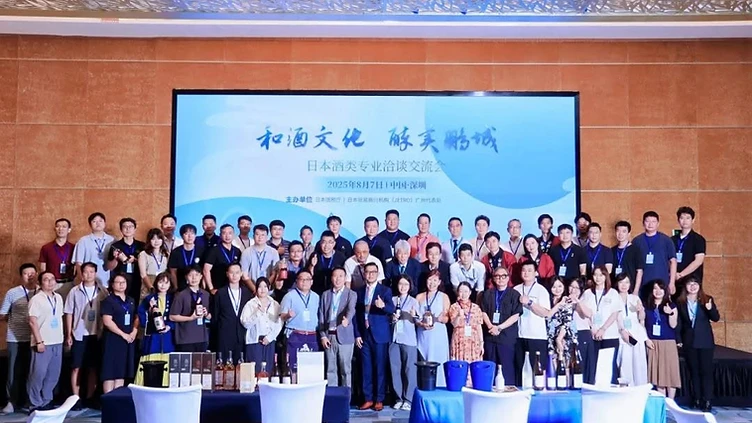
Transform post-show tasting notes into signed distribution contracts. A tactical 5-phase wine trade fair follow-up plan covering CRM triage, Incoterms pricing, sample governance, and cross-channel outreach.
A successful exhibition at an international beverage expo does not conclude when the tasting glasses are cleared. For winery principals, export directors, and distillery commercial leads, the real work begins when hundreds of handwritten tasting cards, digital scans, and exchanged WeChat or WhatsApp contacts are converted into commercial purchase orders. Without a structured post-show workflow, the momentum generated during intensive trade meetings deteriorates rapidly.
Executing the wine trade fair follow up plan from tasting notes to qualified opportunities requires a systematic transition from informal sensory impressions to formal commercial alignment. Wine buyers evaluate dozens of prospective labels during events; securing a listing demands rapid prioritization, commercial clarity, and disciplined communication within the critical 72-hour to 21-day post-show window.
Phase 1: The 72-Hour Intake & Triage Protocol
During high-volume expos, exhibitors interact with hundreds of stand visitors ranging from master importers and regional wholesalers to private sommeliers and casual samplers. Sorting these contacts immediately prevents high-intent buyers from cooling off.
Export teams must organize contacts into three distinct tiers before initiating outreach:
- Tier 1: Hot Commercial Prospects. Importers or distributors with verified import licenses who discussed specific SKUs, asked for FOB/CIF price lists, requested exclusive distribution terms, or scheduled post-fair follow-up meetings. Target initial outreach within 24 to 72 hours.
- Tier 2: Exploratory Buyers & Regional Wholesalers. Secondary distributors, regional sub-dealers, or on-trade groups who showed strong product interest but have not yet defined order volumes, target margins, or portfolio gaps. Schedule outreach between days 4 and 7.
- Tier 3: Sensory & General Trade Contacts. Industry media, freelance educators, trade visitors, and casual samplers. These should be logged in a centralized CRM for seasonal newsletters, general vintage releases, or future masterclass invitations.
To standardize this sorting process during and immediately after the event, export teams should deploy a structured evaluation rubric across all booth staff.
| Lead Category | Typical Profile Indicators | Required Collateral / Next Step | First Touchpoint SLA | | :--- | :--- | :--- | :--- | | Tier 1 (Hot) | Established importer, active customs registration, stated target price point (e.g., FOB €4.50), verified sales channels (off-trade retail/Horeca). | Tailored email with exact tasting references, Incoterms 2020 price list, sample dispatch protocol. | 24–48 Hours | | Tier 2 (Warm) | Regional beverage wholesaler, boutique merchant assessing category expansion, unspecified volume requirements. | Value-proposition deck, channel-specific catalog, request for preliminary commercial profile. | 4–7 Days | | Tier 3 (Nurture) | Brand ambassadors, general trade visitors, hospitality staff without purchasing authority. | Batch CRM import, inclusion in annual portfolio mailing list or media recap. | 8–14 Days |
For wine brands preparing for scheduled international events—such as Interwine Guangzhou (16–18 November 2026; Spring edition 7–9 May 2027 and Autumn edition 31 October–2 November 2027 at the China Import and Export Fair Complex / Pazhou) or the Interwine Hanoi roadshow on 20 November 2026—pre-configuring these lead categories inside a dedicated CRM accelerates post-fair conversion.
Phase 2: Commercial Data Alignment (Incoterms & Pricing)
A common friction point that derails promising buyer conversations is vague commercial documentation. Experienced wine importers reject outreach that forces them to calculate logistics math or guess currency fluctuations. Your first commercial response must specify terms governed by the International Chamber of Commerce (ICC) Incoterms 2020 rules.
=====================================================================
EXPORT COMMERCIAL OFFER TEMPLATE (COMMERCIAL SHEET)
=====================================================================
Winery / Brand: Domaine Example Estates
Contact: export@domaine-example.com | Mobile/WhatsApp/WeChat: +XX XXX
Target Market: China / Southeast Asia
Currency: EUR (€) or USD ($)

SKU / WINE NAME       VINTAGE  APPELLATION   BTL/CS  FOB PORT  EXW CELLAR
---------------------------------------------------------------------
Reserve Cabernet      2023     Regional AOP  6x750ml €6.20     €4.80
Estate Chardonnay     2024     Single Vyd    6x750ml €4.50     €3.40
Classic Red Blend     2023     Estate Blend  12x750ml €3.10    €2.25

LOGISTICS SPECIFICATIONS:
- Pallet Configuration: 84 cases/standard EUR pallet (120x80) | 100 cases/industrial pallet
- Lead Time: 15 business days from Purchase Order confirmation and deposit receipt
- Minimum Order Quantity (MOQ): 1 standard pallet (mixed SKUs allowed by layer)
- Payment Terms: 30% advance on PO confirmation, 70% balance against Bill of Lading (B/L) copy
- Label Compliance: Back-label translation support and lab analysis provided upon confirmation
=====================================================================
When presenting commercial terms, clearly state the named port of shipment (e.g., FOB Bordeaux or FOB Ningbo bonded warehouse). If quoting CIF (Cost, Insurance, and Freight), state the designated port of destination (e.g., CIF Guangzhou Pazhou or CIF Hai Phong Port). Providing transparent packaging specs, case weights, pallet tie/tier counts, and minimum order quantities (MOQs) demonstrates supply-chain readiness.
Phase 3: High-Conversion Outreach Sequence
Professional importers review hundreds of producer pitches following major expos. Generic messages such as "Thank you for visiting our booth" rarely yield high conversion rates. According to industry export analyses from BestWineImporters, specific, personalized messages that reference precise conversations and clear portfolio fit significantly outperform generic blast emails.
Step 1: The Contextual Touch (Hours 24–72)
Reach out across the channel agreed upon at the stand. While North American and European buyers prioritize corporate email, Asian markets often communicate faster via mobile enterprise channels (such as WeChat in mainland China or WhatsApp in Southeast Asia).
Subject: Follow-up from [Fair Name]: [Winery Name] - [Specific SKU Discussed]

Dear [Buyer Name],

Thank you for tasting our range at [Trade Fair Name] on [Day/Date]. I appreciated our discussion regarding your distribution focus across [Channel: e.g., On-trade hotel accounts in Guangdong / Premium retail in Hanoi].

During our meeting, you noted strong interest in our [Specific Wine Name & Vintage], particularly its compatibility with your portfolio's price tier of [Target Retail/Wholesale Price].

As promised, attached please find:
1. Our 2026/2027 Export Price List (FOB [Port Name] / EXW).
2. Technical spec sheets and certified lab analyses for the [Specific SKU(s)].
3. Logistics specifications (pallet configurations and container load factors).

Are you available for a brief 15-minute video call next Tuesday at 10:00 AM [Local Time Zone] to review sample allocations and channel fit?

Sincerely,
[Your Name]
[Export Director Title | Winery Name]
[Direct Phone / WhatsApp / WeChat ID]
Step 2: Commercial Clarification (Days 7–10)
If the buyer has not replied, send a brief check-in that delivers incremental commercial value rather than simple pressure. Include a high-resolution bottle shot, critical accolades (such as 90+ ratings from recognized international competitions), or case-study evidence illustrating retail sell-through performance in comparable markets.
Step 3: Logistics & Opportunity Finalization (Days 14–21)
Address the concrete logistical pathway: establish whether the importer has active shipping consolidations departing from your region, or propose freight consolidation alternatives via bonded hubs.
Phase 4: Sample Protocol and Governance
Unregulated sample distribution creates substantial margin leakage for wine producers. International sample shipments incur air-freight charges, local customs clearances, and regulatory import tariffs. Establishing a structured sample governance framework protects export budgets while testing buyer commitment.
- Verify Importer Credentials: Before approving air samples, confirm that the buyer holds active import and distribution licenses in the destination country. Review their current portfolio to ensure non-competing price segments.
- Consolidate Shipments: Avoid sending ad-hoc two-bottle cartons by courier. Align sample shipments with buyer-managed consolidation hubs in Europe or regional bonded warehouses.
- Enforce Sample Accountability: Implement a formal sample agreement. High-value estates often credit the freight cost of commercial evaluation samples against the buyer's initial commercial order (e.g., full container or standard multi-pallet order).
                         [Trade Fair Meeting]
                                  │
                      [Tier 1 Priority Lead?]
                                  │
                   ┌──────────────┴──────────────┐
                  YES                            NO
                   │                             │
      [Commercial Outreach Sent]       [Add to CRM Nurture /
      (Price Sheet, Technical Specs)     Annual Catalog]
                   │
       [Buyer Confirms Portfolio Fit?]
                   │
         ┌─────────┴─────────┐
        YES                  NO
         │                   │
[Sample Request Initiated] [Maintain Long-Term Review]
         │
[Verify License & Consolidation Point]
         │
[Dispatch Tracked Sample Set]
         │
[Commercial Negotiation & Order Placement]
Producers aiming to streamline this verification process can leverage curated matchings, such as the pre-vetted buyer networks established through Interwine Business Matching and regional industry showcases detailed in our Wine Import & Distribution portal.
Phase 5: Calculating Follow-Up ROI
Trade fair participation should be evaluated on bottom-line contribution margin rather than top-line revenue or badge scans. Calculating accurate return on investment (ROI) requires factoring in complete event operational overhead against the realized gross margin generated across recurring initial orders.
Hypothetical ROI Evaluation Model
Consider an estate exhibiting at a premier international showcase (e.g., Pazhou, Guangzhou or SECC, Ho Chi Minh City):
- Total Exhibition & Operational Cost: €18,500 (Includes booth space, stand construction, freight/customs for sample cases, flights, lodging, bilingual booth staffing, and local translation).
- Leads Generated: 85 total leads.
- Tier 1 Qualified Prospects: 12 commercial importers.
- Converted Importers (12-Month Horizon): 2 distribution partners.
- Initial Purchase Volume: 2 x 20-foot full container loads (FCL), totaling 26,000 bottles.
- Average FOB Selling Price per Bottle: €4.20.
- Total Export Revenue: €109,200.
- Winery Production & Direct Cost (COGS): €2.50 per bottle (€65,000 total).
- Total Gross Contribution Margin Generated: €44,200 (€109,200 − €65,000).
$$\text{Trade Show ROI (%)} = \left( \frac{\text{Gross Margin} - \text{Total Event Costs}}{\text{Total Event Costs}} \right) \times 100$$
$$\text{Hypothetical ROI} = \left( \frac{€44,200 - €18,500}{€18,500} \right) \times 100 = 138.9%$$
Evaluating returns through real contribution margin demonstrates why high-discipline follow-up is critical: converting even one additional Tier 1 importer transforms the commercial balance sheet of an export campaign.
Conclusion: Turning Sensory Conversations into Long-Term Contracts
Tasting notes demonstrate initial sensory resonance, but long-term import partnerships depend on commercial discipline, logistics accuracy, and dependable follow-through. By deploying a systematic 5-phase follow-up protocol, wine brands can systematically qualify trade fair encounters into durable distribution agreements.
To align your brand directly with vetted commercial distributors and category buyers across Asia, submit your winery credentials via Become an Exhibitor or organize targeted buyer engagements through Business Matching.
Frequently Asked Questions
How soon should wineries send follow-up communications after a trade fair?
Tier 1 priority buyers should receive personalized follow-up within 24 to 72 hours of the event's conclusion, while impressions from the tasting table remain fresh. Tier 2 exploratory leads should be contacted within 4 to 7 business days, and Tier 3 general trade contacts can be integrated into ongoing marketing campaigns within 14 days.
What are the essential documents an importer expects in the first follow-up email?
Importers require clear, actionable commercial collateral: a formal price list clearly stating Incoterms 2020 (FOB and EXW), currency, minimum order quantities (MOQs), technical spec sheets, certifications (organic, biodynamic, or vegan, if applicable), and pallet/container logistics data.
How should wineries communicate with buyers in mainland China and Southeast Asia?
While corporate email is essential for formal contracts and documentation, initial business communication and scheduling in mainland China frequently occur via WeChat. In Southeast Asian markets such as Vietnam, Malaysia, and Singapore, WhatsApp and direct phone calls are commonly preferred for operational exchanges.
When is it commercially viable to send wine samples internationally?
Samples should be dispatched only after verifying that the recipient holds active commercial import licenses, operates in compatible sales channels, and confirms that your price matrix aligns with their market segment. Whenever possible, align sample deliveries with the importer's consolidated freight hubs to optimize transport costs.
Sources
- International Chamber of Commerce (ICC) - Incoterms 2020
- BestWineImporters - Email Templates and Follow-Up Strategy
- SevenFifty Daily - A Winery Guide to Trade Show Success
- General Administration of Customs of the People's Republic of China (GACC)
Key Takeaways
- —Prioritize booth contacts within 72 hours into Tier 1 (hot commercial), Tier 2 (exploratory), and Tier 3 (nurture) categories to maximize conversion efficiency.
- —Present export pricing using clear Incoterms 2020 definitions (FOB/EXW), logistics specifications, packaging dimensions, and payment milestones.
- —Adopt market-appropriate communication channels, utilizing WeChat in mainland China and WhatsApp in Southeast Asia alongside official corporate email.
- —Implement strict sample distribution governance to eliminate freight waste and verify distributor licenses prior to air dispatch.
- —Calculate event ROI based on realized gross contribution margins rather than top-line revenue or badge-scan volumes.
Frequently Asked Questions
How soon should wineries send follow-up communications after a trade fair?
Tier 1 priority buyers should receive personalized follow-up within 24 to 72 hours of the event's conclusion, while impressions from the tasting table remain fresh. Tier 2 exploratory leads should be contacted within 4 to 7 business days, and Tier 3 general trade contacts can be integrated into ongoing marketing campaigns within 14 days.
What are the essential documents an importer expects in the first follow-up email?
Importers require clear, actionable commercial collateral: a formal price list clearly stating Incoterms 2020 (FOB and EXW), currency, minimum order quantities (MOQs), technical spec sheets, certifications (organic, biodynamic, or vegan, if applicable), and pallet/container logistics data.
How should wineries communicate with buyers in mainland China and Southeast Asia?
While corporate email is essential for formal contracts and documentation, initial business communication and scheduling in mainland China frequently occur via WeChat. In Southeast Asian markets such as Vietnam, Malaysia, and Singapore, WhatsApp and direct phone calls are commonly preferred for operational exchanges.
When is it commercially viable to send wine samples internationally?
Samples should be dispatched only after verifying that the recipient holds active commercial import licenses, operates in compatible sales channels, and confirms that your price matrix aligns with their market segment. Whenever possible, align sample deliveries with the importer's consolidated freight hubs to optimize transport costs.